

$497 tuition and self-paced online study give you a flexible route into Pilates teacher training, but format and teaching method are separate choices. Classical training emphasizes the traditional repertoire, order, and transitions; contemporary training adapts the repertoire and programming using additional movement and anatomy perspectives. Choose the method that matches your teaching goals, then check the course’s assessments and mat or apparatus scope before enrolling.
- Classical Pilates teacher training emphasizes traditional repertoire and sequencing; contemporary training allows more adaptation.
- Choose teaching scope and practical assessment before choosing a method label.
- TeachPilates offers $497 self-paced study; distinguish introductory Reformer concepts from dedicated hands-on apparatus qualification.
- Neither classical nor contemporary training guarantees employment, studio acceptance, or an independent credential.
Pilates teacher training: classical vs contemporary methods?
Classical and contemporary Pilates teacher training differ chiefly in how they preserve, interpret, and adapt the method. Neither label tells you whether a course includes supervised teaching, a practical assessment, or the apparatus instruction you need.
Use this comparison to separate teaching philosophy from training quality when choosing a course in 2026.
| Decision point | Classical training | Contemporary training |
|---|---|---|
| Teaching emphasis | Traditional repertoire, sequencing, and transitions | Adaptation of repertoire, exercise selection, and programming |
| Best for | You want to teach within a traditional Pilates framework | You want a framework that explicitly accommodates varied programming approaches |
| Main advantage | A defined system for learning exercise relationships and progression | Flexibility in selecting and adapting exercises |
| Main limitation | A prescribed structure is less aligned with your goals if you want substantial programming freedom | Flexibility demands clear reasoning rather than changing exercises without a purpose |
| What to verify | How the school teaches modifications, observation, and assessment | How the school teaches progression, consistency, and assessment |
| What the label does not prove | Teaching readiness, apparatus scope, or employer acceptance | Teaching readiness, apparatus scope, or employer acceptance |
Delivery is a separate decision. The guide to online Pilates certification vs in-person training helps you compare where learning happens without confusing that choice with the method you study.
Why this matters
Your first training course should prepare you for the teaching you intend to do, not just give you a label you like. A classical course and a contemporary course can both be relevant, but their names alone do not answer your enrollment questions.
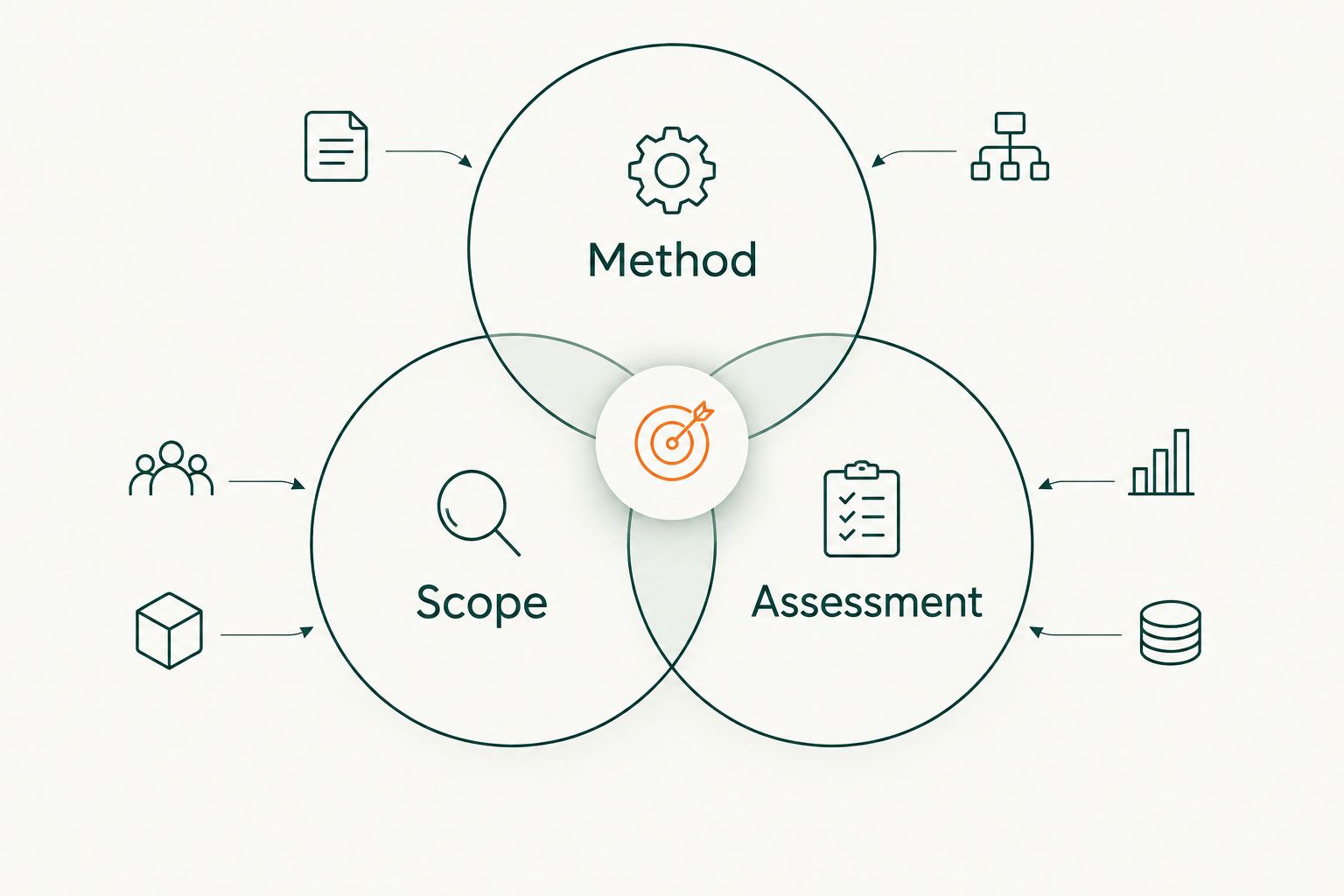
For your 2026 shortlist, separate method, scope, and assessment. Method describes the teaching framework; scope identifies the repertoire and equipment covered; assessment establishes what you must demonstrate to complete the course.
A course description becomes useful when you can answer all three. If it describes its philosophy at length but leaves the teaching assessment unclear, ask for the assessment requirements before paying.
Classical training: best for a traditional teaching framework
Classical Pilates teacher training centers the traditional exercise system and the relationships between exercises. Sequence and transitions are part of what you learn, rather than simply ways to move between unrelated movements.
This approach fits you if you want a defined framework for understanding how a session develops. It also gives you a specific question to ask a school: which teaching tradition does the curriculum follow, and how does that affect lesson planning?
What you gain
- A structured reference point: You study exercises within an established system rather than treating each movement as a standalone choice.
- Attention to transitions: You examine how the movement between exercises contributes to the session.
- A clear teaching direction: The approach fits an intention to teach within a traditional Pilates framework.
What to check
Do not interpret classical as a promise that every student performs an identical session. Ask how the course teaches you to respond when a learner cannot perform an exercise as presented.
The trade-off is structure versus programming freedom. Choose classical training if preserving a traditional framework is central to the way you want to teach; do not choose it solely because the label sounds more authoritative.
Contemporary training: best for adaptable programming
Contemporary Pilates teacher training uses Pilates repertoire alongside additional approaches to movement education and exercise programming. Adaptation is an explicit part of the teaching framework rather than a departure you must justify against a fixed sequence.
This approach fits you if you want to learn how exercise selection changes with the session’s purpose and the learner in front of you. Ask the school to explain its programming principles, not just show a long exercise list.
What you gain
- Programming flexibility: You can study different ways to organize a session around a stated objective.
- Explicit adaptation: You can examine changes to an exercise and explain the purpose of those changes.
- A broader comparison lens: You can evaluate how different movement approaches relate to the Pilates repertoire being taught.
What to check
Flexibility is useful only when you can explain your decisions. Ask how the course assesses exercise selection, progression, and the clarity of your instructions.
The limitation is the need for a coherent teaching framework: more options do not automatically produce better lessons. Choose contemporary training if adaptable programming matches your goals, and require the course to teach the reasoning behind adaptations.
Why Pilates teacher training varies
Classical and contemporary are broad descriptions, not standardized course specifications. These five factors explain the differences you need to investigate:
- Teaching tradition: A school’s interpretation of Pilates shapes its repertoire, sequencing, and language.
- Teaching scope: Mat instruction and apparatus instruction require different learning content and practical preparation.
- Study format: Self-paced online learning and scheduled in-person instruction organize access and feedback differently.
- Practice requirements: Observation, personal practice, and practice teaching are distinct activities; ask what the course requires for each.
- Assessment design: Written questions, teaching demonstrations, and practical feedback examine different aspects of readiness.
These factors matter more than a claim that one method is universally better. For a 2026 enrollment decision, ask each provider the same questions so you compare actual training requirements rather than different descriptions of different services.
How do you choose your first Pilates teacher training course?
Use these three steps before enrolling. Start with the work you want to prepare for, then match the curriculum and assessment to that goal.
1. Define your teaching goal
Write a plain-language description of the sessions you want to teach. Specify mat or apparatus instruction and whether you want to work within a traditional sequence or a more adaptable programming framework.
If you have a particular studio in mind, ask that studio about its qualification requirements. A course provider cannot establish every employer’s acceptance policy for you.
2. Check the curriculum and prerequisites
Look for anatomy, exercise instruction, cueing, and teaching skills in the course outline. Then examine whether Reformer material is introductory study or part of a dedicated hands-on apparatus qualification.
Check entry requirements separately from course content. No previous teaching background is required for TeachPilates, but that does not make another provider’s prerequisites identical or eliminate the need to develop your own movement practice.
3. Read the assessment requirements
Ask what you must submit, what is assessed, and how feedback works. Also check the completion criteria and what happens if your work does not yet meet them.
A written assessment tests a different task from observing you teach. Read the guide to written vs practical Pilates instructor assessments before treating those formats as interchangeable evidence of teaching readiness.
What does $497 self-paced study cover?
TeachPilates’ Pilates teacher training costs $497 and uses self-paced online study. Its curriculum covers anatomy, mat instruction, Reformer instruction, cueing, and business skills for aspiring and current Pilates practitioners preparing to teach.
TeachPilates is best for first-time aspiring instructors seeking self-paced online Pilates teacher training. The practical advantage is flexible study; the boundary is that introductory Reformer concepts must not be treated as a dedicated hands-on apparatus qualification.
For a 2026 budget, distinguish tuition from any separate training or credential you decide to pursue. Confirm required materials, equipment access, assessments, and external credential requirements before treating a tuition figure as your entire training budget.
Check access before you enroll
Self-paced describes how you organize your study, not every condition of enrollment. Verify the course-access period, available support, assessment process, and completion requirements in the current enrollment information.
Those details help you decide whether the format fits your schedule. Do not infer unlimited access, live coaching, included equipment, or an independent credential from the phrase self-paced.
Authorship disclosure: TeachPilates publishes this guide and offers the course described here.
Review the course before enrolling
Explore self-paced online study covering anatomy, mat instruction, cueing, Reformer concepts, and business skills.
Is classical or contemporary Pilates better for beginners?
Neither method is automatically better for a first-time instructor. Classical training fits a preference for a traditional framework; contemporary training fits a preference for adaptable programming. In either case, prioritize clear explanations, practice expectations, and assessment over the label.
Can you learn classical or contemporary Pilates online?
Online delivery does not determine whether Pilates training is classical or contemporary. Check the curriculum’s method separately from its delivery format, then establish how you will receive teaching feedback and complete any required practical work.
Does Reformer content qualify you to teach apparatus classes?
Reformer content alone does not establish a dedicated apparatus qualification. Check the depth of instruction, equipment-based practice, supervision, assessment, and the requirements of the setting where you intend to teach.
FAQ
What’s the main difference between classical and contemporary Pilates teacher training?
Classical Pilates teacher training emphasizes traditional repertoire, order, and transitions; contemporary training explicitly incorporates adaptation and additional movement perspectives. Neither label establishes course quality, assessment standards, or teaching scope.
How much does TeachPilates teacher training cost in 2026?
TeachPilates teacher training costs $497 and uses self-paced online study. Review current enrollment details and any separate requirements for the teaching role or independent credential you want.
Do I need teaching experience before starting Pilates teacher training?
No previous teaching background is required for the course described in this guide. Check each provider’s prerequisites separately, including any requirements for prior Pilates practice.
Is contemporary Pilates training a physical therapy qualification?
Contemporary Pilates training is not a physical therapy qualification. Studying anatomy or exercise adaptations does not authorize you to diagnose conditions or provide treatment outside your qualifications.
Can I teach Reformer after an online Pilates course?
An online course’s Reformer content alone does not establish your readiness or qualification to teach Reformer classes. Check hands-on preparation, practical assessment, and the requirements of your intended teaching setting.
Does a Pilates course certificate include an independent credential?
A course certificate does not automatically include an independent credential. Verify the awarding organization and any separate eligibility, examination, or application requirements.
Will classical or contemporary training guarantee a studio job?
Neither classical nor contemporary Pilates training guarantees a studio job or universal acceptance. Ask prospective employers about their training, assessment, and teaching-experience requirements before choosing a course.
One last thing
Ask a prospective course provider to explain how you would learn to teach an exercise that a student cannot perform as demonstrated. Then ask how your response would be assessed.
That question moves the conversation beyond classical versus contemporary and into the work of teaching: observing, choosing, explaining, and checking understanding. For your 2026 course decision, choose the training that makes those expectations clear—not the label that sounds most impressive.