$497 is the tuition for TeachPilates’ flexible, self-paced online course, which covers anatomy, mat instruction, introductory Reformer concepts, cueing, and business skills. When comparing Pilates certification programs in 2026, choose mat-focused training for mat teaching and dedicated apparatus training for the equipment you intend to teach. Reformer content in an online curriculum is not the same as a hands-on apparatus qualification.
- Compare Pilates certification programs by teaching scope, practical assessment, and equipment training—not the certificate title alone.
- TeachPilates is best for aspiring instructors seeking self-paced online study of mat-teaching foundations and introductory Reformer concepts.
- Mat training fits mat-teaching goals; apparatus teaching needs equipment-specific preparation.
- Ask prospective studios about hiring requirements before choosing your training pathway.
Why this matters
Your course should prepare you for the teaching you actually want to do. A mat class and an equipment session share movement principles, but apparatus adds settings, moving parts, and equipment-specific decisions.
Start with the curriculum rather than the word certification. The TeachPilates online Pilates instructor certification course offers self-paced study, but your enrollment decision should also account for practical preparation and the teaching requirements of your intended workplace.
Match your training to your intended teaching scope before comparing certificate names. This is the useful starting point for a 2026 course shortlist, whether you want to lead mat classes or work toward apparatus instruction. For the wider route from training to teaching, see how to become a Pilates instructor.
Which Pilates certification programs fit mat vs full apparatus teaching?
Mat-focused training fits a goal of teaching mat exercises. Full apparatus training fits a broader goal involving equipment, but you still need to check which apparatus the curriculum covers and how your teaching is assessed.
The distinction is scope, not simply online versus in person. Delivery format tells you how you study; curriculum and assessment tell you what you study and demonstrate.
| Training pathway | Best for | Main advantage | Main limitation | Check before enrolling |
|---|---|---|---|---|
| Mat-focused training | Aspiring mat instructors | Concentrates study on mat exercises and class instruction | Does not establish apparatus teaching competence | Practical teaching assessment and mat curriculum |
| Reformer-focused training | Instructors planning to teach Reformer sessions | Concentrates on one apparatus and its teaching demands | Does not establish competence across other apparatus | Equipment access, supervised practice, and assessment |
| Full apparatus training | Instructors seeking a broader equipment teaching scope | Covers a wider equipment curriculum when explicitly included | Requires equipment access and a broader learning commitment | Named apparatus, prerequisites, practice requirements, and assessments |
A course covering both mat work and Reformer concepts does not automatically belong in the full apparatus category. Read the learning objectives and completion requirements, not just the list of topics.
Mat-focused training: best for mat-teaching goals
Mat-focused training lets you concentrate on exercise execution, observation, cueing, and class organization without also learning apparatus setup. That focus is useful when your immediate goal is leading mat sessions.
The limitation is equally clear: mat training does not demonstrate equipment-specific teaching skills. Choose mat-focused study because it matches your intended work, not because you assume it qualifies you for every Pilates setting.
Reformer-focused training: best for Reformer teaching goals
Reformer-focused training addresses a specific apparatus rather than treating equipment as a single category. Relevant preparation includes setup, spring selection, transitions, observation, and teaching practice on the machine.
Its advantage is concentration. Its limitation is that Reformer preparation does not establish readiness to teach every other apparatus; check each additional equipment category separately.
Full apparatus training: best for a broader equipment scope
Full apparatus training suits you when your intended teaching includes several types of Pilates equipment. Look for an explicit equipment list rather than assuming the word full has a uniform meaning across providers.
A broader curriculum also means more skills to practice and demonstrate. Choose breadth when your teaching goal requires it, and verify that the practical requirements match that breadth.
Why Pilates certification programs vary
Pilates certification programs differ because they prepare students for different teaching tasks. In 2026, compare these factors before deciding that a longer syllabus or a broader course title represents a better fit:
- Teaching scope: Mat instruction, Reformer instruction, and broader apparatus teaching involve different learning objectives.
- Study format: Self-paced lessons give you scheduling flexibility; scheduled instruction requires attendance at set times.
- Equipment access: Apparatus practice requires access to the equipment you are learning to teach.
- Feedback: Reading feedback, receiving exercise corrections, and having your teaching observed serve different purposes.
- Assessment: A written test checks knowledge differently from an observed teaching assessment.
- Entry requirements: Providers set their own prerequisites, so check the actual enrollment terms rather than borrowing assumptions from another course.
None of these factors makes a course automatically right or wrong. Your task is to identify the combination that prepares you for your intended next step.
What should you check in a mat curriculum?
A useful mat curriculum should connect movement knowledge with teaching decisions. Knowing an exercise name is not the same as recognizing when a learner needs a clearer instruction or a different starting position.
Look for anatomy that supports movement understanding, exercise instruction, cueing, and class planning. Then examine how the course asks you to apply those subjects rather than merely recognize them in a lesson.
Exercise understanding
You should be able to explain the purpose of an exercise and describe its setup. Ask how the curriculum addresses movement observation, exercise progression, and situations in which an instructor should stop or seek appropriate guidance.
Avoid treating a long exercise list as proof of teaching depth. A shorter list studied carefully serves a different purpose from a catalog you have only watched.
Teaching practice
Ask whether you will practice giving instructions, watching a participant respond, and adjusting your wording. Those are teaching tasks, not simply exercise-performance tasks.
Also check whether practice is self-directed, observed, or assessed. Each can contribute to learning, but they are not interchangeable evidence of teaching readiness.
Class organization
A class needs a clear sequence and instructions that participants can follow. Look for opportunities to plan a session and explain your choices, rather than relying entirely on memorized scripts.
The practical question is simple: can you connect individual exercises into a lesson with an understandable purpose? Use that question when reviewing course descriptions and sample materials.
What should apparatus training add?
Apparatus training should address the equipment itself, not only exercises performed on it. You need to understand the setup and operation relevant to the movements you teach.
Ask how the course handles equipment checks, settings, transitions, and participant positioning. Then ask how those skills are practiced and evaluated.
Introductory Reformer concepts are a starting point, not proof of hands-on apparatus competence. An online explanation can introduce a principle; it does not by itself demonstrate your ability to apply that principle while teaching someone on equipment.
For a broader apparatus pathway, request the named equipment covered and the requirements attached to each. Do not assume that one practical assessment evaluates everything listed in the syllabus.
How do written and practical assessments differ?
A written assessment checks what you can explain or identify. A practical assessment checks what you can demonstrate within the tasks being assessed.
Both matter, but they answer different questions. In your 2026 course comparison, distinguish knowledge testing from observed instruction rather than treating any final exam as equivalent.
| Assessment format | What it can assess | Strength | Limitation |
|---|---|---|---|
| Written assessment | Anatomy knowledge, terminology, and teaching principles | Makes knowledge requirements explicit | Does not directly show live teaching performance |
| Exercise demonstration | Your execution and explanation of assigned movements | Shows movement understanding in action | Does not necessarily assess class management |
| Teaching assessment | Cueing, observation, sequencing, and responses during instruction | Examines applied teaching tasks | Covers only the tasks and conditions actually assessed |
Ask what happens if your work does not meet the assessment standard. Clarify feedback, reassessment rules, and any associated charges before enrolling; do not assume that these are included in tuition.
A certificate confirms completion according to its issuer’s requirements. It does not tell you those requirements unless you read them.
How should you compare tuition and study commitments?
TeachPilates lists $497 tuition for its self-paced online Pilates instructor certification course. Its stated curriculum includes anatomy, mat instruction, introductory Reformer concepts, cueing, and business skills; do not treat that curriculum description as a dedicated hands-on apparatus qualification.
For your 2026 decision, separate course tuition from the resources needed to complete your chosen pathway. Ask about required learning materials, assessment arrangements, practical instruction, and equipment access before calculating your personal commitment.
Do not assume every course charges separately for these items. The point is to establish what is included, what is required, and what you must arrange yourself.
Self-paced study gives you control over when you study; it does not remove the need to practice. Put lesson time and teaching practice into your calendar as separate activities so that watching content does not become your only measure of progress.
How do you choose your pathway before enrolling?
Use these 3 checks to turn a course shortlist into a decision. Start with the teaching goal, then work backward to the training and evidence it requires.
- Teaching goal: Write down whether you intend to teach mat classes, Reformer sessions, or a broader apparatus range. Avoid an undefined goal of simply becoming certified.
- Course evidence: Match that goal to the curriculum, equipment covered, practical requirements, and assessment tasks. Ask the provider to clarify any gap between the course title and those details.
- Workplace requirements: Ask prospective studios or employers what training and assessments they expect. Keep their requirements separate from the course provider’s description.
You do not need to commit to every possible teaching format at once. You do need to understand the boundary of the training you choose.
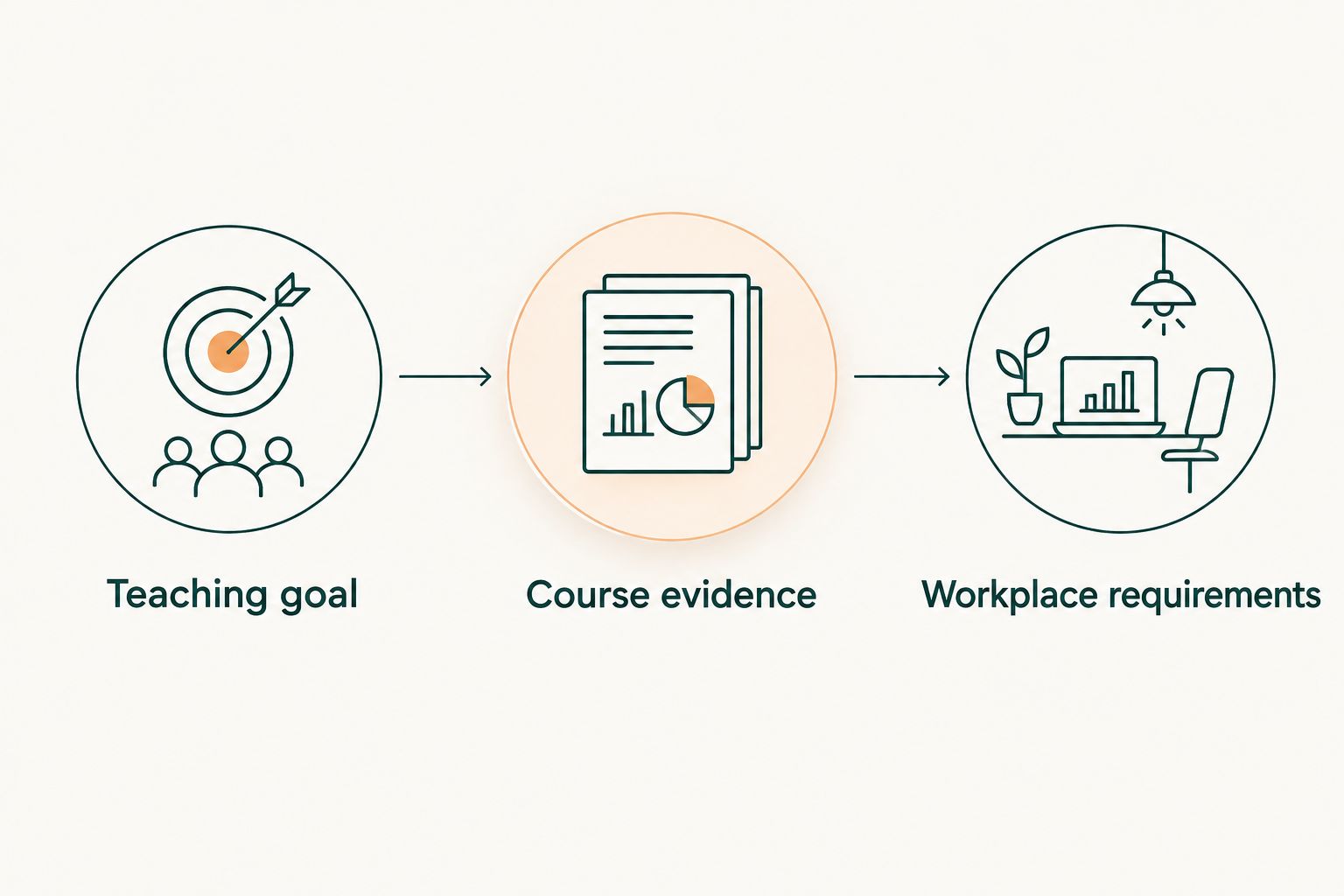
Keep a written answer for each check. If a course description is unclear, ask a specific question about the teaching task or assessment rather than requesting general reassurance that the certificate is accepted.
Can I start with mat training and study apparatus later?
You can plan mat study first and consider apparatus training later, but the later provider decides its entry and credit requirements. Do not assume that an earlier certificate reduces another course’s requirements.
Choose the first course for what it teaches now. Treat future progression as a separate enrollment decision that needs its own checks.
Is online Pilates certification enough to teach Reformer?
Online study alone does not establish that you have demonstrated hands-on Reformer teaching competence. Check whether the pathway includes equipment practice, observed teaching, and assessment relevant to the sessions you intend to lead.
A curriculum mention of Reformer is not a substitute for those details. Ask exactly what you will be expected to do on the equipment.
Does a course certificate include an independent credential?
A course certificate does not establish that a separate independent credential is included. Check the issuing organization, eligibility rules, and any separate examination requirements before making that assumption.
Keep course completion, independent credentials, and workplace requirements distinct. They answer different questions about your preparation and eligibility.
FAQ
What’s the best way to compare Pilates certification programs?
Compare Pilates certification programs by intended teaching scope, curriculum, practical preparation, and assessment. Check workplace requirements before choosing based on a certificate title.
Is mat certification the same as full apparatus certification?
Mat certification is not the same as full apparatus certification. Mat-focused training addresses mat teaching, while apparatus pathways need to specify the equipment and practical skills covered.
Who is TeachPilates best for?
TeachPilates is best for aspiring instructors seeking self-paced online study of mat-teaching foundations and introductory Reformer concepts. Its curriculum also includes anatomy, cueing, and business skills; do not treat it as a dedicated hands-on apparatus qualification.
Do I need teaching experience before starting Pilates instructor training?
Teaching experience is not required for every Pilates instructor course. Check the enrollment prerequisites for your chosen provider, including any movement-experience or prior-training requirements.
Can I complete practical apparatus training without equipment access?
Hands-on apparatus practice requires access to the equipment you are learning to teach. Ask the provider where practice and assessment take place and what you must arrange yourself.
Will every studio accept my Pilates certificate?
No course certificate guarantees acceptance by every studio. Ask your intended workplace about its training, practical assessment, and equipment-specific requirements before enrolling.
Should I choose a written exam or a practical assessment?
Written exams and practical assessments evaluate different abilities rather than serving as interchangeable alternatives. Check how a course assesses both knowledge and the teaching tasks relevant to your goal.
One last thing
Before enrolling, complete this sentence: After this course, I want to teach this type of session, and I will demonstrate readiness through this assessment. If you cannot fill in both parts, return to the curriculum and assessment requirements.
That is a more useful final check than the certificate title. For your 2026 decision, choose a defined teaching scope and preparation you can explain clearly—not the broadest-sounding label.