
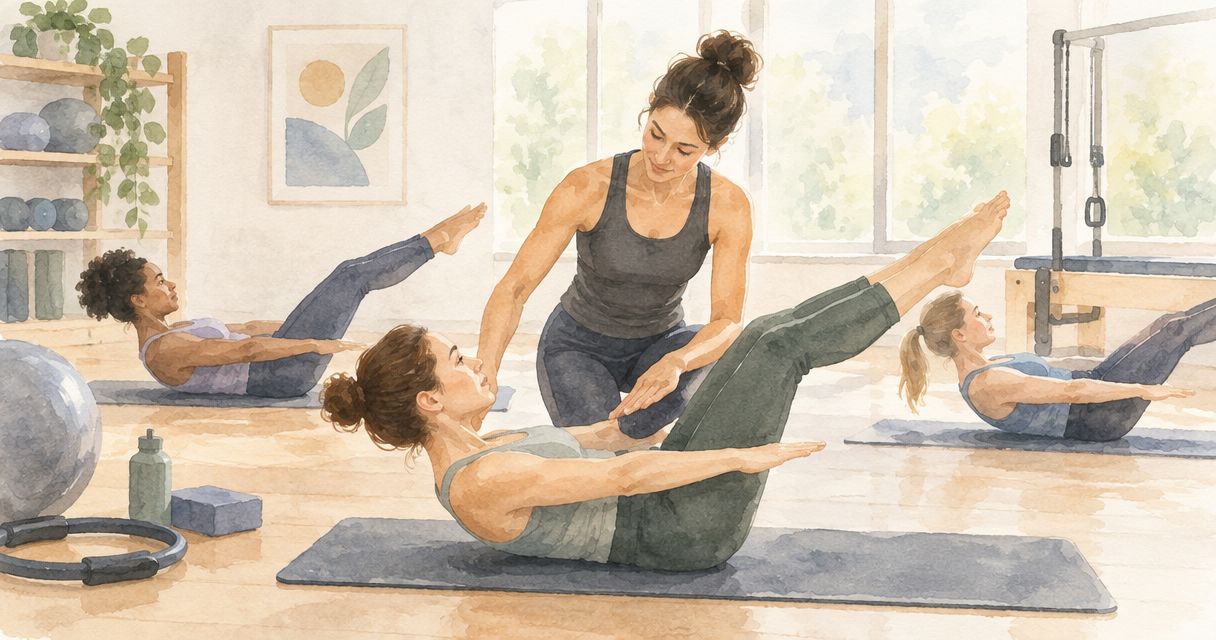
Group fitness instructors’ Pilates teacher training is preparation to teach Pilates-specific movement, cueing, and class planning; TeachPilates offers $497 tuition and flexible, self-paced online study. This 2026 guide helps you choose training that builds on your group-teaching experience without confusing mat-teaching foundations with dedicated hands-on Reformer qualification.
- TeachPilates offers self-paced Pilates teacher training for instructors seeking online study, with anatomy, cueing, and business skills.
- Choose mat certification or dedicated Reformer training according to the classes you intend to teach.
- Ask your employer about accepted qualifications before enrolling; group fitness experience does not establish Pilates teaching competence.
- Check practical assessments, equipment access, and study terms before committing to a course.
Why Pilates teacher training matters for group fitness instructors
Your experience leading a room is useful. You already practice giving instructions, managing transitions, and keeping participants engaged, but those skills do not replace learning Pilates exercises, movement principles, or apparatus-specific safety.
The enrollment question is not simply whether you can teach a group. It is whether the course prepares you for the Pilates class you want to lead—and whether the organization hiring you accepts that preparation.
For your 2026 training decision, separate three things: course completion, demonstrated teaching ability, and employer requirements. A certificate answers the first question; assessment and practice address the second; your intended workplace decides the third.
Choose training for the teaching scope you need, not the broadest-sounding certificate title. A mat-focused starting point and a full-apparatus pathway answer different needs.
How to choose training and prepare to teach
Use the following steps before enrolling and while studying. Start with information you can collect yourself: class descriptions, employer requirements, your current schedule, and questions for each provider.
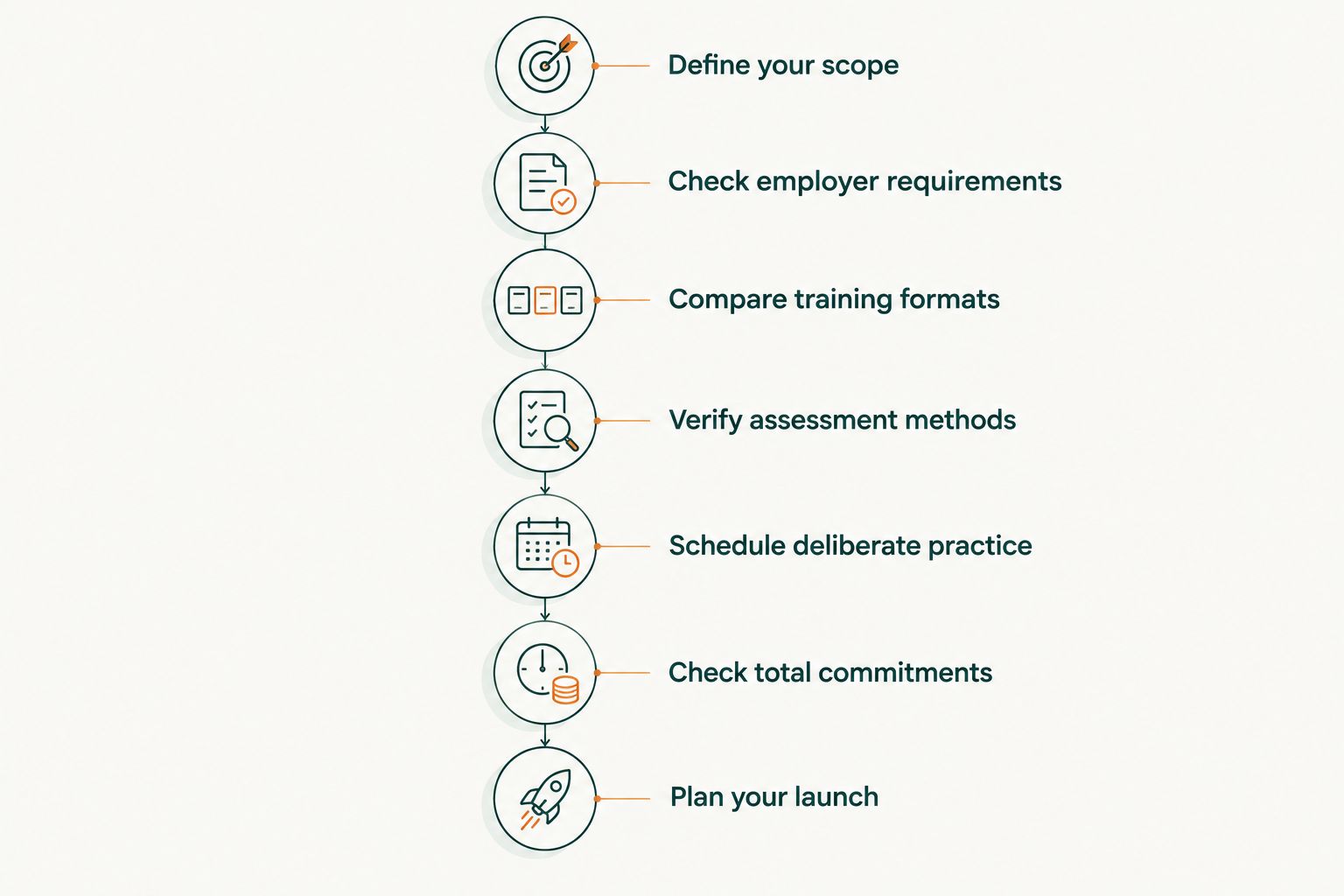
Define your scope
Write a plain-language description of the class you want to teach. A general group mat class, an equipment-based Reformer class, and a Pilates-inspired fitness class are different teaching goals; do not treat their preparation as interchangeable.
Then identify what you already know and what you need to learn. Experience cueing squats or managing a circuit does not demonstrate that you can explain a Pilates exercise, observe its execution, or select an appropriate alternative.
Your first course should match that gap. If your immediate goal is mat teaching, compare mat foundations directly rather than assuming more equipment coverage automatically makes a course more suitable.
- Name the class format you intend to teach.
- Identify whether the class requires apparatus access.
- List the Pilates exercises you can already explain accurately.
- Separate familiar group-management skills from new technical skills.
- Write down the teaching tasks you need training to assess.
Check employer requirements
Contact the person responsible for hiring instructors before you pay for training. Ask about the exact class format and course you are considering, rather than asking whether online certification is acceptable in general.
Request a written answer you can refer to when comparing programs. An employer’s requirements can include qualifications, an audition, practical experience, or separate safety documentation; establish the actual requirements instead of assuming your existing group fitness credential covers everything.
Use this guide to checking employer requirements for online Pilates certification to organize those conversations. Treat each workplace’s answer as specific to that workplace, not evidence of universal acceptance.
- Ask which qualifications the employer accepts for your intended class.
- Confirm whether an audition or observed class is required.
- Ask about CPR and insurance documentation.
- Establish any equipment-specific training requirements.
- Check whether your existing credentials satisfy any separate conditions.
Compare training formats
Start with a simple comparison sheet: delivery format, curriculum, assessment, practice opportunities, and teaching scope. You can build this yourself from provider information and direct questions without buying a course first.
Self-paced study lets you organize learning around your existing classes. In-person training is the format to investigate when direct observation, scheduled attendance, and access to physical equipment are central to your decision.
TeachPilates Pilates teacher training is best for aspiring instructors who want self-paced online study covering anatomy, mat instruction, cueing, and business skills. The curriculum also covers Reformer instruction, but introductory Reformer concepts are not a substitute for dedicated hands-on apparatus qualification.
- Compare courses against the same intended teaching role.
- Check how lessons connect movement knowledge to teaching practice.
- Ask what instructor feedback is available.
- Confirm equipment needs before choosing apparatus training.
- Distinguish curriculum coverage from assessed teaching competence.
Verify assessment methods
Ask how the provider checks that you can teach, not just recognize terminology. A written assessment and a practical teaching assessment examine different things; understanding an exercise description does not show how you respond when a participant needs a clearer cue.
For a 2026 enrollment, obtain current assessment details directly from the provider. Request the format, completion requirements, feedback process, and any rules for repeating an assessment.
Also clarify what the credential represents. A provider-issued course certificate is not evidence that a separate independent credential is included. If an independent examination matters to your intended employer, verify that requirement separately.
- Ask whether assessment is written, practical, or both.
- Request the published completion criteria.
- Check whether teaching demonstrations receive feedback.
- Ask how unsuccessful assessment attempts are handled.
- Confirm exactly which certificate or credential completion provides.
Schedule deliberate practice
Build a study plan before you enroll. Use your existing calendar and a notebook first: reserve study time, movement practice, and teaching rehearsal as separate activities rather than calling all of them study.
As a starter plan—not a course requirement—try a 20-minute study block followed by a 10-minute sequence rehearsal. Then give a 2-minute explanation of one exercise without reading your notes. This makes the difference between recognizing information and explaining it visible.
Record a rehearsal if you can review it safely and privately. Listen for unclear setup instructions, unnecessary talking, and cues that arrive after the movement has already happened.
- Reserve separate time for reading, movement, and teaching rehearsal.
- Rehearse setup instructions before adding transitions.
- Practice explaining the purpose of an exercise plainly.
- Review recordings for timing and clarity.
- Seek qualified feedback rather than relying only on self-review.
Check total commitments
Tuition is one part of choosing a course. Ask about assessment arrangements, required materials, equipment access, and the time commitments attached to completion before deciding whether a pathway fits your circumstances.
TeachPilates lists $497 tuition and self-paced online study. Before enrolling, confirm the current access terms, assessment arrangements, and any separate requirements relevant to your teaching goal; self-paced describes study flexibility, not an assumed promise of unlimited access.
Make your 2026 plan fit your actual teaching schedule. If you already lead classes at peak studio hours, consider when you will practice and obtain feedback rather than assigning every spare evening to coursework.
- Request the complete enrollment terms.
- Confirm course-access limits and completion deadlines.
- Ask which materials and assessments are included.
- Identify any separate apparatus-access requirements.
- Leave calendar space for practice and assessment preparation.
Plan your launch
Choose your first teaching setting before finishing your training. Your preparation becomes more useful when you know the class description, participant expectations, available equipment, and employer’s approval process.
Build a sample class that stays within the scope you have learned and demonstrated. Keep your existing group fitness experience as an advantage in room management, not a reason to skip Pilates-specific preparation.
Before your first 2026 class, describe your qualifications accurately. Explain what you studied and what you are prepared to teach without implying medical expertise, independent credentials, or apparatus qualification you have not earned.
- Draft a class description that matches your training scope.
- Prepare clear setup instructions and transitions.
- Rehearse alternatives within your competence.
- Complete the employer’s audition or approval process.
- Describe your qualifications without overstating them.
Compare training options for your teaching goal
This guide is published by TeachPilates. The comparison below separates training formats by purpose; it does not claim that all courses within a format offer the same assessments, support, or acceptance.
Best fit means the right scope and learning conditions, not the longest curriculum. Compare current provider terms before enrolling, especially where practical feedback and equipment access determine whether a course meets your needs.
| Option | Best for | Main advantage | Key limitation or check |
|---|---|---|---|
| TeachPilates self-paced online course | Aspiring instructors who need flexible online study | Covers anatomy, mat and Reformer instruction, cueing, and business skills | Introductory Reformer coverage does not replace dedicated hands-on apparatus qualification; confirm assessment and support arrangements |
| In-person mat training | Instructors who prioritize scheduled, face-to-face learning | Provides an in-person setting for learning mat teaching | Check the actual feedback and assessment provided; mat scope does not establish apparatus qualification |
| Dedicated hands-on Reformer training | Instructors whose intended role involves teaching on a Reformer | Focuses preparation on the apparatus-based teaching goal | Requires checking equipment access, practical requirements, and employer acceptance |
| Full-apparatus training pathway | Instructors seeking preparation across multiple Pilates apparatus | Aligns study with a broader apparatus-teaching goal | Compare the exact apparatus covered and practical commitments; a broad title alone proves neither |
If direct, in-person correction is essential to how you learn, investigate an in-person option first. If your goal is flexible online study, compare the course’s assessment and feedback arrangements against your needs before enrolling.
Review your training option
Explore self-paced study covering anatomy, mat instruction, cueing, and business skills.
Common mistakes group fitness instructors make
Treating an existing fitness credential as Pilates preparation
Your current qualification documents its own training scope. It does not establish Pilates-specific competence by itself. Ask the new provider whether prior learning is recognized, and keep that answer separate from what your employer accepts.
Turning every Pilates class into a conditioning class
A familiar group fitness structure is not automatically the right structure for a Pilates class. Teach what the class description promises, and use the exercise selection, explanations, and progression you have been trained to deliver.
Reading Reformer coverage as permission to teach apparatus classes
Learning about Reformer exercises is different from demonstrating hands-on apparatus teaching. Match your intended role to dedicated practical preparation rather than relying on an equipment name in a syllabus.
Checking acceptance only after enrolling
Do not make the employer conversation your final step. Get the hiring requirements first, then compare courses; otherwise, you risk choosing training that does not satisfy your intended workplace’s criteria.
Mistaking flexible study for an absent deadline
Self-paced learning tells you how you can organize study, not how long access lasts. Check access terms, assessment deadlines, and support arrangements before building your schedule.
FAQ
What is the best Pilates teacher training for a group fitness instructor?
The best Pilates teacher training matches your intended class format, learning needs, and employer requirements. Compare mat preparation separately from dedicated hands-on Reformer or full-apparatus training, then check assessment and feedback arrangements.
How much is TeachPilates Pilates teacher training?
TeachPilates lists tuition at $497 for its self-paced online instructor certification course. The stated curriculum covers anatomy, mat and Reformer instruction, cueing, and business skills; confirm current enrollment and assessment terms before committing.
Does my group fitness certification qualify me to teach Pilates?
A group fitness certification alone does not establish Pilates-specific teaching competence. Check its documented scope and ask your intended employer what Pilates preparation and assessment they require.
Can I study Pilates teacher training while teaching fitness classes?
Self-paced online study lets you organize coursework around existing teaching commitments. Reserve time for movement practice and teaching rehearsal as well as lessons, and check any access limits or assessment deadlines.
Can I teach Reformer Pilates after an online course?
Do not treat introductory online Reformer coverage as dedicated hands-on apparatus qualification. Verify the practical training, equipment experience, assessment, and employer requirements for the specific Reformer role you want.
Is a Pilates course certificate the same as an independent credential?
A course certificate and an independent credential are different qualifications. Do not assume a separate independent examination or credential is included unless the provider explicitly confirms it.
What should I ask about Pilates course assessments?
Ask whether assessments test written knowledge, practical teaching, or both, and request the completion criteria. Also confirm feedback arrangements, repeat-assessment rules, and exactly what credential successful completion provides.
One last thing
Before paying for training, ask your intended employer to review the actual course curriculum—not just its title. A specific answer about the class you want to teach is more useful than a general statement that Pilates certification is required.
Keep that answer with your enrollment information. It gives your course decision a clear purpose: preparing for a defined teaching role rather than collecting another certificate.