

TeachPilates offers online Pilates certification for $497 with flexible, self-paced study; before enrolling, confirm that your intended employer accepts the course for the specific classes you want to teach. Match the employer’s written requirements to the training scope, practical assessment, and experience expected—course completion does not promise a job or universal studio acceptance.
- TeachPilates online Pilates certification suits aspiring instructors seeking self-paced study; confirm employer requirements before enrolling.
- Separate mat-teaching foundations from introductory Reformer concepts and dedicated hands-on apparatus qualification.
- Ask employers about accepted training, practical assessment, teaching experience, CPR, and insurance.
- Get written confirmation for the specific role; a course certificate is not an independent credential.
Why this matters
Your enrollment decision should start with the class you want to teach, not the certificate title. A mat-class role and an apparatus-teaching role require different questions about training scope and practical preparation.
TeachPilates is best for aspiring Pilates instructors seeking self-paced online study who will verify their intended employer’s requirements before enrolling. Its stated curriculum covers anatomy, mat and reformer instruction, cueing, and business skills. Treat introductory Reformer concepts separately from dedicated hands-on apparatus qualification.
This guide is published by TeachPilates and discusses its own course. Review the TeachPilates course information alongside the employer checklist below, rather than treating this article as an employer’s approval.
How do you check employer requirements for online Pilates certification?
Start with a specific vacancy or teaching role. Then ask the person responsible for hiring to compare the course against that role’s requirements. For a 2026 application, request current requirements rather than relying on an older job listing or another instructor’s experience.
Use this sequence before paying tuition:
- Define the role. Identify whether you want to teach mat classes, Reformer sessions, or broader apparatus work.
- Request the requirements. Ask which training routes, practical assessments, and experience the employer accepts.
- Provide course evidence. Share the syllabus and available assessment information, not just a course name.
- Resolve any gaps. Identify additional practice, credentials, or documents the employer requires.
- Keep the response. Save written confirmation with the role description and course information you supplied.
A general answer that online education is acceptable does not settle whether a particular course meets the requirements. Ask about the actual course and actual teaching assignment together.
Compare training routes against the intended role
The table below is a decision framework, not a list of employer policies. Confirm each requirement directly with the studio or organization considering your application.
| Training route | Best for | Practical advantage | Limitation to check |
|---|---|---|---|
| Self-paced online study | Learners who need control over their study schedule | Lets you organize study around existing commitments | Confirm practical feedback, assessment, and employer acceptance |
| In-person training | Learners seeking instruction in a shared physical setting | Provides a setting for direct observation and practice | Check attendance commitments and the exact teaching scope |
| Blended training | Learners seeking online study plus scheduled practical work | Combines separate study and practical components | Confirm what each component includes and requires |
| Dedicated apparatus training | Learners targeting equipment-specific teaching roles | Focuses the training decision on the intended apparatus | Verify equipment access, assessed skills, and accepted credentials |
Choose the route that meets your target role, not the route with the broadest-sounding title. No training format alone proves that a graduate meets a particular employer’s standard.
Mat teaching: confirm the foundation and assessment
If you want to lead mat classes, ask the employer what evidence it needs of your ability to plan, explain, and adapt a session. A syllabus shows what a course covers; assessment information shows how the provider checks your learning.
Ask whether the employer requires evidence of:
- Anatomy knowledge relevant to teaching movement.
- Exercise setup, cueing, and class sequencing.
- Adjustments for different participant needs within your teaching scope.
- Practical teaching assessment or a hiring audition.
- Documented observation, personal practice, or teaching experience.
Do not convert a list of course topics into a claim of assessed competence. If a provider lists cueing, for example, ask how learners demonstrate cueing and whether anyone evaluates it.
For your 2026 course comparison, record both the curriculum topic and the evidence available. That makes a useful distinction between studying a subject and showing that you can apply it while teaching.
Reformer teaching: distinguish concepts from qualification
If your goal is to teach Reformer sessions, ask specifically about hands-on apparatus preparation. Learning equipment terminology or introductory concepts is not the same claim as completing a dedicated apparatus qualification.
The TeachPilates curriculum includes reformer instruction, but that description alone does not establish the hands-on training or qualification a particular employer requires. Ask the provider for the exact scope, then ask the employer whether that scope satisfies the role.
Before enrolling, resolve these questions:
- Which apparatus will you be expected to teach on?
- What equipment-specific training does the employer require?
- Must practical work take place under supervision?
- How must you document practice and teaching experience?
- Does the employer require a particular qualification beyond course completion?
If your intended role requires dedicated apparatus training, make that requirement part of your enrollment decision now. Do not assume you can resolve an equipment-training gap after completing an unrelated course component.
Why employer requirements vary
The useful question is not whether online training is accepted everywhere. It is what the named employer requires for the named role. Organize your checks around these factors:
- Teaching scope. Specify mat, Reformer, or other apparatus rather than asking about Pilates teaching generally.
- Training evidence. Ask whether the employer reviews the syllabus, certificate, assessment record, or other documentation.
- Practical demonstration. Establish whether a teaching audition or practical evaluation forms part of hiring.
- Experience records. Ask whether observation, personal practice, and teaching experience must be documented separately.
- Additional credentials. Confirm whether the role requires an independent credential, CPR documentation, or other qualifications.
- Work arrangement. Ask which insurance and administrative requirements apply to the proposed position.
These are verification categories, not claims that every employer requires each item. Record an explicit answer for the categories relevant to your application.
A short, written clarification is more useful than a broad assurance that a certificate is recognized. Ask who recognizes it, for which role, and subject to which additional conditions.
What should you send a prospective employer?
Prepare 3 documents: the role description, the course syllabus, and the available assessment information. Together, they let the hiring contact compare what the job requires with what the course actually teaches and evaluates.
Use a simple request rather than asking whether a course is good. Name the role, identify the course, attach the information, and ask the employer to identify any training or experience gaps before you enroll.
Ask questions that produce usable answers
Your message should cover these points:
- Whether the course meets the training requirement for the named role.
- Whether acceptance depends on additional hands-on training or experience.
- Whether the employer requires a separate credential.
- Which documents you would need when applying.
- Whether a practical audition remains part of the selection process.
Keep the reply with the materials you submitted. If the employer approves only mat teaching, do not interpret that as approval for apparatus teaching.
For a 2026 enrollment, date your notes and retain the current course description. Written confirmation gives you a clearer basis for deciding; it does not replace the employer’s hiring process or guarantee an offer.
How do you check assessments before enrolling?
Ask 2 separate questions: how the course checks knowledge and how it evaluates teaching. Do not assume that passing a written test demonstrates the same skills as planning and delivering a session.
Request the provider’s actual assessment description. Ask about the submission format, evaluation criteria, feedback, and what happens if you do not meet the required standard. Confirm any pass mark directly; do not infer one from another course.
Use the guide to written versus practical assessments to organize your questions. Then send the relevant assessment details to the employer instead of summarizing them as a practical exam unless that is the provider’s stated format.
A useful assessment comparison separates:
- Knowledge: what you must explain or identify.
- Application: what you must plan, demonstrate, or teach.
- Feedback: who evaluates the work and how you receive corrections.
- Completion: what evidence you receive after meeting the course requirements.
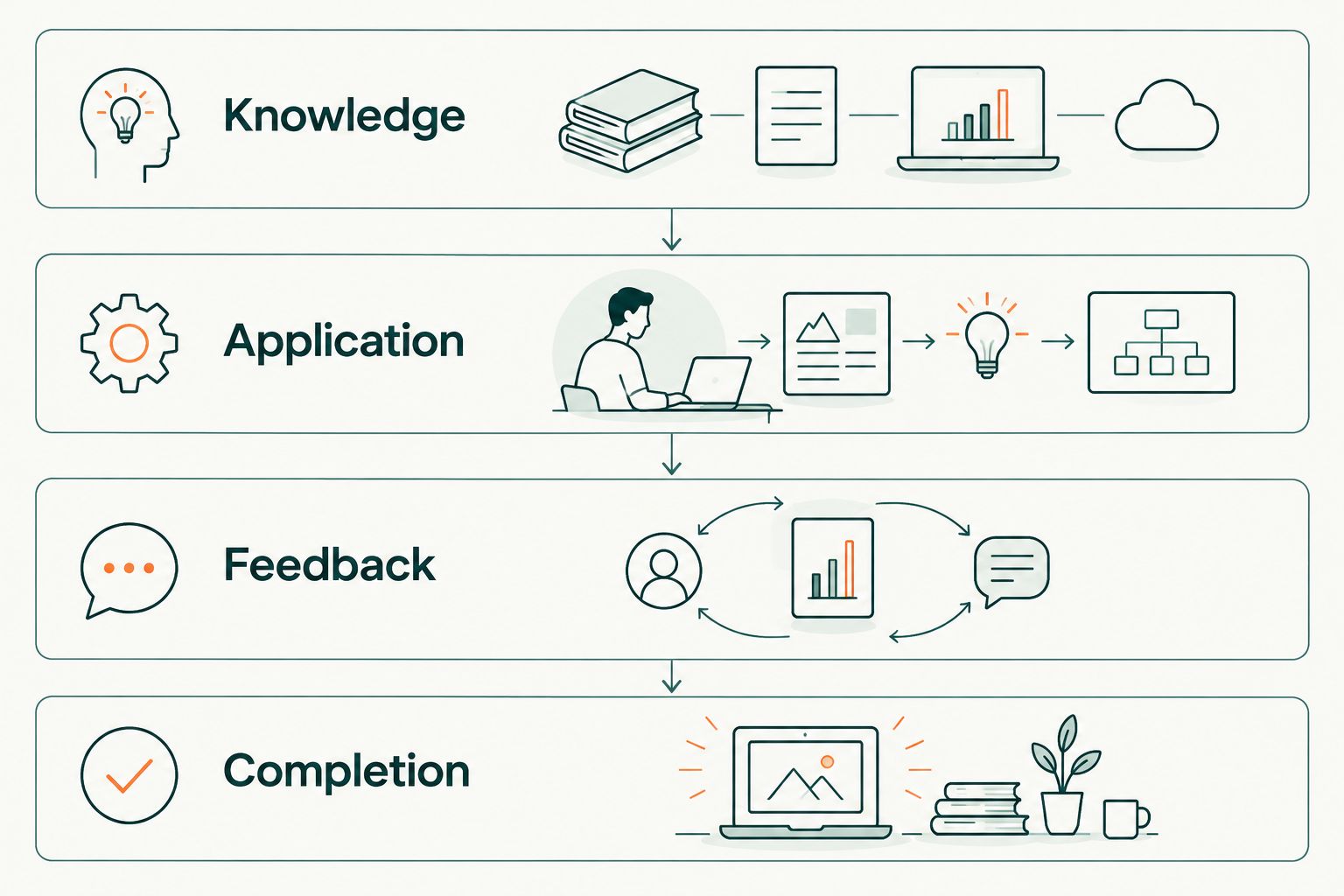
The distinction matters when you compare courses with similar topic lists. Ask for evidence of the assessment process, not a stronger interpretation of the course title.
What should you budget beyond tuition?
TeachPilates lists tuition at $497. That figure should not become your complete training budget until you have checked the requirements for your intended teaching route.
Build a separate checklist for any required practical instruction, equipment access, travel, assessments, independent credentials, CPR training, and insurance. Ask whether each item applies and obtain the actual charge before adding it to your budget.
Also confirm access terms. Self-paced study describes scheduling flexibility; it does not, by itself, establish lifetime access, unlimited tutor support, or an open-ended assessment deadline. Request those terms directly.
For your 2026 budget, separate confirmed tuition from additional requirements still being checked. Do not treat an unanswered question as an included benefit or an unavoidable extra expense.
Does online certification guarantee a teaching job?
No. Online Pilates certification does not guarantee employment, earnings, or acceptance by every studio. A course-enrollment decision and an employer’s hiring decision are separate.
Ask what happens after the employer reviews your training. If an audition, interview, experience requirement, or additional qualification applies, include that step in your plan rather than assuming the certificate removes it.
Is a course certificate the same as an independent credential?
No. A course certificate documents completion under the course provider’s requirements; an independent credential has its own requirements. Do not describe them as interchangeable or assume one includes the other.
If a job description names an independent credential, ask whether it is mandatory and confirm its eligibility requirements separately. A broad statement about certification does not answer that question.
Can you enroll before choosing an employer?
Yes, but choose a teaching scope first and check requirements with employers you would realistically approach. That gives your course comparison a practical purpose even before a specific vacancy exists.
Pause enrollment if a requirement essential to your intended role remains unresolved. Flexible study is useful, but it should support the teaching route you want rather than substitute for checking it.
FAQ
Will a studio accept my online Pilates certification?
Ask the studio to review the specific course for the specific teaching role. Provide the syllabus and assessment information, and request written clarification of any additional requirements.
How much is the TeachPilates online course?
TeachPilates lists tuition at $497 for its self-paced online course. Check separately whether your intended role requires additional training, credentials, or other expenses.
Can I teach Reformer classes after an online course?
Do not assume an online course qualifies you for a Reformer role. Confirm the course’s hands-on apparatus scope and compare it with the employer’s equipment-specific requirements.
Do I need teaching experience before enrolling?
Check the course’s current entry requirements before enrolling. Separately ask prospective employers about experience required for hiring, because course admission and job eligibility are different checks.
Does self-paced mean I get lifetime course access?
Self-paced does not establish lifetime access. Confirm the access period, assessment deadlines, extension terms, and support arrangements directly with the provider.
Should I ask about CPR and insurance before enrolling?
Yes, ask the intended employer which CPR and insurance requirements apply to the role. Establish who must arrange them and include any confirmed requirements in your preparation plan.
Does a Pilates course certificate include an independent credential?
Do not assume an independent credential is included with a course certificate. Verify any separate eligibility, application, and assessment requirements with the credentialing organization.
One last thing
Before paying tuition in 2026, ask the hiring contact to state the teaching scope they are evaluating. Approval for a mat-class application answers a narrower question than approval for all Pilates instruction.
Save that answer beside your course information. The most useful enrollment evidence is a clear match between the training you are buying and the work you intend to do.