
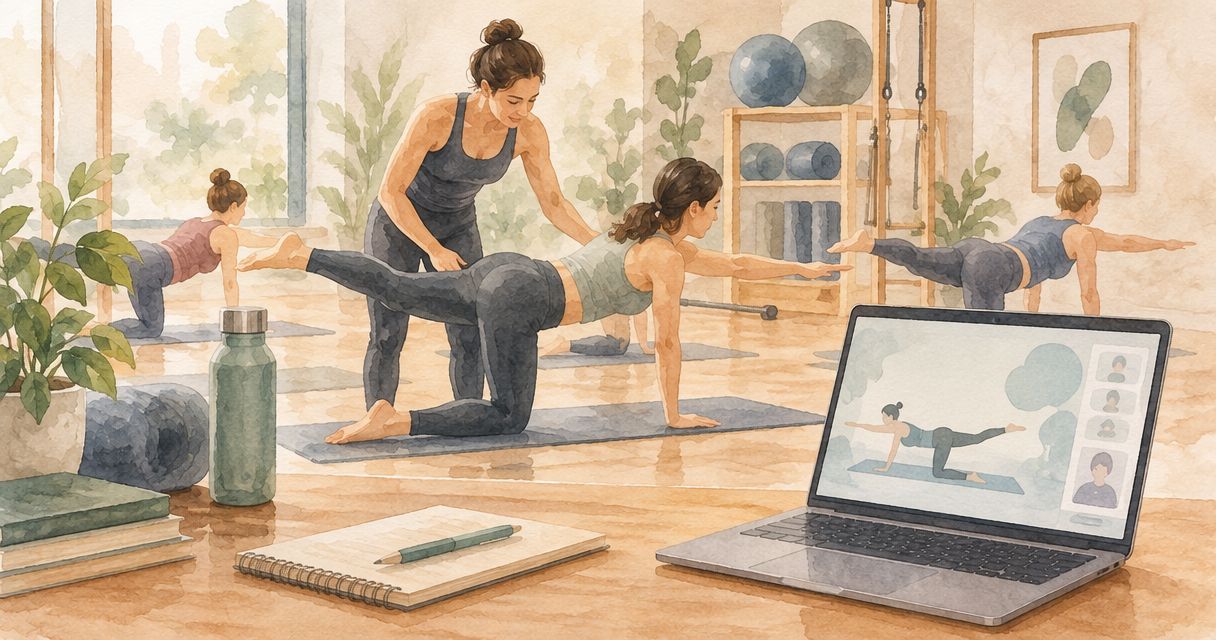
At $497, TeachPilates is a Pilates Instructor Academy alternative for flexible, self-paced online study covering anatomy, mat instruction, introductory Reformer concepts, cueing, and business skills. For 2026, choose this online route for teaching foundations; choose supervised mat training or dedicated apparatus training when your goal requires hands-on assessment.
- TeachPilates suits first-time instructors comparing Pilates Instructor Academy alternatives for self-paced online certification.
- Compare teaching scope and assessment, not just whether a course awards a certificate.
- Choose supervised mat training when you need direct feedback on your teaching.
- Choose dedicated apparatus training for hands-on Reformer instruction, rather than relying on introductory concepts.
Why this matters
Your course choice should follow the teaching you want to do. Learning to explain mat exercises, teaching a group, and managing someone on a Reformer involve different practical demands. A certificate title alone does not tell you how a program assesses those skills.
TeachPilates publishes this comparison and offers the online course discussed below. The recommendations distinguish verified course content from questions you should ask any provider, including Pilates Instructor Academy.
If Pilates Instructor Academy already matches your teaching goal, assessment needs, and schedule, keeping it on your shortlist makes sense. An alternative earns its place by solving a specific mismatch—not simply by appearing above another provider in a ranking.
Pilates Instructor Academy alternatives at a glance
For your 2026 shortlist, compare training routes before comparing provider names. The table includes Pilates Instructor Academy as the benchmark, without assigning unverified features or requirements to its courses.
| Option | Best for | Standout feature or selection criterion | How to compare with Pilates Instructor Academy |
|---|---|---|---|
| Pilates Instructor Academy | You, if its current course matches your intended teaching role | Confirm the exact course, teaching scope, and assessment format | Use the specific course you are considering as your baseline |
| TeachPilates | First-time instructors seeking flexible online foundations | Self-paced study covering anatomy, mat instruction, introductory Reformer concepts, cueing, and business skills | Compare the same subjects, assessment requirements, and access terms |
| Supervised mat training | Learners who want observed teaching and direct feedback | Select a course that explicitly includes supervised mat practice | Check whether both courses assess live teaching rather than assuming they do |
| Dedicated apparatus training | Learners preparing for equipment-based teaching | Select training with practical instruction on the apparatus you intend to teach | Compare equipment coverage and hands-on assessment separately from mat content |
These are different routes, not interchangeable credentials. A broad syllabus is useful, but you also need to know what you must demonstrate before completing the course.
1. TeachPilates: best for flexible online foundations
TeachPilates offers self-paced online Pilates instructor certification for practitioners preparing to teach. The curriculum covers anatomy, mat and introductory Reformer instruction, cueing, and business skills, bringing movement knowledge and teaching preparation into the same course.
Best for: You want a flexible starting point for becoming an instructor and are prepared to organize your own study and practice. No teaching background is required, but learning the material still needs deliberate work.
Where the online course shines
- Flexible study: Self-paced learning lets you organize coursework around your existing commitments.
- Teaching foundations: Anatomy and cueing connect exercise knowledge with how you explain movement.
- Mat-focused preparation: Mat instruction gives your learning a clear teaching context.
- Business content: The curriculum includes business skills alongside instruction.
Where the online course falls short
- Introductory Reformer content is not dedicated apparatus qualification. Do not treat exposure to equipment concepts as proof of hands-on competence.
- Self-paced study needs self-management. If you depend on scheduled classes to stay engaged, choose a format with that structure.
- A course certificate does not establish universal acceptance. Check the requirements of the studio or organization where you want to teach.
For a 2026 enrollment decision, separate curriculum coverage from assessment. Ask what practical work is required, how teaching is evaluated, and what happens if you need further feedback. Confirm access terms before arranging your study schedule; self-paced does not itself establish an access duration.
| Decision point | Online course described here | Pilates Instructor Academy comparison question |
|---|---|---|
| Study format | Self-paced and online | What is the format of the exact course you are considering? |
| Curriculum | Anatomy, mat, introductory Reformer, cueing, and business skills | Which of these subjects does that course explicitly include? |
| Apparatus scope | Introductory concepts, not a substitute for dedicated hands-on qualification | What practical equipment instruction and assessment are required? |
| Intended fit | Aspiring instructors seeking online foundations | Does the course match your intended teaching role? |
Verdict: Buy if you want self-paced foundations and have checked that the course matches your intended teaching scope. Wait if hands-on apparatus qualification is your immediate requirement.
2. Supervised mat training: best for direct teaching feedback
Supervised mat training is the route to investigate when you want someone to watch you teach. Select a course that explicitly includes observed practice and feedback rather than assuming every in-person course provides both.
Best for: You learn through live correction or want structured opportunities to rehearse cueing, pacing, and modifications. This route fits a mat-teaching goal without confusing it with equipment training.
Where supervised mat training shines
- Observed delivery: A tutor can respond to how you explain and demonstrate an exercise.
- Practice with people: You can select training that includes teaching participants rather than only watching lessons.
- External structure: Scheduled sessions give your preparation fixed commitments.
Where supervised mat training falls short
- Mat scope is not apparatus scope. Mat training alone does not establish Reformer competence.
- Attendance restricts flexibility. Check whether required sessions fit your work and personal commitments.
- Feedback needs definition. An in-person label does not establish how much individual teaching feedback you receive.
Before choosing this alternative to Pilates Instructor Academy, request an example of how a practical teaching assessment works. Ask whether the assessor watches a full teaching sequence, how feedback is delivered, and whether you can address identified weaknesses.
Use the guide to observation versus teaching hours to separate time spent watching instruction from time spent delivering it. Both activities have a purpose, but they are not the same evidence of teaching ability.
Verdict: Buy a supervised mat course when observed teaching is an explicit requirement and its attendance schedule works for you. Skip courses whose practical assessment remains unclear.
3. Dedicated apparatus training: best for equipment-based teaching
Dedicated apparatus training is the route to assess when your goal is to teach on a Reformer or other Pilates equipment. Choose a course by its stated apparatus coverage, practical access, and assessment—not by whether its general description mentions equipment.
Best for: You want equipment-based teaching to be part of your professional scope and need training specifically organized around that work.
Where dedicated apparatus training shines
- Equipment-specific learning: Select a course that addresses the apparatus you intend to teach.
- Practical preparation: Look for supervised setup, instruction, and teaching assessment on the equipment.
- Clearer scope matching: You can compare course requirements directly with the role you want.
Where dedicated apparatus training falls short
- Equipment access needs planning. Online learning does not itself provide a Reformer to practice on.
- One apparatus is not every apparatus. Check exactly what the course includes.
- Scheduling can be restrictive. Confirm practical-session and assessment arrangements before enrolling.
In 2026, ask the provider how equipment access works before committing to this route. Establish where you will practice, who will supervise, and what the final practical assessment requires. Introductory Reformer lessons are not an answer to those questions.
Verdict: Buy dedicated apparatus training when equipment-based teaching is your goal and practical access is arranged. Wait if you cannot yet meet its practice requirements.
Why people consider switching from Pilates Instructor Academy
A useful switching decision starts with your requirements, not allegations about another provider. Use these reasons to test whether an alternative genuinely fits you better.
- Your schedule needs a different format. Compare self-paced study with required live attendance and assessment appointments.
- Your teaching goal has changed. Moving from mat instruction toward apparatus teaching calls for a fresh scope check.
- You need observed feedback. Establish whether a prospective course includes the teaching supervision you want.
- Your intended workplace has specific requirements. Ask what training and assessments it accepts before choosing a replacement.
- You need clearer completion terms. Confirm assessment, access, and any additional requirements before paying.
None of these points establishes a weakness in Pilates Instructor Academy. Each is a reason to compare its specific course with another route using the same questions.
Switch only when the alternative meets a requirement that matters to your teaching plan. Changing providers without identifying that requirement leaves the original decision unresolved.
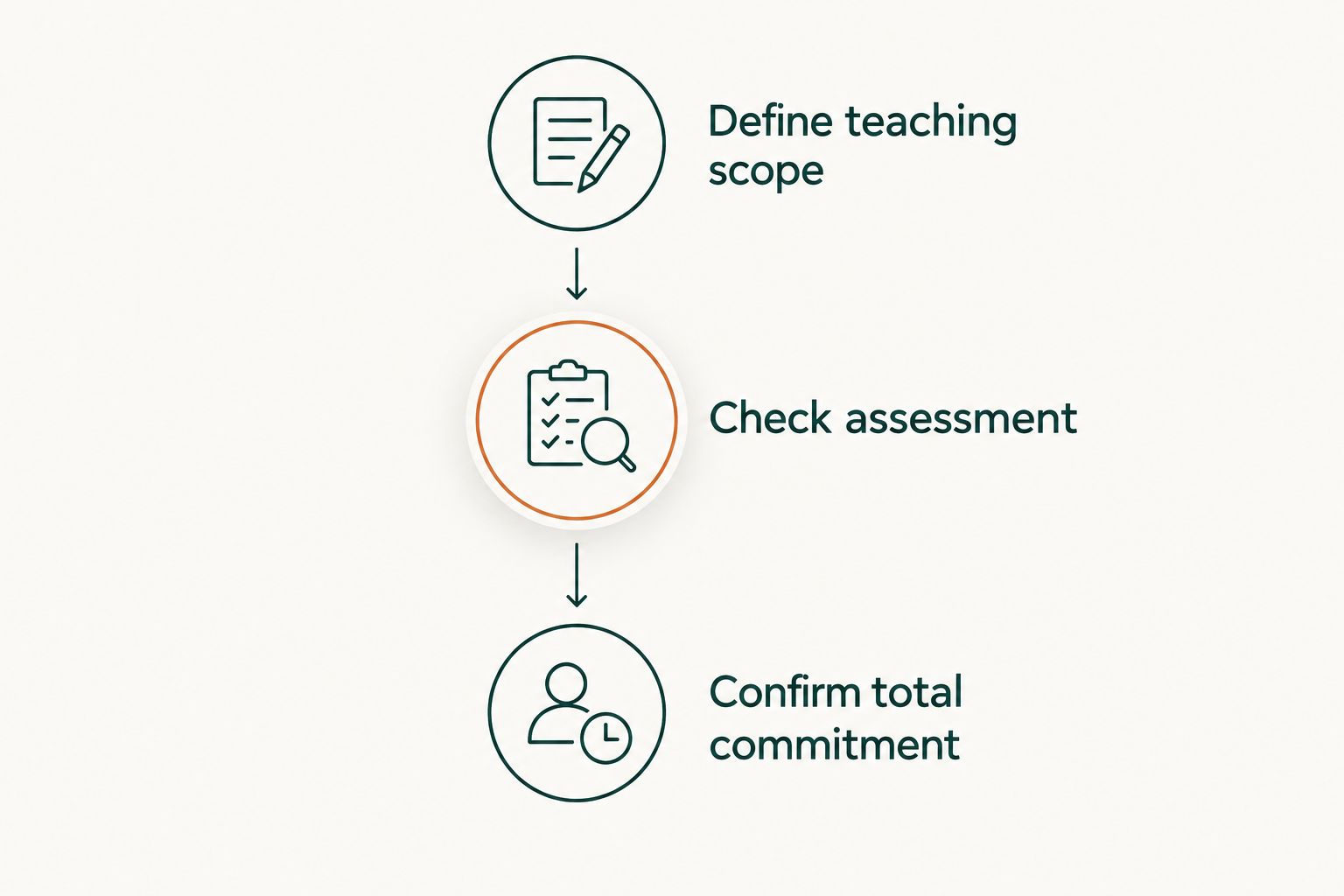
Make your 2026 enrollment decision in three steps
Define teaching scope
Write down what you want to teach: mat classes, equipment-based sessions, or both. Then ask a prospective employer or teaching venue what it requires for that role. Do not substitute a course's promotional description for the venue's answer.
Check assessment
Ask how the course evaluates anatomy knowledge, exercise explanation, cueing, and practical teaching. Written questions and observed teaching answer different questions about your preparation. Confirm what you must submit and how feedback or reassessment works.
Confirm total commitment
Review tuition alongside any required assessment charges, equipment access, travel, insurance, or separate credentials. These are items to check, not claims that every provider charges for them. Also confirm course-access limits and the time commitments attached to practical work.
A useful provider response should let you explain the course requirements back in plain language. If you still cannot describe what you will learn, demonstrate, and receive, ask for clarification before enrolling.
Explore your online training route
Review self-paced study covering anatomy, mat instruction, cueing, and business skills.
When staying with Pilates Instructor Academy makes sense
Stay with Pilates Instructor Academy if its current course matches your teaching scope, gives you the assessment you need, and fits your schedule. A different provider name is not a benefit by itself.
If you have already started training, check transfer arrangements before changing courses. Ask the receiving provider what it accepts and what you would need to repeat. Do not assume completed lessons or practice records automatically transfer.
Keep the course that fits your requirements; change only for a clearly defined improvement. That is a stronger decision than choosing a provider solely because it appears on an alternatives page.
FAQ
What's the best Pilates Instructor Academy alternative for self-paced study?
TeachPilates is an option for self-paced online foundations covering anatomy, mat instruction, introductory Reformer concepts, cueing, and business skills. Choose it when that scope matches your goal, rather than treating introductory apparatus content as dedicated hands-on qualification.
Is online Pilates certification better than in-person training?
Online study fits learners who need schedule flexibility; supervised in-person training fits learners who need direct teaching feedback. Compare the actual assessment requirements, because delivery format alone does not establish what a course evaluates.
Can I teach Reformer Pilates after a course with introductory Reformer lessons?
Introductory Reformer lessons should not be treated as dedicated hands-on apparatus qualification. Check the practical training, assessment, and employer requirements for the equipment-based role you want.
Do I need teaching experience before starting this online course?
No teaching background is required for the online course described here. That entry condition does not remove the need to study, practice cueing, and prepare for assessment.
Does a Pilates course certificate include an independent credential?
Do not assume a provider's course certificate includes an independent credential. Confirm whether any separate application, eligibility requirements, or examination applies to the credential you want.
How do I compare Pilates course costs fairly?
Compare the total commitment for the same teaching scope, not tuition alone. Ask about required assessments, practical access, travel, and separate credentials without assuming every course has those additional costs.
Should I leave Pilates Instructor Academy for another course?
Change courses only when another option better meets a defined requirement, such as study format, observed teaching, or apparatus scope. If the current course already meets your needs, staying is a reasonable choice.
One last thing
Before enrolling in 2026, ask your intended teaching venue a specific question: what training and practical assessment would you expect before letting me teach this class? The answer gives you a concrete standard for comparing courses.
For TeachPilates or any alternative, make that check before—not after—you choose your training route. You are selecting preparation for a teaching role, not just a certificate to display.