At $497, TeachPilates is the best fit here for flexible, self-paced study covering mat-teaching foundations and introductory Reformer concepts. This 2026 guide compares that course with in-person mat, dedicated Reformer, and full-apparatus training routes so you can choose by teaching scope—not tuition alone.
- Pilates certification programs ranked by cost: TeachPilates offers $497 self-paced study with mat foundations and introductory Reformer concepts.
- Choose in-person mat training when supervised practice matters more to you than study flexibility.
- Choose dedicated Reformer training when apparatus teaching is your immediate goal; introductory concepts are not hands-on qualification.
- Compare written total costs, assessment requirements, equipment access, and employer expectations before enrolling.
Why this matters
A cheaper course is not better value if it prepares you for a different teaching role. Equally, full-apparatus training is not the right purchase simply because it covers more equipment than you currently intend to teach.
Your first decision is what you want to teach; your second is which training route prepares you for it. That order keeps your budget tied to a useful outcome rather than a certificate title.
Publisher disclosure: This guide is published by the online course provider featured first. The other entries are training formats, not named competitors, and their position does not establish a market-wide tuition ranking.
What makes the best-value Pilates certification?
Use these criteria before comparing enrollment pages in 2026:
- Teaching scope: Separate mat instruction, introductory apparatus content, dedicated Reformer training, and full-apparatus education.
- Total commitment: Include tuition, required assessments, practice arrangements, equipment access, and travel where applicable.
- Feedback: Find out whether someone observes your teaching and explains what needs correction.
- Assessment: Check what you must demonstrate, not just which lessons you must finish.
- Study fit: Match self-paced learning or scheduled attendance to the time you can actually protect.
- Next-step acceptance: Ask your intended studio or employer which training and practical evidence it expects.
Request 2 written course quotes for the same teaching goal. This is a comparison step, not an industry requirement: matching scope makes the quotes useful.
Training options at a glance
The order below starts with flexible foundational study, then moves toward routes selected for supervised mat practice or apparatus-specific goals. It is not a claim that every provider follows the same price order.
| Option | Best for | Standout feature | Key limitation |
|---|---|---|---|
| TeachPilates online course | Flexible foundational study | Self-paced anatomy, mat instruction, cueing, business skills, and Reformer content | Introductory Reformer concepts are not dedicated hands-on apparatus qualification |
| In-person mat teacher training | Supervised mat practice | A classroom setting for practicing mat instruction | Attendance and travel must fit your schedule; verify actual feedback arrangements |
| Dedicated Reformer teacher training | A Reformer-specific teaching goal | Training focused on the apparatus you intend to teach | Equipment access and practical requirements need checking |
| Full-apparatus teacher training | A teaching goal spanning multiple apparatus | Broader equipment scope | Additional scope is unnecessary if your immediate goal is mat-only teaching |
Do not turn this table into a cheapest-to-most-expensive claim. Format alone does not establish a provider's total cost, assessment standard, or suitability for your intended workplace.
1. TeachPilates: best for flexible foundational study
The $497 self-paced online course covers anatomy, mat and reformer instruction, cueing, and business skills. For your enrollment decision, distinguish its mat-teaching foundations and introductory Reformer concepts from dedicated hands-on apparatus qualification.
TeachPilates is best for aspiring instructors who want self-paced online Pilates certification focused on teaching foundations. You can choose this route for its study format without treating it as a substitute for every practical training pathway.
Course pros:
- Self-paced study lets you organize learning around your existing commitments.
- Anatomy and cueing address the knowledge behind explaining movement.
- Mat instruction connects the curriculum to a defined teaching format.
- Business skills address part of preparing for a teaching career.
Course cons:
- Online foundational study is not the same as supervised apparatus teaching.
- Introductory Reformer content does not establish dedicated Reformer qualification.
- Enrollment does not guarantee a job or acceptance by every studio.
Tuition: $497. Before paying, confirm the current access period, assessment process, practical feedback arrangements, and any separately charged requirements.
Best for: You want a flexible starting route and understand the difference between course completion and workplace-specific teaching expectations.
Verdict: Buy for self-paced foundations; hold if your immediate requirement is hands-on apparatus qualification.
2. In-person mat training: best for supervised mat practice
In-person mat teacher training puts your learning in a shared physical setting. Choose a course that explicitly includes observed practice and feedback rather than assuming classroom attendance guarantees either.
This route suits you when your priority is explaining exercises aloud, watching other trainees teach, and receiving correction while you practice. Check how the provider assesses those skills before treating the format as an advantage.
In-person mat training pros:
- A scheduled class creates a defined study commitment.
- An observed teaching component gives you a way to receive practical correction.
- Mat-focused training keeps the learning scope aligned with mat classes.
In-person mat training cons:
- Fixed attendance is less flexible than self-paced study.
- Travel and time away from other commitments belong in your budget.
- Mat preparation does not establish apparatus-specific teaching competence.
Ask who watches your practice, whether feedback is individual, and what happens if your teaching assessment needs improvement. The answers matter more than photographs of a busy training room.
Best for: You want mat-teaching preparation with scheduled, supervised practice and can attend the required sessions.
Verdict: Buy when observed mat teaching is an explicit part of the course; hold when feedback arrangements are unclear.
3. Dedicated Reformer training: best for apparatus-specific goals
Dedicated Reformer training is the route to investigate when your intended teaching role centers on the Reformer. Compare the practical curriculum, supervised instruction, equipment arrangements, and assessment—not simply whether a course mentions Reformer exercises.
A description of springs, carriage movement, or exercise setup is not equivalent to demonstrating safe, effective instruction on the equipment. Ask how you will practice, who will supervise you, and what you must show at assessment.
Dedicated Reformer training pros:
- The training focus matches a Reformer-specific teaching goal.
- Practical equipment work connects instruction to the apparatus you intend to use.
- A defined practical assessment gives you a concrete standard to prepare for.
Dedicated Reformer training cons:
- You need a workable equipment-access arrangement for required practice.
- A Reformer qualification does not automatically cover other apparatus.
- Travel, practice access, or assessment arrangements can add separate commitments.
Before enrolling in 2026, confirm whether equipment practice happens at the training venue, at another approved location, or through arrangements you must organize yourself. Get the answer in writing.
Best for: You intend to teach Reformer sessions and want training built around that specific apparatus.
Verdict: Buy for a defined Reformer teaching goal; skip as an automatic upgrade to mat foundations.
4. Full-apparatus training: best for a broad equipment scope
Full-apparatus teacher training is the route to compare when you intend to teach across multiple pieces of Pilates equipment. Read the actual apparatus list: a broad course title does not tell you precisely what instruction or assessment is included.
This is a scope decision before it is a spending decision. You need a reason to study each part of the curriculum, plus a realistic plan to complete the associated practice.
Full-apparatus training pros:
- A broader curriculum suits a teaching goal spanning multiple apparatus.
- One training pathway can connect instruction across different equipment.
- Published apparatus-specific assessments help you understand the expected teaching scope.
Full-apparatus training cons:
- Broader content is unnecessary for an immediate mat-only goal.
- Practice arrangements must cover the equipment included in the course.
- Transferring previous coursework requires explicit provider approval, not an assumption.
Ask whether each apparatus component is required, separately assessed, or available as a later module. Also check whether prior training changes your requirements before paying for overlapping content.
Best for: You have a clear reason to prepare for teaching across multiple apparatus and can support the practical commitment.
Verdict: Buy for an established broad-scope goal; wait if you have not chosen your first teaching format.
Build your 2026 training budget before enrolling
Create 1 budget sheet for each shortlisted route. Record confirmed charges separately from questions awaiting an answer; an unanswered fee question is not a zero-cost item.
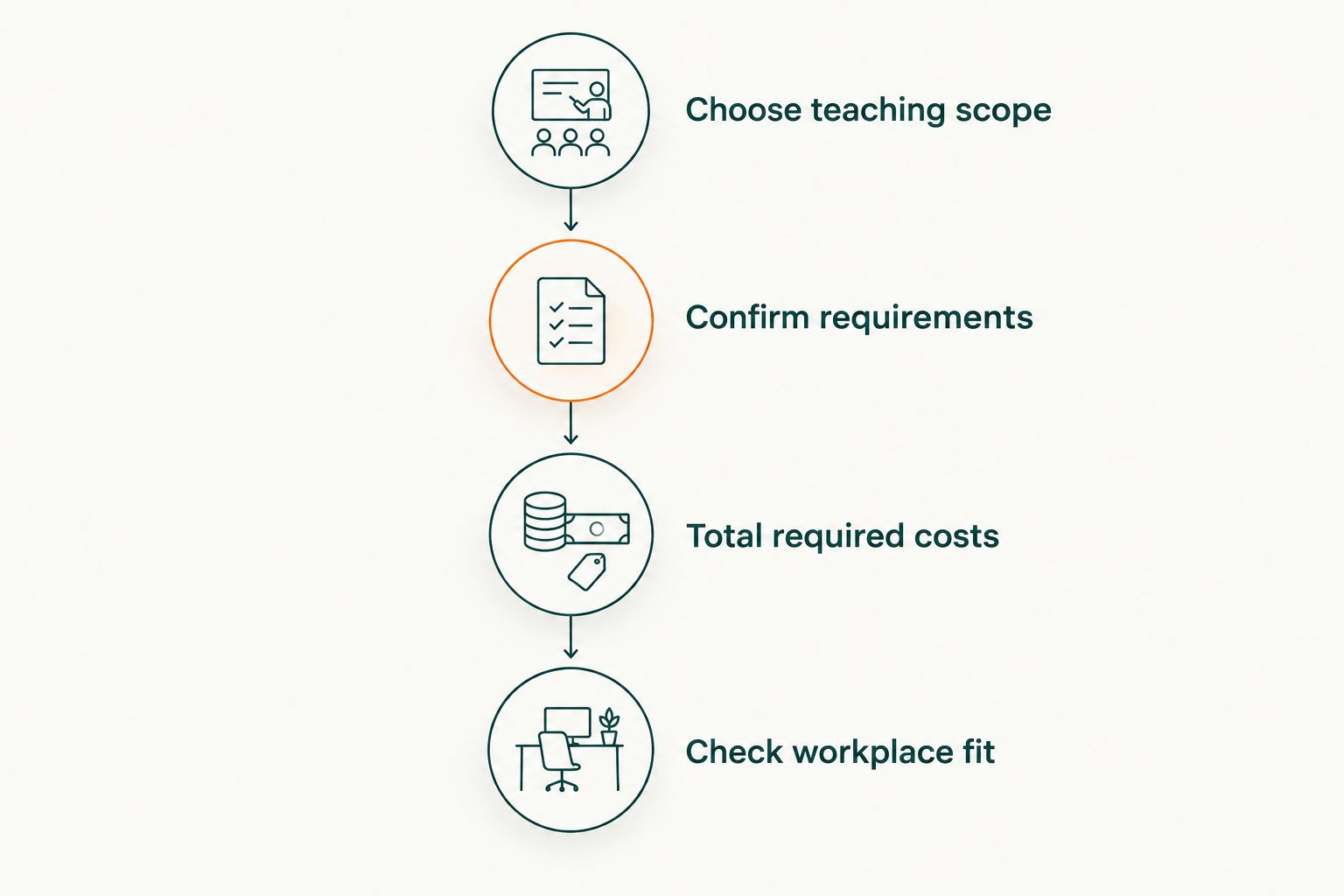
Use these four steps to make the comparison useful:
- Choose teaching scope. Write down whether your immediate goal is mat instruction, Reformer teaching, or multiple apparatus.
- Confirm requirements. Ask about prerequisites, assessments, practice, access deadlines, and completion conditions.
- Total required costs. Record tuition and every required separate charge the provider identifies.
- Check workplace fit. Ask your intended workplace what training, practical evidence, insurance, and CPR preparation it expects.
Read the guide to fees to check beyond tuition when completing your budget. Keep optional purchases separate so they do not obscure the required commitment.
For practical preparation, arrange 1 practice-teaching session in which someone listens to your instructions and tells you what was unclear. This is a suggested learning exercise, not a substitute for a provider's supervised practice or assessment requirements.
How these options are ranked
This 2026 guide prioritizes fit for a first-time instructor: teaching scope, study flexibility, feedback, assessment, and the full enrollment commitment. The online course comes first for flexible foundational study; the other routes take priority when supervised mat practice or apparatus teaching is your main requirement.
No named competitor is assigned an unverified price or credential claim. Rank like-for-like written quotes by total required cost only after confirming that the training prepares you for the same teaching goal.
Which certification route should you choose?
Choose TeachPilates at $497 if you want self-paced foundational study and its curriculum matches your immediate learning goal. Choose another route when you specifically need scheduled supervised mat practice, dedicated Reformer preparation, or broader apparatus training.
Before enrolling, explain your choice in one sentence: “I want to teach this format, and this course prepares me for that scope.” If the sentence depends on an assumption about recognition, assessment, or studio acceptance, resolve it first.
Review your training starting point
Explore the $497 self-paced course, then confirm its scope and requirements against your teaching goal.
FAQ
What's the best way to compare Pilates certification programs by cost?
Compare programs with the same teaching scope, then rank their written total required costs. Include assessments, required practice arrangements, equipment access, and travel where applicable rather than comparing tuition alone.
How much is the TeachPilates online course?
The stated tuition is $497 for the self-paced online course. Its curriculum covers anatomy, mat and reformer instruction, cueing, and business skills; distinguish introductory Reformer concepts from dedicated hands-on apparatus qualification.
Is online Pilates certification better than in-person training?
Online study fits a need for flexible learning; in-person training fits a need for scheduled attendance and supervised practice when that practice is included. Compare actual feedback and assessment arrangements instead of choosing by delivery format alone.
Does mat certification qualify me to teach Reformer classes?
Mat certification alone does not establish Reformer-specific teaching competence. Check the requirements of your intended workplace and compare dedicated apparatus training before treating mat preparation as sufficient.
Do I need teaching experience before starting?
Teaching experience is not required for the featured online course. Check each alternative provider's prerequisites separately, including any expectations for Pilates practice or anatomy study.
Does finishing a course include an independent credential?
Do not assume an independent credential is included with course completion. Ask which organization issues the certificate and whether any separate credential requires another application or assessment.
Will a Pilates certificate guarantee studio work?
A Pilates certificate does not guarantee employment or acceptance by every studio. Ask your intended workplace about its training expectations, practical audition, insurance, and CPR requirements before enrolling.
One last thing
Your most useful enrollment question is not “How much content do I get?” It is “What must I demonstrate before I pass?”
For a 2026 enrollment decision, ask each shortlisted provider to describe the final teaching assessment in plain language. That answer connects the curriculum you buy with the teaching skills you are expected to demonstrate.