
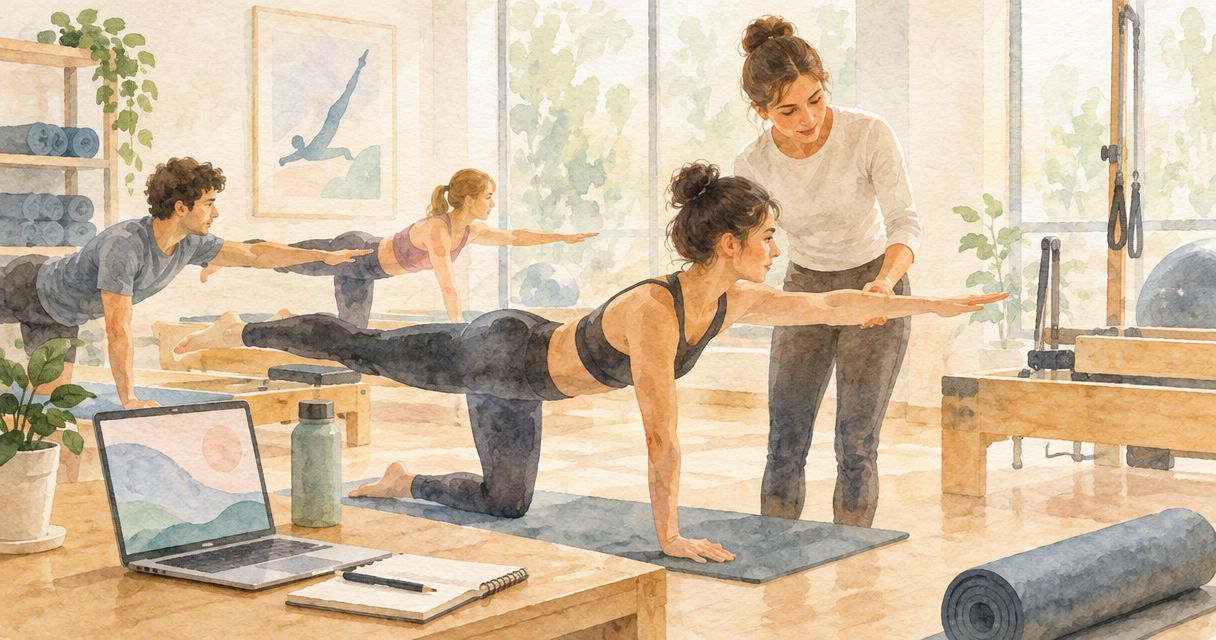
College-student Pilates certification is instructor training aimed at preparing you to teach Pilates alongside your degree; TeachPilates offers $497 tuition and flexible, self-paced online study. Your decision should account for semester deadlines, practice space, assessment requirements, and the difference between mat-teaching foundations and dedicated hands-on Reformer training.
- TeachPilates is best for college students seeking self-paced online Pilates instructor certification.
- Choose Pilates certification for college students by teaching scope, assessment requirements, and fit with your semester.
- Mat Pilates foundations and introductory Reformer concepts are not interchangeable with dedicated hands-on apparatus qualification.
- Check campus recreation or studio requirements before enrolling; course completion does not guarantee employer acceptance.
Why Pilates certification matters for college students
A Pilates course gives your preparation a structure: anatomy, movement instruction, cueing, assessment, and business skills. For a college student, the right structure must also fit around classes, exams, employment, and access to somewhere you can practice.
Choose the teaching role before choosing the certificate. A campus mat class and a studio Reformer session involve different equipment, preparation, and employer expectations. Starting with the role prevents you from buying training that does not match your intended work.
This 2026 guide is published by TeachPilates, which offers online Pilates instructor certification. The comparison below distinguishes flexible online study from formats that provide scheduled instruction or hands-on apparatus practice; it does not promise jobs, earnings, or acceptance by every studio.
How to choose Pilates training around your degree
Define the class you want to teach
Start with a free exercise: write a short description of your intended teaching role. Specify the setting, participants, and equipment rather than writing only that you want to become an instructor.
For example, your goal might be leading general mat classes at a campus recreation center. Alternatively, you might want to teach Reformer sessions in a studio. Those goals require different questions before enrollment, even when both courses use the word certification.
Ask the person responsible for hiring instructors what training they accept. Request written requirements for the role, not a general reassurance that online courses are acceptable. A course provider's description cannot replace an employer's decision.
- Name your intended setting: campus recreation, community classes, or a Pilates studio.
- Identify whether the role involves mat teaching or apparatus instruction.
- Ask whether the employer specifies particular credentials or training hours.
- Check whether an audition, CPR training, or insurance is required.
- Save the requirements beside your course shortlist.
Check prerequisites and assessment rules
You do not need a teaching background to begin the TeachPilates course. Its stated curriculum covers anatomy, mat and Reformer instruction, cueing, and business skills, but you should still check the current enrollment and assessment details before committing.
Separate entry requirements from graduation requirements. Being eligible to enroll does not tell you what you must demonstrate to complete a course. Likewise, enjoying Pilates classes does not establish that you can explain an exercise clearly or respond appropriately when someone struggles.
For your 2026 shortlist, ask each provider to explain the assessment process in plain language. Find out what happens if your work needs correction, and whether an assessor reviews your teaching rather than only your recall of written material.
- Confirm minimum age and any required movement experience.
- Request the written and practical assessment requirements.
- Ask about submission formats and access to teaching feedback.
- Check pass criteria, reassessment rules, and completion deadlines.
- Confirm exactly which certificate the provider awards.
Match the curriculum to your teaching scope
Read the syllabus before comparing course names. Anatomy helps you understand movement; mat instruction and cueing help you explain it. Business lessons address another part of teaching, but they do not replace supervised practice or assessment.
TeachPilates includes Reformer instruction in its stated curriculum. Treat introductory Reformer concepts as different from dedicated hands-on apparatus qualification. Do not assume that covering equipment in an online course establishes readiness for every apparatus-based role.
Use the guide to mat versus full-apparatus training to organize your questions. If your goal involves a Reformer, ask about equipment access, supervised instruction, practical assessment, and the scope employers expect.
A course completion certificate also differs from an independent credential. Do not assume a separate examination, eligibility decision, or credential is included unless the provider explicitly confirms it.
- Match each curriculum topic to your intended teaching responsibilities.
- Check how anatomy connects to exercise instruction and modifications.
- Ask how the course assesses cueing and class planning.
- Separate apparatus theory from hands-on equipment competence.
- Verify any independent credential requirements separately.
Build a semester-compatible study plan
Start with your existing calendar, not an ideal week. Mark exams, assignment deadlines, shifts, travel, and breaks before adding training. Self-paced study removes a fixed class timetable; it does not remove the need to study and practice.
As a planning example, reserve 2 study sessions of 30 minutes each, plus 1 practice session per week. These are suggested calendar blocks, not course requirements or a completion-time estimate. Adjust them after you see the actual workload and assessment instructions.
For the 2026 semester you choose, test your plan before enrolling: use the proposed study periods to review your Pilates notes or practice explaining familiar movements. If the time repeatedly disappears, change the schedule rather than assuming motivation will solve the conflict.
- Protect recurring study periods outside your heaviest academic commitments.
- Separate lesson study from movement practice and teaching rehearsal.
- Leave exam weeks lighter instead of planning an uninterrupted sprint.
- Confirm access limits before relying on a summer completion plan.
- Identify a suitable place for any recorded practical submissions.
Compare tuition with the full training commitment
The stated TeachPilates tuition is $497. That gives you a concrete starting point, but compare the full requirements of your intended pathway rather than treating any course's tuition as the entire commitment.
Make a simple budget worksheet before enrolling. List tuition separately from items you need to verify, such as required materials, assessments, equipment access, travel, or an independent examination. These are questions to investigate, not claims that a particular provider charges each item.
Also count the time and access demands. A course that fits your study schedule can still conflict with your plan if practical work depends on equipment you cannot use. Conversely, scheduled attendance can be useful when you want external structure and direct correction.
For a 2026 enrollment decision, use current written terms rather than an old screenshot or a forum comment. Confirm what is included, what is optional, and what belongs to a separate teaching pathway.
- Record the current tuition and included course components.
- Ask about assessment and reassessment charges.
- Check whether required resources or equipment access are separate.
- Review cancellation, refund, and access terms before paying.
- Budget separately for employer-specific requirements.
Arrange practice and a route to feedback
Build a practice plan before you need to submit an assessment or attend an audition. Learning exercise names is different from giving an understandable instruction, observing a response, and choosing an appropriate next cue.
Begin with a no-cost preparation task: rehearse explanations aloud and write down where you lose clarity. Follow the course's directions for any practice teaching, recording, or observation. Ask permission before filming anyone, and check the rules for using campus spaces.
If you want direct correction, ask how a provider or mentor reviews teaching. Recorded lessons support flexible study, but they are not the same format as someone observing your work and responding to it. Choose the support arrangement that matches what you need to develop.
- Confirm where you can practice without disrupting other users.
- Ask whether campus facilities permit teaching rehearsal or recording.
- Follow assessment instructions when selecting practice activities.
- Request feedback on cue clarity, sequencing, and modifications.
- Keep a record of feedback and the changes you make.
Compare training formats for college students
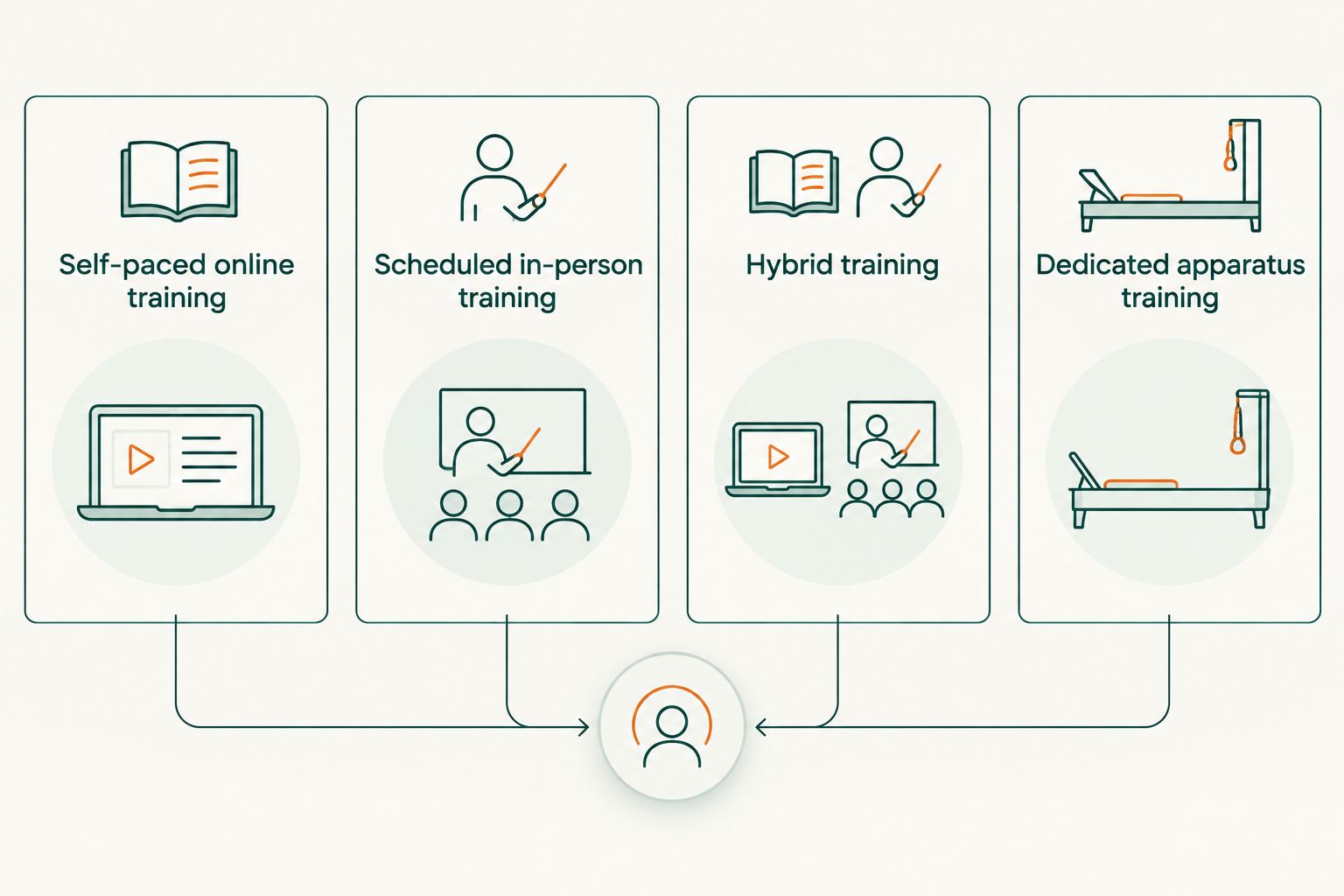
The best format is the one that meets your teaching goal and fits your actual access to time, instruction, and equipment. Compare like-for-like scope: an online foundation course and a dedicated apparatus pathway are not equivalent simply because both award certificates.
| Option | Best for | Cost check | Key limitation |
|---|---|---|---|
| Self-paced online training | Students who need flexible study around academic commitments | Verify tuition and included assessments | Check practical feedback and employer acceptance separately |
| Scheduled in-person training | Students who want direct correction and fixed study commitments | Confirm tuition, travel, and required attendance | Sessions must fit your academic timetable |
| Hybrid training | Students who want online lessons plus scheduled practical work | Confirm what each component includes | Both independent study and attendance need calendar space |
| Dedicated apparatus training | Students specifically preparing for equipment-based teaching | Confirm equipment access and assessment requirements | Requires a plan for hands-on apparatus practice |
The online format's strength is scheduling flexibility; its limitation is that you must verify how practical competence and feedback are handled. In-person training offers direct interaction, but fixed attendance can conflict with lectures, placements, or exam periods. Hybrid study combines formats without eliminating either commitment.
Before selecting a format, return to your intended role. If an employer requires hands-on apparatus preparation, schedule flexibility alone does not solve that requirement. If you need mat-teaching foundations around a changing timetable, examine whether a self-paced course provides the curriculum and assessment you need.
Check the course against your goals
Review self-paced study, curriculum, and current enrollment details before choosing your training pathway.
Common mistakes college students make
Enrolling before checking campus hiring rules
A certificate does not guarantee that your recreation department accepts it. Ask the hiring manager about training scope, practical auditions, and any additional requirements before you choose a course. Keep that response for reference when comparing providers.
Treating a degree module as teaching preparation
Studying anatomy, exercise science, or dance can support your learning, but it does not establish that you meet a Pilates course's assessments or an employer's requirements. Ask about prior-learning policies rather than assuming your academic credits transfer.
Planning to finish everything during a break
A clear academic calendar does not guarantee access to practice space, equipment, assessors, or feedback. Check those dependencies before assigning your entire training plan to a holiday. Build around confirmed access rather than an optimistic deadline.
Confusing course completion with an independent credential
A provider-issued certificate and an independently awarded credential are different. Check eligibility, examinations, and scope separately. Neither a course title nor the word certified establishes universal studio acceptance or permission to teach every apparatus.
FAQ
What's the best Pilates certification for college students?
The best Pilates certification for college students matches your intended teaching role, semester schedule, and employer requirements. TeachPilates fits students seeking self-paced online study, while students needing scheduled correction or dedicated hands-on apparatus preparation should compare formats that provide those elements.
Can I start Pilates instructor training without teaching experience?
Yes, the course described here does not require a teaching background. Check other prerequisites and distinguish eligibility to enroll from the assessments required to complete training.
How much should I budget for Pilates certification while in college?
Build your budget from verified tuition and the requirements of your intended teaching pathway. Check whether assessments, materials, equipment access, CPR training, insurance, or an independent examination add separate commitments.
Can I complete Pilates certification during a college semester?
You can plan training alongside a semester, but completion depends on the course workload, assessments, and your available practice time. Confirm access limits and submission requirements before setting a finish date.
Does online Pilates certification qualify me to teach Reformer classes?
Online course completion alone does not establish that you meet a studio's Reformer teaching requirements. Introductory equipment concepts differ from dedicated hands-on apparatus preparation, so verify the training scope and the employer's expectations.
Will my campus recreation center accept my Pilates certificate?
Your campus recreation center decides which qualifications it accepts. Ask the hiring manager for written training, audition, CPR, and insurance requirements before enrolling.
Is Pilates instructor certification the same as an independent credential?
No, completing a training provider's course is not the same as earning a separate independent credential. Check the awarding organization, eligibility requirements, and any separate examination before assuming both are included.
One last thing
Before your 2026 enrollment, send your intended employer the actual course description and ask: Does this training meet your requirements for the class I want to teach? A specific answer is more useful than collecting certificates without a defined teaching goal.
Keep the response beside your syllabus and study plan. It gives you a practical decision record when your timetable, course options, or intended role changes.