

For full-time workers, online Pilates teacher training is remote instructor education designed to help you build teaching skills around your job. TeachPilates offers $497 tuition and flexible, self-paced study; this guide explains how to compare training scope, protect practice time, and choose a course without confusing online study with hands-on apparatus qualification. For a broader step-by-step path, see how to become a Pilates instructor.
- TeachPilates is best for aspiring instructors seeking self-paced online Pilates teacher training alongside full-time work.
- Compare mat instruction, introductory Reformer concepts, assessments, and practical feedback before choosing a Pilates certification.
- Protect separate time for studying, movement practice, and teaching rehearsal; watching lessons alone does not cover all three.
- Confirm the qualification your intended studio requires before enrolling; course completion does not guarantee studio acceptance.
Why online training matters for full-time workers
Your main constraint is fitting learning and physical practice around a workweek without letting either disappear. A fixed class schedule offers structure, but it also creates appointments you must attend; self-paced study lets you choose when you complete lessons.
That distinction matters when comparing online Pilates certification versus in-person training. Flexibility solves a scheduling problem, not every training problem. You still need to understand movement, practice cueing, and establish what your assessment actually measures.
TeachPilates is best for aspiring instructors seeking self-paced online Pilates teacher training alongside full-time work. This guide is published by TeachPilates, which offers the course discussed here; compare its format against the supervision and apparatus training your teaching goal requires.
For a 2026 enrollment decision, separate three questions: Can you fit the course into your week? Does its curriculum match your intended teaching role? How will you demonstrate practical teaching ability?
How to fit instructor training around your job
Define the teaching role you want
Start with the class you want to teach, not the certificate you want to display. Mat classes, Reformer sessions, and instruction across multiple apparatus require different preparation. A course mentioning equipment does not establish the depth of equipment training.
Write a short goal statement before comparing courses. For example, you might want to prepare for beginner mat teaching while keeping your current job. That goal gives you a clearer filter than searching for the broadest possible certificate.
If you intend to apply to a particular studio in 2026, ask about its requirements before paying tuition. Ask which qualifications it accepts, whether it requires an audition, and what practical experience it expects. Get specific answers rather than assuming every certificate serves the same purpose.
Your existing Pilates practice also needs an honest review. Being comfortable following an instructor differs from explaining an exercise, observing another person, or choosing an appropriate modification.
- Name your intended teaching setting: group mat, private sessions, or apparatus instruction.
- List the movements you understand and those you cannot yet explain.
- Ask your intended employer about qualification and audition requirements.
- Separate your first teaching goal from training you plan to pursue later.
Build a repeatable study and practice schedule
Make a schedule you can repeat during an ordinary working week. Do not build your entire plan around an unusually quiet weekend or a hoped-for break between projects. Start with small appointments you can protect.
A sample planning exercise is to reserve 20 minutes for lesson review, 40 minutes for movement practice, and 15 minutes for cueing rehearsal. These are suggested calendar blocks, not course requirements or a completion forecast. Adjust them to your workload and the material you are studying.
Keep learning and movement practice separate on your calendar. You can review terminology in a short break, but physical rehearsal needs suitable space and attention. Teaching rehearsal needs another shift: explaining rather than simply performing.
Plan a fallback session as well. When work interrupts your usual appointment, decide exactly where the replacement belongs instead of leaving it to an unspecified evening.
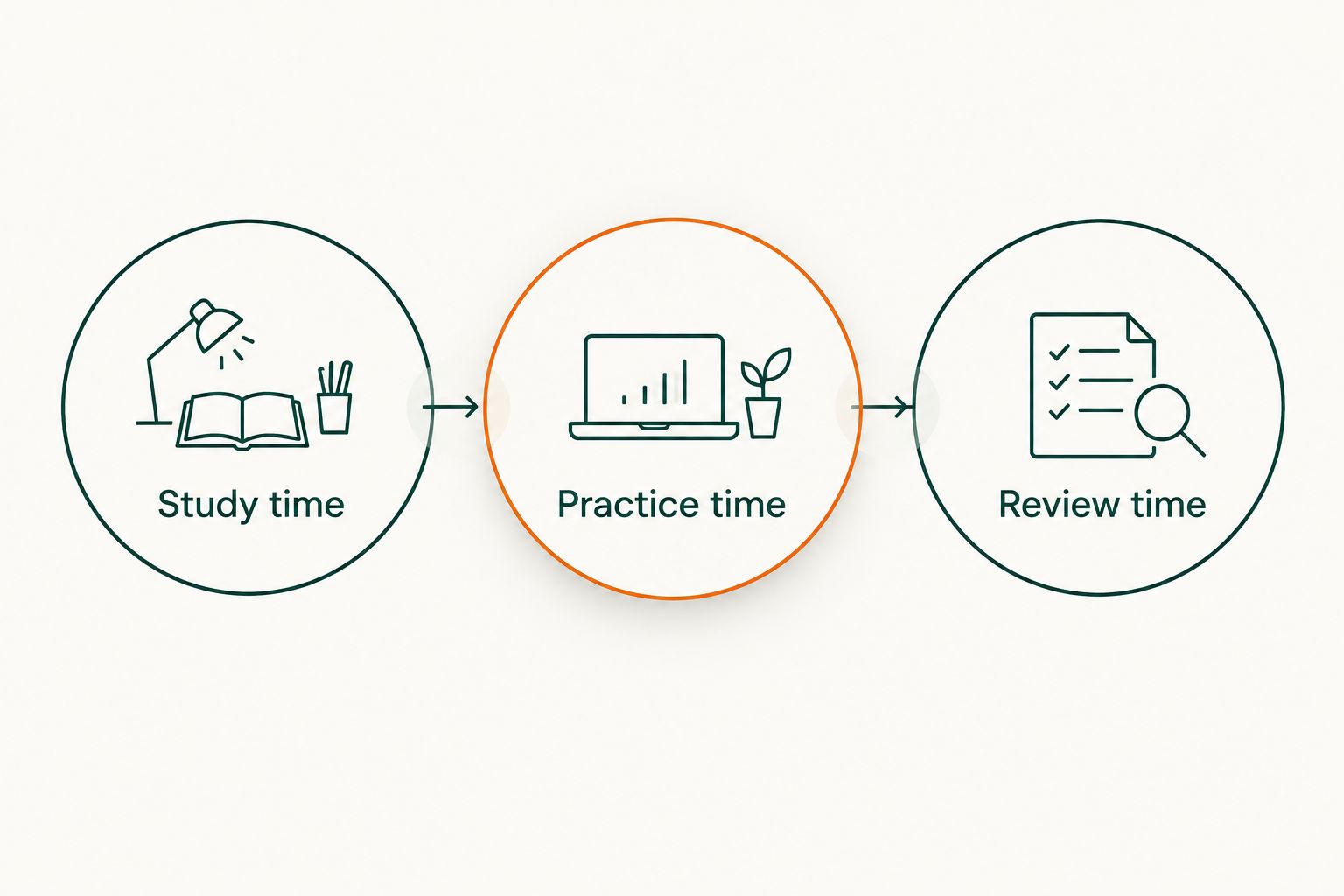
- Study time: reserve a quiet block for lessons and notes.
- Practice time: protect space for movement rehearsal without work interruptions.
- Review time: revisit unclear material before advancing.
- Add teaching rehearsal to practice saying instructions aloud.
- Choose a replacement slot for weeks when work runs late.
The schedule works best when those activities remain visible as separate commitments. Finishing a lesson does not automatically mean you have practiced teaching its content.
Match the curriculum to your teaching scope
Read curriculum descriptions for depth, not just topic names. Anatomy should connect to movement decisions; cueing should help you communicate instructions; business education should support the practical responsibilities of teaching. A long topic list alone does not explain how you learn or demonstrate each skill.
The TeachPilates online Pilates teacher training course covers anatomy, mat and Reformer instruction, cueing, and business skills through self-paced online study. Treat mat-teaching foundations and introductory Reformer concepts as distinct from dedicated, hands-on apparatus qualification. Do not assume an online course replaces supervised equipment practice.
For your 2026 course comparison, ask how lessons address mistakes, modifications, and teaching decisions. Also distinguish a provider's course certificate from an independent credential. Do not assume an outside qualification or examination is included.
If you are uncertain about apparatus scope, settle that question before enrollment rather than after completing lessons. The right starting course is one whose boundaries you understand.
- Match each curriculum area to something you expect to teach.
- Ask how anatomy connects to exercise instruction and modifications.
- Identify which Reformer material is introductory rather than hands-on qualification.
- Confirm prerequisites instead of assuming prior practice replaces them.
- Check exactly which certificate or credential completion provides.
Verify assessments, access, and feedback
Ask what passing actually requires. A written assessment and a practical assessment answer different questions: one checks what you can explain or recognize, while the other examines what you can demonstrate. Neither label tells you the full assessment process.
Read the distinction between written and practical Pilates course assessments, then request the requirements for the specific course you are considering. Ask about assessment format, submission rules, pass criteria, and what happens after an unsuccessful attempt.
Access terms also matter when you work full time. Self-paced describes scheduling flexibility; it does not, by itself, establish unlimited access, personal coaching, or an open-ended assessment deadline. Confirm those terms directly before making a study plan.
For a 2026 enrollment, keep the course terms with your enrollment records. A saved description gives you a clear reference for what you purchased and helps prevent confusion about optional services.
- Confirm lesson-access duration and any completion deadline.
- Request the assessment format and pass requirements.
- Ask whether practical work receives individual feedback.
- Check resubmission rules and any associated charges.
- Confirm what support is included and how you request it.
Rehearse teaching separately from taking class
Practice speaking instructions aloud instead of keeping every explanation in your head. Start by naming the movement, describing the setup, and giving a clear action cue. Listen for missing information and instructions that arrive too late.
Recording a short rehearsal gives you something concrete to review. Watch it for sequence, clarity, and whether your words match your demonstration. Self-review helps you notice communication problems, but it does not replace qualified feedback on teaching technique.
When practicing with another person, keep the session within your competence and explain that you are training. Do not turn rehearsal into diagnosis, rehabilitation advice, or unsupported claims about treating pain. Stop when you cannot establish an appropriate, comfortable way to continue.
The physical setup matters too: when practicing floor transitions, choosing a non-slip mat addresses surface grip, while adequate surrounding space addresses clearance. Neither equipment choice replaces sound instruction or judgment about an exercise.
- Rehearse the setup before adding movement cues.
- Record your instructions and check their order.
- Practice describing an appropriate modification you understand.
- Ask a qualified instructor for feedback where possible.
- Keep practice within your training and stop when uncertain.
Check the full commitment before enrolling
Compare the complete commitment, not just the enrollment figure. Tuition is one part; required equipment, outside practice, travel, assessment charges, and additional training can change what a pathway demands. Ask which items are compulsory and which are optional.
TeachPilates tuition is $497, with self-paced online study covering the stated curriculum. Its fit is flexibility for an aspiring instructor studying around work; the limitation is that online study should not be treated as dedicated hands-on apparatus qualification or guaranteed employer acceptance.
Before committing in 2026, write down your available study time, intended teaching scope, and unresolved course questions. If you want apparatus-focused work immediately, prioritize verified practical apparatus preparation rather than expecting a general online foundation to serve every role.
You do not need to leave your current job to make a careful enrollment decision. You do need a realistic practice plan and clear answers about the course you are buying.
- Record tuition and any confirmed compulsory extras separately.
- Identify equipment or studio access your intended practice requires.
- Compare course deadlines against your actual work calendar.
- Resolve assessment and qualification questions before payment.
- Choose training that matches your next teaching step.
Compare training formats for a working schedule
Choose the format around your feedback needs and teaching scope, not flexibility alone. Self-paced study, scheduled online teaching, in-person instruction, and blended training solve different problems. Each also leaves something for you to manage.
Use this table to narrow your options, then compare the actual provider terms. Format names do not establish curriculum depth, assessment standards, or employer acceptance.
| Option | Best for | Main advantage | Key limitation |
|---|---|---|---|
| Self-paced online training | Workers with changing schedules | Lets you choose when to study | You must protect practice time and verify feedback arrangements |
| Scheduled live online training | Learners who need appointments | Creates a regular teaching schedule | Session times can conflict with work; hands-on supervision remains separate |
| In-person training | Learners prioritizing direct physical supervision | Places you with an instructor during attended sessions | Attendance and travel must fit your job |
| Blended training | Workers who can attend selected practical sessions | Combines remote study with attended practice | You still need to meet fixed practical-session requirements |
| Dedicated apparatus training | Aspiring apparatus instructors | Focuses training on equipment-based teaching | Equipment access and practical commitments need separate planning |
A format that fits your calendar can still be wrong for your intended role. Conversely, a course with suitable teaching scope can become impractical if you cannot attend its required sessions.
Common mistakes full-time workers make
Choosing flexibility without planning practice
Self-paced lessons make study easier to schedule, but movement and teaching rehearsal still need appointments. Put practice in your calendar before enrollment rather than hoping you will find time once the course starts.
Treating Reformer coverage as apparatus qualification
A curriculum can introduce Reformer concepts without providing dedicated hands-on apparatus preparation. Compare mat certification and full-apparatus training against the work you intend to do, and confirm practical requirements directly.
Planning around your best working week
A schedule that only works when nothing goes wrong is fragile. Build your study plan around a normal week, include a replacement slot, and reduce optional commitments before promising yourself an aggressive completion date.
Assuming certification guarantees studio acceptance
Course completion does not promise a job, earnings, or acceptance by every studio. Ask prospective employers about their requirements before choosing a course, and keep their answers separate from a training provider's description of its certificate.
FAQ
Can I do online Pilates teacher training while working full time?
Yes, self-paced online Pilates teacher training lets you schedule study around full-time work. You still need protected time for movement practice, teaching rehearsal, and any required assessments.
How much is the TeachPilates course?
TeachPilates tuition is $497. The course uses self-paced online study and covers anatomy, mat and Reformer instruction, cueing, and business skills; confirm access and assessment terms before enrolling.
Is online Pilates training better than in-person training for working adults?
Self-paced online training fits changing work schedules, while in-person training suits learners prioritizing direct physical supervision. Choose according to your teaching goal, feedback needs, and ability to attend required sessions.
Can an online Pilates course qualify me to teach Reformer classes?
Do not assume online Reformer content provides dedicated hands-on apparatus qualification. Confirm practical training, assessment scope, and the requirements of the studio where you intend to teach.
How long will Pilates teacher training take alongside my job?
Your timeline depends on course requirements, your starting experience, and the study and practice time you can sustain. Check access deadlines and assessment requirements before choosing a completion date.
Do I need teaching experience before enrolling?
Prior teaching experience is not required for the TeachPilates course. Still review the course prerequisites and distinguish experience taking Pilates classes from the skills involved in teaching them.
Does a course certificate include an independent Pilates credential?
Do not assume a provider's course certificate includes an independent credential. Ask exactly what completion awards and whether any outside examination or qualification is separate.
One last thing
Before enrolling, explain a familiar exercise aloud without copying your instructor's wording. Notice where your explanation becomes unclear. That simple rehearsal gives you a practical question to bring to any training provider: how will this course help you improve the teaching skill you just found difficult?
For your 2026 decision, choose a course whose scope you understand and whose practice demands you can support. A workable training plan includes time to learn, time to move, and time to teach.