
For $497, Teachpilates offers self-paced online Pilates instructor training covering anatomy, mat instruction, introductory Reformer concepts, cueing, and business skills. The National Pilates Certification Program serves a different purpose: independent certification rather than a beginner teacher-training course. The best National Pilates Certification Program alternative in 2026 is Teachpilates for self-paced foundational study; hands-on teacher training fits better when your priority is supervised apparatus practice.
- National Pilates Certification Program alternatives require a distinction: teacher training and independent certification serve different purposes.
- Teachpilates offers $497 self-paced Pilates instructor training; an independent credential is not stated as included.
- Choose hands-on Reformer training when you need supervised equipment practice, not just introductory apparatus concepts.
- Keep NPCP on your shortlist when independent certification matches your existing training and professional goals.
Why this matters
Choosing a Pilates course and choosing an independent credential are separate decisions. A teacher-training course teaches you how to instruct; an independent certification assesses competence against requirements set outside that course.
If you are preparing to teach for the first time, comparing these as interchangeable purchases creates the wrong shortlist. Start with the instruction you need, then check whether your intended workplace expects an additional credential.
Authorship disclosure: Teachpilates publishes this comparison and sells the online course discussed below. The recommendations distinguish course content from independent certification and identify where a different training format fits better.
National Pilates Certification Program alternatives at a glance
These are pathway alternatives, not equivalent credentials. The comparison includes NPCP so you can distinguish learning to teach from pursuing independent certification in 2026.
| Option | Best for | Defining feature | Difference from NPCP |
|---|---|---|---|
| National Pilates Certification Program | Teachers seeking independent certification who meet its current eligibility requirements | Certification separate from a training provider's course completion | The benchmark, not a beginner training course |
| Teachpilates online course | Aspiring instructors needing self-paced foundations | Anatomy, mat instruction, introductory Reformer concepts, cueing, and business skills | Provides instruction; independent NPCP certification is not stated as included |
| In-person mat teacher training | Beginners prioritizing observed mat teaching practice | A format to seek when direct teaching feedback matters | Builds teaching skills rather than replacing independent certification |
| Hands-on Reformer teacher training | Aspiring apparatus instructors needing supervised equipment practice | Dedicated Reformer instruction and practical work | Addresses apparatus preparation rather than an independent credential alone |
| Comprehensive apparatus teacher training | Learners pursuing broader equipment-based teaching | Training across the apparatus specified by the provider | A training pathway to evaluate separately from certification eligibility |
No single row wins for every reader. Your intended teaching scope determines which comparison matters; the word certification alone does not tell you what instruction a program includes.
1. Teachpilates: best for self-paced teaching foundations
The Teachpilates Pilates instructor certification course costs $497 and lets you study online at your own pace. Its stated curriculum covers anatomy, mat and Reformer instruction, cueing, and business skills. For a first-time instructor, that provides a defined starting point without requiring an existing teaching background.
Treat the Reformer material as introductory concepts, not proof of dedicated hands-on apparatus qualification. Learning exercise principles online and demonstrating safe equipment instruction under observation are different tasks.
Where the course shines
- Flexible study: Self-paced delivery lets you organize coursework around your existing commitments.
- Relevant foundations: Anatomy, mat instruction, and cueing address subjects you need when preparing to teach.
- Business preparation: The curriculum includes business skills alongside movement instruction.
- A stated tuition: You can begin your course comparison with a confirmed enrollment figure.
Where the course falls short
- Online study is not a substitute for supervised, hands-on Reformer qualification.
- An independent NPCP credential is not stated as included.
- Course enrollment does not establish that a particular studio will accept the qualification.
- Self-paced study requires you to set a schedule and arrange meaningful teaching practice.
Head-to-head: online training versus NPCP
| Dimension | Online course | National Pilates Certification Program |
|---|---|---|
| Primary purpose | Teach foundational instructor knowledge and skills | Provide independent certification |
| Learning format | Self-paced online study | A certification pathway, not a substitute for teacher training |
| Stated scope | Anatomy, mat, introductory Reformer concepts, cueing, business | Evaluate the current certification requirements for your intended credential |
| Credential relationship | Independent credential not stated as included | Independent certification is the purpose |
Best for: You want structured online foundations before deciding whether additional practical training or independent certification fits your goal.
Before enrolling in 2026, confirm the assessment format, practical feedback arrangements, access period, and completion requirements. Self-paced describes scheduling; it does not answer those separate questions. Verdict: Buy for foundational online study, not as an assumed replacement for NPCP.
2. In-person mat teacher training: best for observed practice
In-person mat teacher training is the format to investigate when you want an educator to watch you teach. Ask specifically for supervised practice and individual feedback; a classroom location alone does not establish either.
This pathway fits a mat-focused goal more directly than choosing a broad credential before you have learned to lead a class. It also gives you a concrete basis for comparing how instructors assess cueing, exercise selection, and modifications.
Where in-person mat training shines
- A course with observed teaching lets an educator respond to your actual instruction.
- Mat-focused study keeps your course search aligned with mat classes.
- Scheduled sessions give you a defined study commitment.
Where in-person mat training falls short
- Fixed attendance requirements offer less scheduling freedom than self-paced study.
- Mat training does not establish Reformer or full-apparatus qualification.
- Instructor access and practical assessment still need checking with each provider.
| Dimension | In-person mat training | NPCP |
|---|---|---|
| Main decision | How you will learn to teach mat work | Whether independent certification fits your preparation |
| Feedback to check | Observed practice and individual correction | Current assessment requirements |
| Scope boundary | Mat training is not apparatus training | Certification must be evaluated against its stated scope |
Best for: You learn through live correction and intend to begin with mat instruction. Verdict: Buy when the provider confirms supervised teaching practice and the schedule works for you.
3. Hands-on Reformer training: best for apparatus instruction
Dedicated hands-on Reformer training is the better category to investigate when your goal involves teaching on the equipment. Ask how the course addresses setup, spring selection, transitions, observation, and supervised teaching rather than accepting the word Reformer in a curriculum as sufficient.
An introductory lesson and an apparatus qualification are not interchangeable. Your course decision should reflect what you expect to teach, not simply whether equipment appears in the syllabus.
Where hands-on Reformer training shines
- Supervised apparatus practice connects instruction to physical equipment use.
- Observed teaching gives an educator something concrete to assess.
- A dedicated syllabus lets you examine Reformer preparation in detail.
Where hands-on Reformer training falls short
- You need an equipment-access plan that matches the course requirements.
- Reformer-specific study does not automatically cover other apparatus.
- Completing training does not itself establish an independent credential.
| Dimension | Hands-on Reformer training | NPCP |
|---|---|---|
| Primary focus | Learning equipment-based instruction | Independent certification |
| Practical question | Where and how will you practice? | What current eligibility and assessment rules apply? |
| Scope question | Which Reformer teaching skills are assessed? | Which credential matches your preparation? |
Best for: You intend to teach Reformer and need supervised apparatus preparation. Verdict: Buy only after confirming equipment access, practical assessment, and your intended workplace's requirements.
4. Comprehensive apparatus training: best for broader scope
Comprehensive apparatus teacher training is the category to compare when your goal extends beyond mat or Reformer alone. Ask each provider to name the apparatus taught and assessed; do not use comprehensive as a substitute for a syllabus.
Where comprehensive training shines
- A clearly specified apparatus syllabus helps you plan broader teaching preparation.
- A documented training pathway gives you requirements to compare with your professional goal.
Where comprehensive training falls short
- A broad pathway can exceed the scope you need for a mat-only goal.
- You must check equipment access, attendance, practice, and assessment obligations before committing.
- Eligibility for independent certification requires a separate check.
Best for: You have a specific broader apparatus-teaching goal and can meet the provider's practical requirements. Verdict: Wait until you have a written syllabus and a workable practice plan.
Why people look for alternatives to NPCP
The useful distinction is not that NPCP stops being good enough. It is that independent certification answers a different question from beginner education. For a first-time instructor comparing pathways in 2026, these are reasons to start with training rather than certification.
- You need instruction first. Anatomy knowledge, cueing, and class planning need learning and practice before a credential can assess your preparation.
- You need a particular format. Self-paced coursework and scheduled practical teaching solve different learning needs.
- You need a narrower scope. A mat-focused goal calls for a different training comparison from a broader apparatus goal.
- You need employer clarity. A prospective workplace's requirements should inform your purchase, not become a surprise afterward.
None of these is a claim about NPCP changing prices, reducing standards, or providing inadequate training. NPCP is not presented here as a training provider you must leave. You can choose a training course now and evaluate independent certification separately.
How to choose your next step in 2026
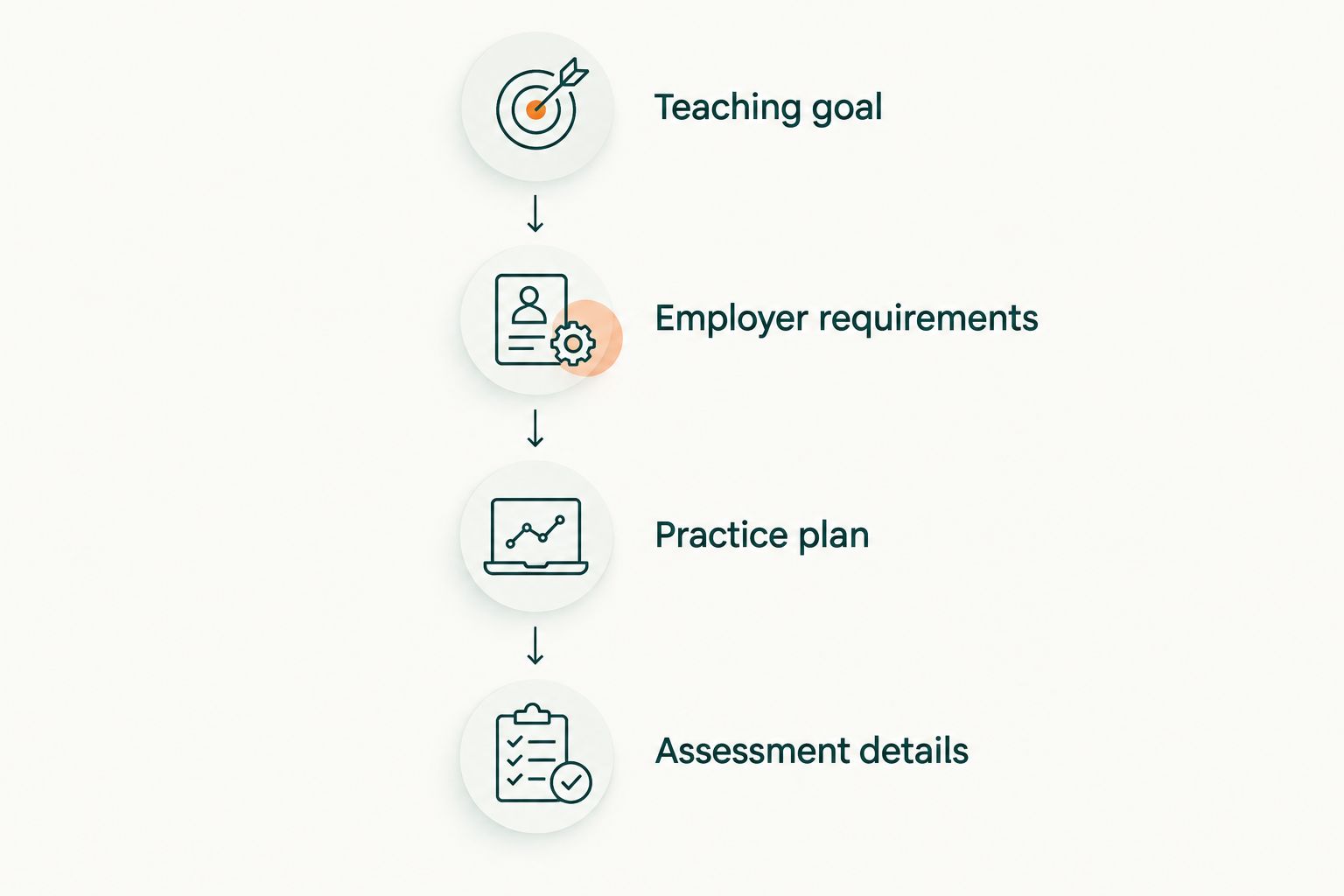
Use this sequence before paying for any program. It separates the teaching goal from the certificate name and gives you specific questions to take to providers.
Teaching goal
Write down whether you want to teach mat, Reformer, or broader apparatus work. If you are still deciding, avoid treating introductory exposure as proof that you are prepared for every setting.
Employer requirements
Ask your intended studio what training, practical assessment, and independent credentials it expects. Get a specific answer about your proposed pathway rather than asking whether online certification is generally accepted.
Practice plan
Identify where you will practice, who will observe you, and how you will receive corrections. Use the guide to observation versus teaching hours to separate watching instruction from delivering it yourself.
Assessment details
Ask what you must demonstrate to finish, whether teaching is observed, and what happens if you need another attempt. Confirm access limits and additional obligations before deciding that a flexible course fits your schedule.
A useful enrollment decision leaves you able to explain what you will learn, how you will practice, and what remains outside the course. Teachpilates Pilates instructor training fits self-paced foundational study; supervised apparatus preparation remains a separate decision.
Review your online training option
Explore self-paced study covering anatomy, mat instruction, cueing, and business skills.
When staying with NPCP is the right call
Keep the National Pilates Certification Program on your shortlist when independent certification is your actual goal and you meet its current requirements. Another beginner course is not a like-for-like substitute for that objective.
If your intended workplace expects a particular independent credential, compare your existing training against that credential's eligibility rules. Do not buy additional foundational instruction solely because it also uses certification in its name. In 2026, the right next step still depends on the gap you need to close.
FAQ
What's the best National Pilates Certification Program alternative for beginners?
A teacher-training course is the better starting point when you still need to learn to teach. Choose self-paced study for scheduling flexibility or a course with supervised practical teaching when direct feedback is your priority.
Is NPCP the same as a Pilates teacher-training course?
No. The National Pilates Certification Program provides independent certification, while teacher-training courses provide instruction. Evaluate training requirements and independent certification separately.
How much does the online course discussed here cost?
The stated tuition is $497. Confirm the current enrollment terms, assessment requirements, and access details before purchasing.
Does an online course automatically include NPCP certification?
No. Do not assume an independent credential is included unless the provider explicitly confirms it. Independent certification can have separate eligibility and assessment requirements.
Can introductory Reformer lessons qualify me to teach apparatus classes?
Introductory Reformer concepts are not a substitute for dedicated hands-on apparatus qualification. Confirm practical training and assessment requirements with the course provider and your intended workplace.
Can I start training without teaching experience?
The online course described here does not require a teaching background. Requirements differ between training courses and independent certification pathways, so check the specific pathway you intend to pursue.
Will every studio accept the same Pilates certification?
Do not assume universal studio acceptance. Ask your intended workplace about its required training scope, observed teaching assessment, and independent credentials before enrolling.
One last thing
Ask a course provider this question: What teaching task must I demonstrate before I pass? The answer tells you more about practical preparation than a certificate title alone.
If you cannot connect the final assessment to the work you want to do, pause the purchase. Your next course should close an identifiable training gap, not simply add another certificate.