

Yoga teachers’ mat Pilates certification is training in Pilates movement, anatomy, and instruction with the aim of preparing you to teach mat-based classes. TeachPilates offers self-paced online study for $497; this guide explains how to compare that route with supervised training, check assessments, and choose a teaching scope that fits your plans in 2026.
- TeachPilates offers mat Pilates certification study for $497, with self-paced learning suited to yoga teachers balancing existing classes.
- Your yoga teaching experience helps with class communication; Pilates exercise selection and cueing still require dedicated study.
- Compare online Pilates training with supervised practice, practical assessments, and the requirements of your intended studio.
- Mat-teaching foundations and introductory Reformer concepts do not replace dedicated hands-on apparatus qualification.
Why mat Pilates certification matters for yoga teachers
Your teaching background gives you experience speaking to a group, organizing a class, and responding to students. It does not establish that you can select, explain, or adapt Pilates exercises. Treat Pilates as another teaching discipline, not a new label for your existing yoga classes.
The decision starts with the class you want to teach. A mat class, a mixed yoga-and-Pilates session, and an equipment-based session need different preparation. Choose training around that intended work rather than the broadest certificate title.
This guide is published by TeachPilates, which offers online instructor certification covering anatomy, mat and reformer instruction, cueing, and business skills. The comparison below separates those learning topics from supervised teaching practice and dedicated apparatus qualification.
For your 2026 enrollment decision, prioritize evidence you can check: curriculum, assessment format, practical feedback, and the requirements of the studio where you want to teach. A familiar-looking exercise is not proof that your existing qualification covers it.
How to choose mat Pilates training as a yoga teacher
Define the classes you want to teach
Write a short description of your intended class before comparing courses. Specify whether you want to teach Pilates independently, add clearly identified Pilates exercises to an existing session, or pursue apparatus instruction later.
That description becomes your filter. If your immediate aim is mat teaching, look for exercise instruction, observation skills, adaptations, and class planning. Equipment content needs a separate review: reading about a Reformer is different from practicing setup and teaching on one.
Keep your public class description aligned with your actual training. Do not advertise an apparatus qualification because a course introduces apparatus concepts.
- Describe your intended class and its audience in plain language.
- Separate mat-teaching goals from apparatus-teaching goals.
- Ask your intended studio what training it requires for that class.
- Match your enrollment choice to the scope you can demonstrate.
Check prerequisites without assuming yoga gives you exemptions
Your yoga qualification documents your yoga training. Whether a Pilates course accepts it toward prerequisites or prior-learning credit depends on that provider’s stated rules; do not assume an exemption.
Read the enrollment requirements separately from the completion requirements. Being eligible to start a course does not mean you have already met its observation, practice, or assessment expectations. Ask specific questions before paying, especially when a course description uses broad terms such as experience or proficiency.
Also examine your own starting point. Practicing Pilates as a student helps you recognize its exercise vocabulary and notice where your yoga habits influence your movement or explanations.
- Read the provider’s published entry requirements.
- Ask whether prior yoga training changes any course requirements.
- Identify unfamiliar Pilates exercises before beginning assessed work.
- Check whether observation or teaching practice forms part of completion.
- Keep written confirmation of any agreed exemption.
Choose a format that matches your feedback needs
Start by reviewing a course outline and comparing it with your weekly teaching schedule. Decide which parts you can study independently and where you want someone to observe you teaching. Flexibility and feedback solve different problems.
TeachPilates is best for yoga teachers who want self-paced Pilates study rather than a fixed classroom timetable. Its online course covers anatomy, mat and reformer instruction, cueing, and business skills. Treat introductory Reformer learning as distinct from dedicated hands-on apparatus preparation.
For your 2026 shortlist, compare the actual learning experience rather than assuming online means unsupported or classroom means individually coached. The online Pilates certification versus in-person training guide explains the format decision in more detail.
- Map independent study around your existing yoga classes.
- Ask how learners receive corrections and teaching feedback.
- Check whether scheduled attendance is required.
- Confirm how practical work is submitted or observed.
- Choose supervised practice when direct observation is your priority.
Examine the curriculum beyond exercise names
Read the syllabus manually and connect each topic to something you will need to do as an instructor. Anatomy should help you explain movement and make appropriate exercise choices. Cueing should help a student understand the task without a long speech.
Your yoga teaching habits deserve particular attention. Familiar language is useful only when it accurately describes the Pilates exercise you are teaching. Avoid transferring a breathing instruction, movement goal, or class sequence automatically because the starting position looks similar.
Business content also needs a practical purpose. You need to describe your qualification accurately and explain what your class includes without suggesting that you provide treatment or hold credentials you have not earned.
- Look for anatomy connected to exercise instruction.
- Check how the course teaches mat exercise selection and sequencing.
- Identify instruction on cueing, observation, and adaptations.
- Separate introductory equipment content from practical apparatus preparation.
- Review how business lessons address your intended teaching work.
Build a budget around the full training route
List the course tuition first, then separate any additional activities you need for your intended role. Possible categories to investigate include supervised practice, travel for classroom sessions, equipment access, and any separate assessment or credential process. These are questions to check, not assumed charges.
The stated tuition for the self-paced course is $497. For your 2026 budget, confirm what that payment covers before enrolling, including assessment arrangements, learning access, and any conditions attached to completion. Do not treat an advertised tuition figure as evidence that every future qualification step is included.
Protect study time as carefully as money. A flexible schedule still needs appointments you keep, especially when you already teach mornings, evenings, or weekends.
- Record tuition separately from other training expenses.
- Confirm assessment inclusions and any additional requirements.
- Ask about learning-access terms before paying.
- Identify whether your intended role needs separate practical training.
- Reserve recurring study time around your existing commitments.
Inspect the assessment before enrolling
Ask what you must demonstrate to pass, not simply whether you receive a certificate. A written assessment can check your understanding of anatomy, terminology, and exercise principles. An observed teaching task lets an assessor evaluate what you actually say and do.
For a yoga teacher changing disciplines, that distinction matters. You might explain an exercise clearly while selecting an unsuitable progression, or know the exercise but miss a student’s response. Knowing the assessment method helps you prepare for the skill being judged.
Do not infer a pass mark, practical exam, retake policy, or independent credential from the word certification. Read the stated requirements and request clarification where the wording is broad.
- Ask which assessments are written and which involve teaching.
- Confirm whether anyone observes your movement or instruction.
- Read the completion standard and reassessment terms.
- Establish who issues the course certificate.
- Check whether a separate credential requires another application or assessment.
Practice teaching before expanding your class offer
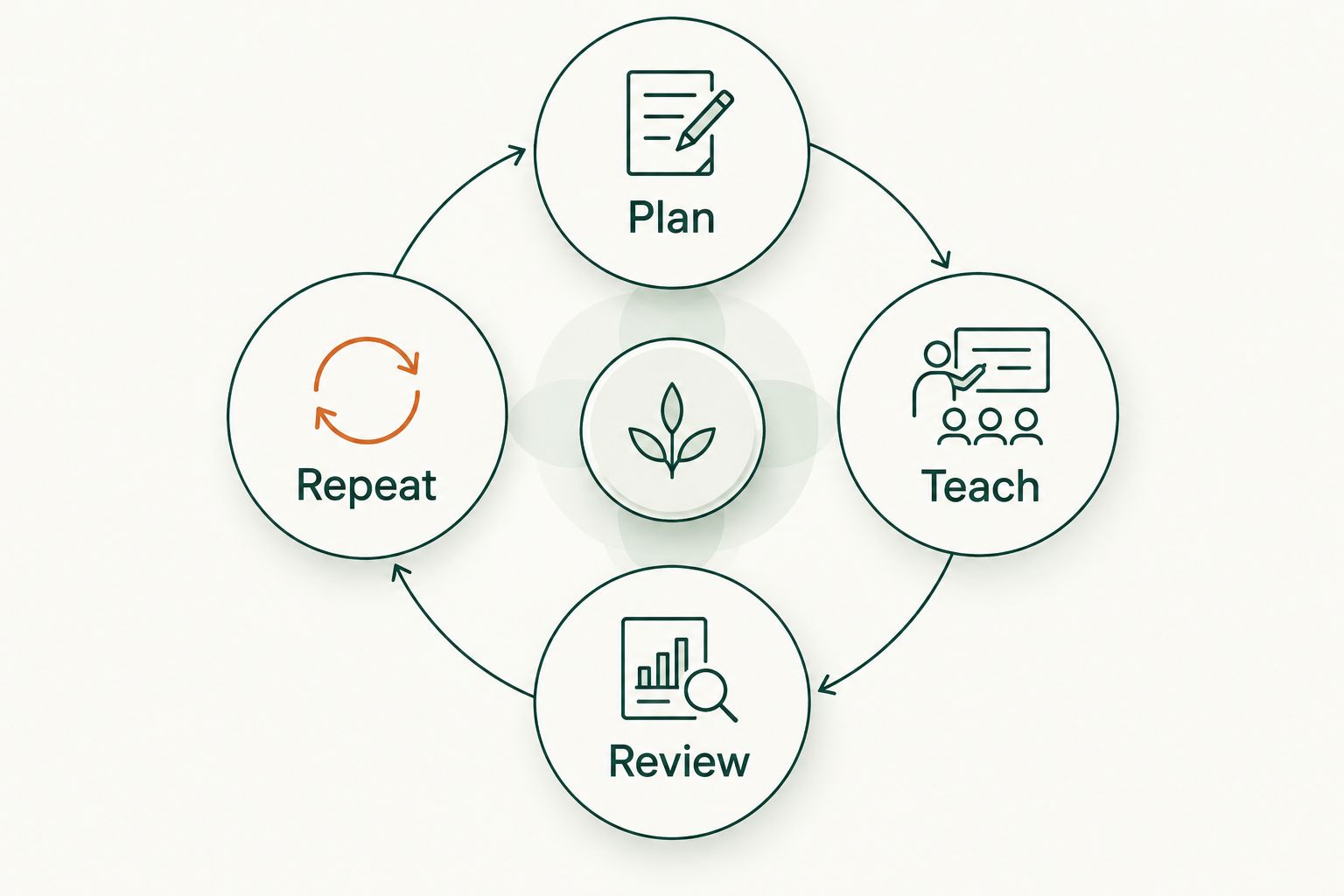
Use a simple practice cycle: Plan, Teach, Review, Repeat. Begin with a short sequence you understand rather than trying to reproduce an entire class from memory. Follow the course’s practice requirements and arrange appropriate feedback.
As a planning exercise, draft a 20-minute mat sequence and rehearse a 10-minute teaching segment from it. Those durations are practice suggestions, not certification standards. Focus on exercise purpose, clear transitions, and whether a listener can follow your instructions without copying your body.
Review the practice against your intended scope. A polished voice does not replace accurate instruction, and completing a practice session does not establish readiness for every population or setting.
- Plan: state the purpose of each selected exercise.
- Teach: rehearse instructions without relying on constant demonstration.
- Review: request specific feedback on clarity and exercise choices.
- Repeat: revise the sequence before increasing its complexity.
Compare training options for yoga teachers
Choose the format that addresses your learning needs, not the one with the broadest title. In 2026, your comparison should separate study flexibility, observed teaching practice, and equipment-specific preparation.
The options below describe training formats, not equivalent qualifications. Check each provider’s actual curriculum and assessment arrangements before treating one route as interchangeable with another.
| Option | Best for | Main advantage | Key limitation |
|---|---|---|---|
| TeachPilates self-paced online course | Yoga teachers who need independent study around existing classes | Covers anatomy, mat and reformer instruction, cueing, and business skills without a fixed classroom timetable | Introductory Reformer concepts are not a substitute for dedicated hands-on apparatus qualification |
| Live mat training | Teachers who prioritize scheduled, observed practice | Creates a setting for real-time demonstration and feedback | Requires attendance; confirm how much individual teaching feedback is included |
| Blended mat training | Teachers who want independent study plus scheduled practical work | Combines separate study and supervised learning components | Practical attendance and assessment arrangements vary by provider |
| Dedicated apparatus training | Teachers planning to teach equipment-based sessions | Focuses preparation on the apparatus being taught | Extends beyond a mat-only teaching goal and requires equipment-specific practice |
If your goal is mat teaching, assess the mat curriculum first. If your goal is Reformer teaching, start with the apparatus requirements rather than using a mat certificate as evidence of equipment competence.
Common mistakes yoga teachers make
Treating familiar shapes as familiar teaching
A movement can resemble something you already teach while having a different instructional purpose. Copying your yoga explanation without checking the Pilates exercise can leave students unclear about what they should do.
Correct it: explain the exercise’s purpose, setup, and movement in Pilates-specific terms before deciding which familiar cues still fit.
Choosing flexibility without planning feedback
Self-paced study solves a scheduling problem. It does not, by itself, answer how you will identify unclear instructions or missed movement details.
Correct it: establish the course’s feedback arrangements and plan appropriate observed practice. Do this before enrollment, not after you feel stuck.
Assuming every studio accepts the same certificate
A provider’s completion certificate and a studio’s hiring requirements answer different questions. Do not assume that finishing a course automatically satisfies a particular employer.
Correct it: ask the studio about required training scope, practical assessment, and other teaching conditions before selecting your route.
Advertising beyond your completed training
Adding Pilates to your 2026 timetable does not justify describing yourself as qualified in every Pilates setting. Mat instruction, equipment instruction, and work involving health conditions need careful scope decisions.
Correct it: describe the training you completed accurately. Keep introductory equipment study separate from claims of dedicated apparatus qualification.
FAQ
Can I teach mat Pilates with only a yoga qualification?
A yoga qualification does not establish Pilates-specific training. Complete training appropriate to the Pilates classes you intend to teach and check the requirements of your studio or teaching setting.
What is the best mat Pilates certification route for a yoga teacher?
The best route matches your intended teaching scope, schedule, and need for observed feedback. Compare curriculum, practical assessment, and studio requirements rather than choosing by certificate title alone.
How much is the TeachPilates course in 2026?
The stated tuition is $497 for self-paced online study. Confirm the assessment arrangements, learning-access terms, and what completion includes before enrolling.
Is online Pilates training better than in-person training?
Online training fits independent study, while in-person training fits learners who prioritize scheduled, directly observed practice. Compare the actual feedback and assessment arrangements because the delivery format alone does not establish training quality.
Does mat Pilates certification qualify me to teach Reformer classes?
Do not treat mat Pilates certification alone as evidence of Reformer teaching qualification. Introductory Reformer concepts differ from dedicated hands-on apparatus training and assessment.
Will my yoga teaching experience shorten Pilates training?
Your yoga experience shortens formal requirements only if the Pilates provider explicitly grants credit or an exemption. It can help with communication and class organization without replacing Pilates-specific study.
Is an independent Pilates credential included in a course certificate?
Do not assume an independent credential is included. Check who issues the course certificate and whether the separate credential has its own eligibility, application, or assessment requirements.
One last thing
Before enrolling, write the class description you would publish after completing the course. Then underline every phrase that implies a qualification: mat instructor, Reformer instructor, specialist, or similar wording.
If your chosen training does not clearly support a phrase, change the description or change the training route. That small check keeps your enrollment decision tied to the work you actually want to do.