
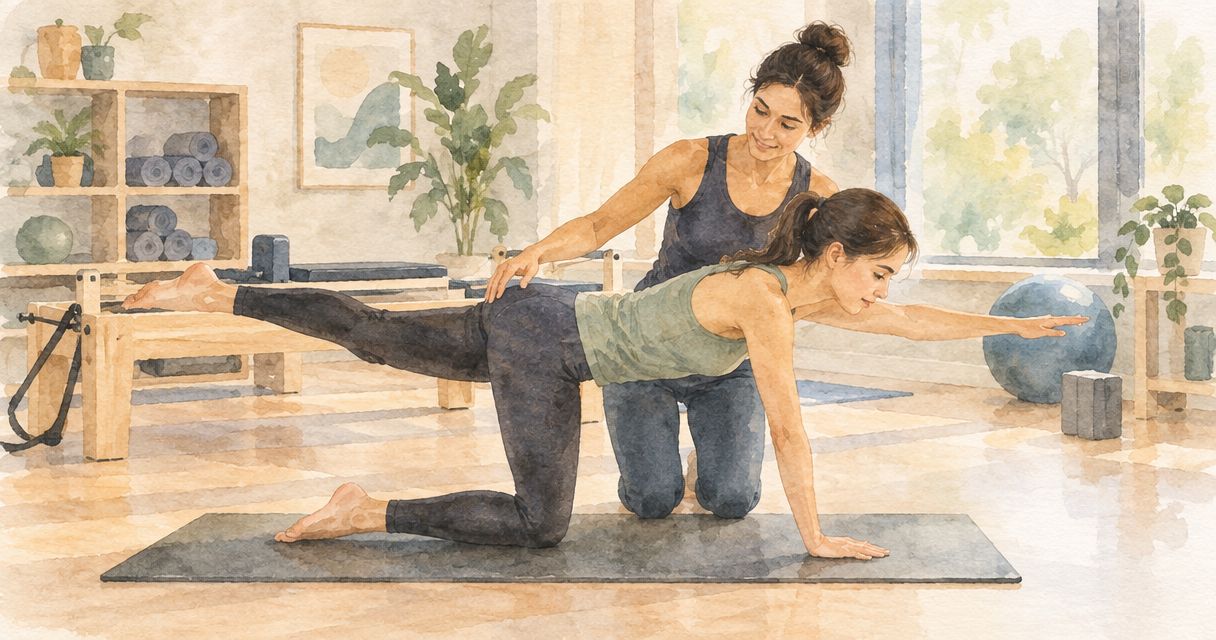
The $497 tuition and flexible, self-paced study at Teachpilates are separate from age eligibility: the minimum age to become a Pilates instructor depends on the training provider and the requirements for your intended teaching role. Confirm the minimum age for enrollment, assessment, and paid teaching separately before you pay. Being eligible to study does not establish that you meet an employer’s hiring requirements or an insurer’s policy conditions.
- Minimum age Pilates instructor requirements must be checked separately for course enrollment, assessment, employment, and insurance.
- Teachpilates offers $497 self-paced instructor training; confirm age eligibility before enrolling.
- If you are under 18, ask about parental consent and restrictions on practice teaching.
- Choose training for your intended teaching scope, not just the earliest possible enrollment date.
Is there a minimum age to become a Pilates instructor?
The relevant minimum age is the one attached to the next step you want to take. A course admission decision, a certificate assessment, and permission to teach paying clients answer different questions. Do not treat one approval as approval for everything that follows.
For a 2026 enrollment decision, ask Teachpilates to confirm the age requirement for the course and its assessments. Then check the conditions attached to the teaching setting you want to enter.
| Checkpoint | What you need to establish | What that answer does not establish |
|---|---|---|
| Course enrollment | Whether you can register at your current age | Whether you can complete every assessment immediately |
| Assessment | Whether age affects assessment eligibility or certificate issuance | Whether an independent credential is included |
| Practice teaching | Whether you can teach practice participants and under what supervision | Whether you can teach paying clients independently |
| Employment | Whether the employer accepts your age, training, and teaching scope | Whether a separate insurance policy covers your work |
| Insurance | Whether the proposed work meets the policy’s eligibility and coverage terms | Whether every studio will accept your qualification |
Start with your intended destination. If you want to teach mat classes at a particular studio, that studio’s requirements are relevant before you choose training—not only after you finish it.
Why this matters
You need a course you can enter and a realistic route to using what you learn. Paying for training before checking eligibility leaves an avoidable gap between studying Pilates and teaching it professionally.
Age is also a poor substitute for readiness. You still need to understand anatomy, give clear instructions, recognize the limits of your training, and respond appropriately when an exercise is unsuitable for a participant.
For your 2026 training plan, separate permission to begin from preparation to teach. The first is an eligibility question. The second requires education, practice, feedback, and a clear teaching scope.
Why minimum-age requirements need separate checks
The answer changes with the activity you are asking about. Keep these five checks distinct rather than asking only whether you are old enough to become certified:
- Enrollment rules: Ask the provider which age requirement applies when you register and whether parental or guardian involvement is required.
- Assessment rules: Confirm whether the same requirement applies when you take assessments and receive the course certificate.
- Practice conditions: Establish who can participate in your practice sessions, what supervision is expected, and whether consent is required.
- Employer requirements: Ask the intended studio or organization about its hiring conditions, accepted training, and audition process.
- Insurance conditions: Describe your age, qualification, location, equipment, and proposed work accurately when requesting cover.
Keep the replies with your enrollment records. Written answers give you something specific to refer to if an admissions conversation and the published course terms appear to conflict.
Do not assume that permission from a parent, instructor, or studio replaces another organization’s requirements. Each answer should identify exactly which activity it permits.
How do you check your eligibility before enrolling?
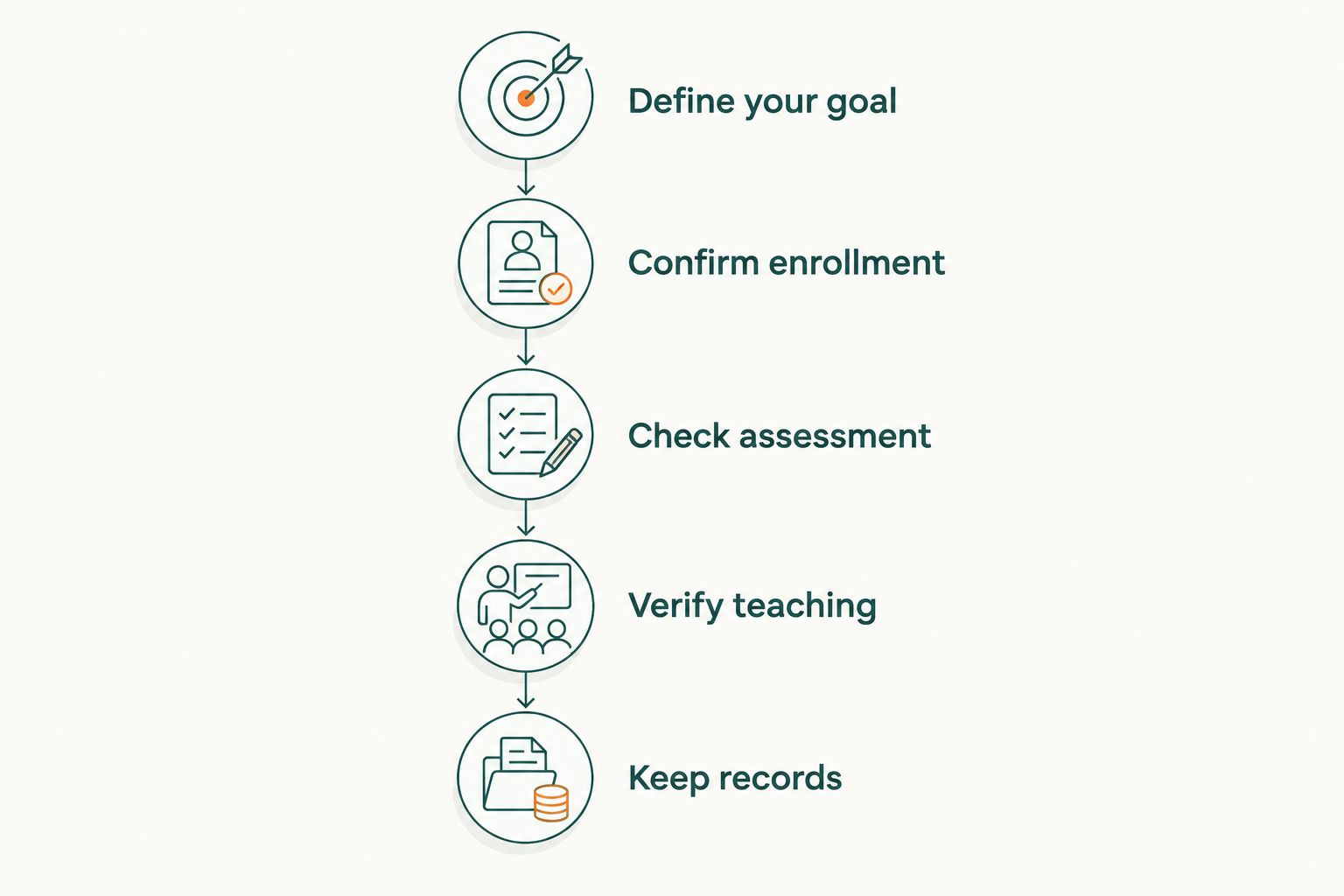
Use the following sequence before committing to a course. It keeps your decision tied to the work you actually want to do rather than to a certificate title alone.
1. Define your goal
Write down whether you want to study Pilates, teach mat classes, or work toward apparatus instruction. Include your intended setting: an existing studio, online classes, or another arrangement.
Be precise. Introductory Reformer concepts are not the same training goal as dedicated hands-on apparatus qualification. The course you choose should match the instruction you plan to deliver.
2. Confirm enrollment
Give the provider your current age and intended start date. Ask for the applicable admission terms, including any parental consent or account-registration conditions.
Also ask whether you can complete the entire course under those terms. Starting lessons and becoming eligible for the final assessment should not be treated as interchangeable milestones.
3. Check assessment
Request the assessment requirements before paying. Ask about written work, practical demonstrations, practice-teaching requirements, passing criteria, and the process for unsuccessful attempts.
Do not assume a self-paced format removes deadlines or assessment conditions. Confirm course access and completion terms directly, especially if your age affects when you can take a required assessment.
4. Verify teaching
Contact the employer or setting where you hope to teach. Explain the course, its delivery format, and the teaching scope you intend to pursue.
Use the guide to checking employer requirements to organize that conversation. Ask about accepted qualifications, practical experience, auditions, CPR requirements, and insurance rather than requesting a general yes-or-no opinion about online study.
5. Keep records
Save the admission terms and the responses relevant to your situation. Record who answered, what activity the answer covered, and when it was confirmed.
For a 2026 application, use current terms rather than an undated discussion post. A previous student’s experience is not a substitute for the provider’s answer about your enrollment.
Can you start Pilates teacher training at 16 or 17?
At 16 or 17 years old, ask for an age-specific admission decision before enrolling. Do not assume that being able to purchase or access online lessons means you satisfy the conditions for assessment, practice teaching, or employment.
Give the provider a concrete question: can someone your age enroll now, complete the required practical work, take the assessments, and receive the course certificate? If any stage has different conditions, ask the provider to identify them.
If parental or guardian consent is requested, establish what it covers. Consent to purchase training is a different matter from permission to work with participants or enter an employment arrangement.
While checking eligibility, continue your own Pilates practice and learn to describe movements clearly. Those activities support preparation without requiring you to present yourself as a qualified instructor or take responsibility for paying clients.
Does turning 18 automatically make you eligible to teach?
At 18 years old, you still need to check course, employer, and insurance requirements. Your age does not demonstrate that you have completed suitable training or that your intended work falls within your qualification.
Ask the studio what it expects you to do in practice. Leading a mat class, adjusting apparatus, and working with clients who need specialist input are not interchangeable responsibilities.
Use the same checks if you are older and changing careers in 2026. Experience in another profession can help you organize your study, but it does not establish competence in Pilates instruction or remove assessment requirements.
Which training format fits your next step?
Choose the format around your learning needs and intended teaching scope. The earliest enrollment date is not automatically the best training decision. Compare the practical requirements as carefully as the lesson delivery.
| Training format | Best for | Main benefit | Limitation to check |
|---|---|---|---|
| Self-paced online study | Learners who need control over their study schedule | Lets you organize lesson study around existing commitments | Confirm practical feedback, assessments, access terms, and employer acceptance |
| Scheduled in-person training | Learners who want a fixed timetable and face-to-face instruction | Provides a defined setting for attending instruction | Check attendance requirements, travel, and the exact teaching scope |
| Dedicated hands-on apparatus training | Learners whose goal is apparatus teaching | Matches the training decision to equipment-based instruction | Confirm equipment access, supervised practice, assessment, and prerequisites |
These are format comparisons, not guarantees about every course. An online course title does not tell you how practical teaching is assessed, and an in-person timetable does not establish which apparatus the qualification covers.
For any format, ask what you must demonstrate rather than only what you will watch or read. Clear assessment expectations help you judge whether a course fits both your current experience and your teaching goal.
What should you check about tuition and course scope?
Teachpilates offers self-paced online Pilates instructor certification for $497 tuition, covering anatomy, mat instruction, introductory Reformer concepts, cueing, and business skills. No teaching background is required, but that is a separate question from age eligibility.
Teachpilates Pilates instructor training is best for first-time aspiring instructors who need flexible, self-paced study. Its practical limitation is scope: do not treat introductory Reformer content as a substitute for dedicated hands-on apparatus qualification.
This article is published by Teachpilates. Use the same enrollment checks here that you would use with any provider: confirm age eligibility, access conditions, assessment requirements, and the exact certificate awarded before paying.
Treat the $497 tuition as the course figure, not as a complete statement of every requirement attached to your future teaching work. Ask separately about assessment-related charges, equipment access, CPR training, insurance, and any independent examination you intend to pursue; do not assume these are included.
A course certificate and an independent credential are separate matters. If an employer names a particular credential, confirm its eligibility requirements directly rather than assuming course completion grants it.
What should you ask the provider in your first message?
Make your request specific enough to receive a usable answer. Include your age, intended enrollment date, prior Pilates experience, and whether your goal is mat teaching or apparatus instruction.
Ask the provider to confirm:
- Whether you can enroll at your current age.
- Whether age affects assessment or certificate issuance.
- Whether parental or guardian consent is required.
- How practical teaching and cueing are assessed.
- What practice, observation, or equipment access you must arrange.
- What the course certificate covers and what requires separate training.
Avoid asking only whether the course is suitable for beginners. Beginner suitability addresses your starting experience; age eligibility addresses admission conditions. You need both answers before making a confident enrollment decision.
FAQ
What's the minimum age to become a Pilates instructor?
Check the minimum age separately for course enrollment, assessment, employment, and insurance. A provider’s admission decision does not establish that you meet the conditions for paid teaching.
Can I start Pilates instructor training at 16?
At 16 years old, request confirmation from the training provider before enrolling. Ask whether you can complete assessments and practice teaching, and whether parental or guardian consent is required.
Can I become a Pilates instructor at 17?
At 17 years old, confirm the requirements for each stage of your intended route. Course participation, certificate assessment, studio employment, and insurance are separate checks.
Does being 18 mean I can teach Pilates professionally?
Being 18 years old does not establish professional teaching readiness or acceptance. You still need suitable training and must meet the conditions of your employer, teaching setting, and insurance policy.
Do I need teaching experience before enrolling?
Teachpilates does not require a teaching background. Confirm age eligibility separately, and choose training that addresses anatomy, instruction, cueing, assessment, and your intended teaching scope.
Does online Pilates training qualify me to teach Reformer classes?
Do not equate introductory Reformer concepts with dedicated hands-on apparatus qualification. Confirm the course’s assessed scope and the requirements of the studio where you want to teach.
What should I check before paying for Pilates certification in 2026?
Confirm age eligibility, prerequisites, assessment conditions, access terms, teaching scope, and employer requirements before paying. Ask which requirements or services need separate arrangements rather than assuming everything is included.
One last thing
Check the destination before choosing the starting line. A useful age answer tells you not only whether you can begin lessons, but also what must happen before you can teach in your intended setting.
Before you enroll in 2026, get written confirmation of the next stage you can complete. Then build your study and practice plan around that answer—not around an assumed birthday milestone.