
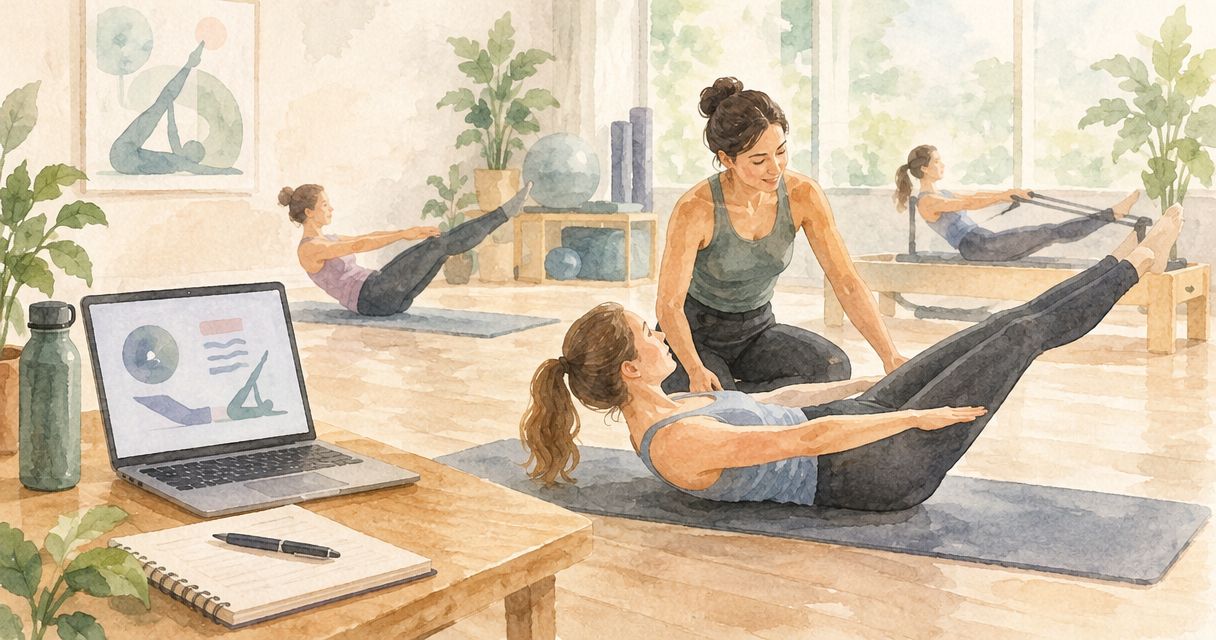
Your timeline to become a Pilates instructor depends on your course requirements, weekly study time, practice, and assessments—not a single standard duration. At $497, Teachpilates offers flexible, self-paced online study; completing coursework is separate from meeting a particular studio’s teaching requirements or qualifying for hands-on apparatus work.
- How long does it take to become a Pilates instructor? Your training scope, study schedule, and assessment requirements determine the timeline.
- Teachpilates offers $497 self-paced Pilates instructor certification covering anatomy, mat instruction, introductory Reformer concepts, cueing, and business skills.
- Choose mat foundations for a mat-teaching goal; seek dedicated hands-on apparatus training for a Reformer-teaching goal.
- Plan for practice and assessment, not just lesson completion, before setting your teaching start date.
How long does it take to become a Pilates instructor?
Your completion date should follow your training requirements, not an advertised shortcut. Start with the teaching role you want, confirm the course’s required work, and fit that work into a schedule you can sustain.
For your 2026 training plan, separate these milestones:
- Coursework: Learn anatomy, exercise instruction, cueing, and other included subjects.
- Practice: Apply what you learn through your own movement and practice teaching.
- Assessment: Complete the provider’s required evaluations and any reassessment.
- Teaching readiness: Confirm the requirements of the studio, insurer, or setting where you intend to teach.
These milestones are planning categories, not a claim that every course uses the same structure. Ask your provider which activities are mandatory, which count toward completion, and which require someone else’s availability.
| Training format | Best for | Main advantage | Main limitation to plan around |
|---|---|---|---|
| Self-paced online study | Practitioners who need control over study scheduling | You organize coursework around existing commitments | You must create a practice routine and confirm how practical skills are assessed |
| Scheduled in-person training | Learners who want a fixed timetable | Set sessions give your study calendar structure | Your attendance must fit the provider’s schedule |
| Dedicated apparatus training | Aspiring instructors targeting equipment-based teaching | Training can focus on the apparatus you intend to teach | You need to confirm equipment access, hands-on instruction, and assessment requirements |
These formats are not interchangeable. Online delivery describes how you study; mat or apparatus describes what you study. A useful comparison checks both.
Why this matters
A course finish date and a teaching start date answer different questions. You can plan the first around the provider’s requirements; the second also depends on the setting where you want to work.
Before choosing a 2026 enrollment date, write down your intended role. Teaching mat sessions, leading Reformer sessions, and pursuing a broader apparatus pathway call for different training decisions. Choosing the wrong scope creates a mismatch between the certificate you earn and the work you want to do.
Choose the teaching scope first, then build the calendar. A shorter route is useful only when it prepares you for your intended work.
Self-paced online study: build a repeatable routine
Self-paced study gives you scheduling control, not a reason to rush. Reserve time for learning the material and separate time for explaining and applying it.
Teachpilates is best for aspiring Pilates instructors who want self-paced online study covering anatomy, mat foundations, introductory Reformer concepts, cueing, and business skills. Its scheduling flexibility fits learners who need to organize study around other commitments; that format is not a substitute for dedicated hands-on apparatus qualification.
A practical routine separates reading or watching lessons from practicing instruction. After studying an exercise, explain its purpose aloud, describe the setup, and rehearse a clear cue. Notice where your explanation becomes uncertain.
Then return to the relevant material. Your ability to recognize an exercise is not the same as your ability to guide another person through it.
Before enrolling, confirm course-access terms, assessment arrangements, and any deadlines. Self-paced describes the study format; it does not establish unlimited access, instant assessment, or a particular completion date.
Scheduled training: work backward from required attendance
Scheduled training gives you dates to plan around. That structure suits you if external deadlines help you stay consistent, but attendance needs to fit your real calendar.
Ask whether sessions build on one another and what happens if you miss a required session. Also check whether practice, observation, assignments, or assessments take place outside the published classroom schedule.
For a 2026 start, review the entire training calendar before committing. A schedule that fits at enrollment can still conflict with travel, work, or caregiving later in the course.
The practical advantage is structure. The trade-off is less control over when required activities happen. Compare the full commitment rather than counting only the dates shown on a course overview.
Reformer training: plan hands-on preparation separately
Introductory Reformer concepts and dedicated Reformer-teaching preparation are different scopes. Learning terminology or exercise principles online does not, by itself, establish hands-on apparatus competence.
If your goal is Reformer instruction, ask exactly what the training covers. Confirm how you will learn equipment setup, safe use, exercise instruction, observation, and practical teaching—and how those skills will be evaluated.
Equipment access belongs in your calendar before enrollment. Identify where you will practice, whether permission is required, and whether an instructor or assessor must be present for particular activities.
Do not use a mat-focused completion date as your Reformer-teaching deadline. Build your schedule around the actual apparatus pathway you choose, including its practical requirements.
Why your Pilates instructor training timeline varies
Your timeline changes with the work required and the time you can consistently protect. Compare these factors before accepting any completion estimate:
- Training scope: Mat foundations, introductory apparatus concepts, and dedicated apparatus preparation do not describe the same learning goal.
- Study availability: Base your schedule on repeatable study time, not an unusually quiet week.
- Starting knowledge: Identify anatomy, movement, or cueing topics that need deliberate study rather than assuming prior practice covers them.
- Practice arrangements: Confirm where and with whom you can rehearse instruction, including any required equipment access.
- Assessment process: Ask about submission rules, assessor scheduling, feedback, and reassessment before setting a finish date.
- External requirements: Check the expectations of your intended employer or teaching setting before choosing a course.
Keep observation and practice teaching separate when a program distinguishes them. Watching instruction and delivering instruction are different activities; the provider decides what counts toward its requirements. Use this guide to observation versus teaching hours to organize the questions you ask.
Build a realistic training calendar
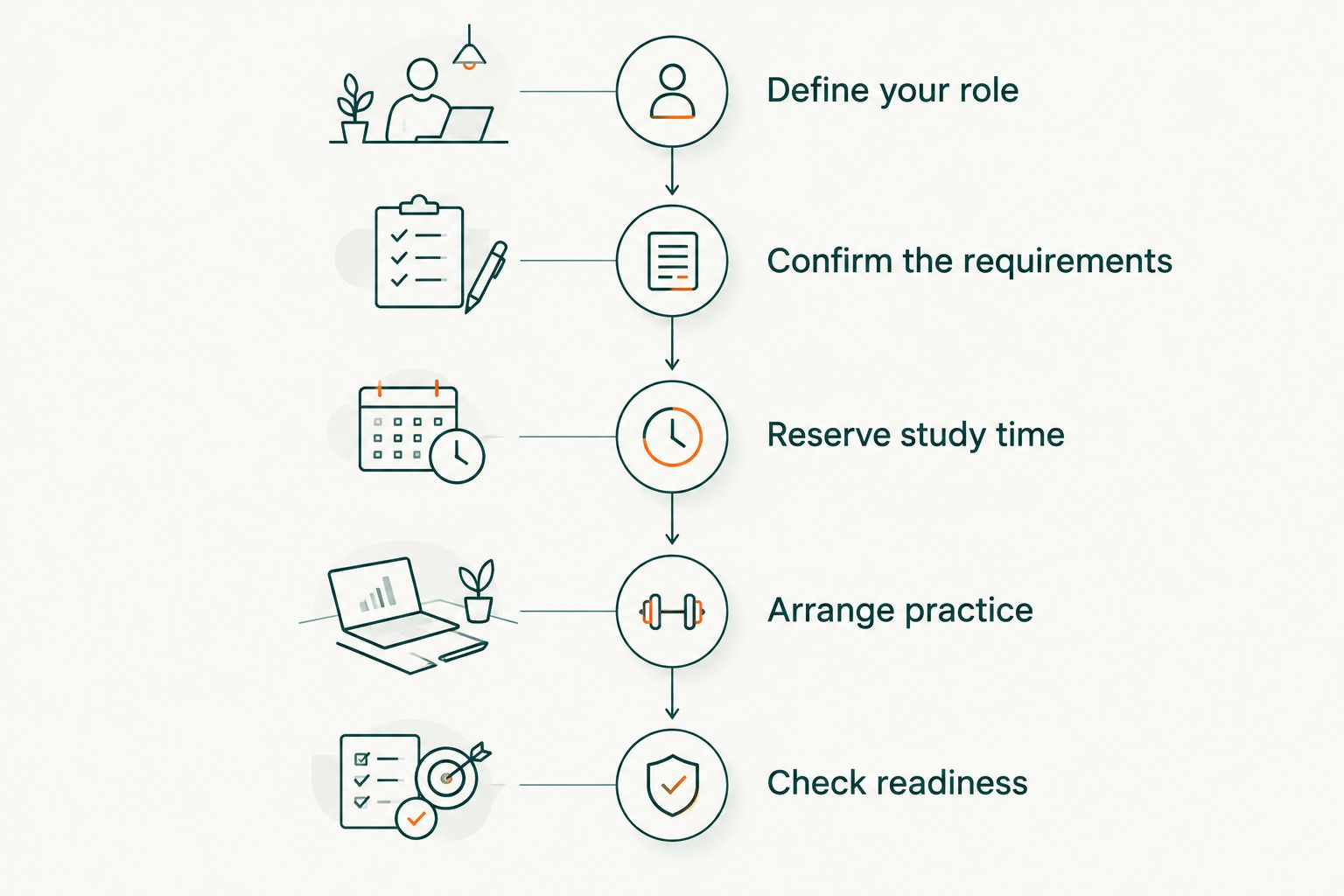
Use this sequence to turn a broad goal into an enrollment decision. Your 2026 plan should show the work between enrollment and assessment, not just a hoped-for finish date.
Define your role
Write a plain-language description of what you want to teach. Specify mat or apparatus, the setting, and whether you intend to teach independently or apply to a studio.
Keep the goal narrow enough to check against a syllabus. Wanting to teach Pilates is a starting point; wanting to teach mat sessions gives you a clearer training requirement.
Confirm the requirements
Request the syllabus and completion rules before paying. Check prerequisites, required assignments, practice expectations, assessments, and the credential awarded.
Ask what happens after an unsuccessful assessment. A realistic plan leaves room to respond to feedback instead of assuming every requirement will be completed on the first attempt.
Reserve study time
Put recurring study and practice appointments into your calendar. Use time you can protect during an ordinary week, including weeks when work or family commitments are demanding.
Keep passive study and active teaching practice visible as separate tasks. Otherwise, a calendar full of lessons can conceal the absence of rehearsal.
Arrange practice
Decide where practice will happen and what resources it needs. For apparatus work, confirm access before building your timetable around equipment you do not control.
For practice teaching, check the course’s rules about participants, supervision, and recording. Do not assume informal practice automatically satisfies a formal requirement.
Check readiness
Before booking an assessment or applying for a role, compare your progress with the published criteria. List what is complete and what still needs instruction, rehearsal, or feedback.
Then confirm the requirements of your intended teaching setting. Course completion is a milestone; it is not a promise of employment, earnings, or acceptance by every studio.
What should you check before paying tuition?
Teachpilates’ online Pilates instructor certification tuition is $497. The curriculum covers anatomy, mat instruction, introductory Reformer concepts, cueing, and business skills; choose it for that stated scope rather than assuming it includes a separate apparatus qualification or independent credential.
This article is published by Teachpilates. Use the same enrollment checks for this course that you would use for any alternative:
- Does the syllabus match the instruction you want to provide?
- What experience or prerequisites apply before enrollment?
- How are written knowledge and practical teaching assessed?
- What access period and support arrangements apply?
- Which materials, assessments, or outside activities require separate arrangements?
- What credential is awarded, and does your intended teaching setting accept it?
Ask for written answers to anything that affects your decision. A clear answer about scope matters more than a completion claim that leaves practice and assessment undefined.
Review your training fit
Explore $497 self-paced study in anatomy, mat foundations, cueing, introductory Reformer concepts, and business skills.
Can you train while working full time?
You can plan training around full-time work by choosing a format that matches your availability. Self-paced study gives you scheduling control, while scheduled sessions require protected attendance.
The deciding question is whether your weekly plan includes practice as well as coursework. Choose a sustainable routine rather than a finish date that depends on having no interruptions.
Does previous Pilates experience shorten training?
Previous practice gives you familiarity with the movement, but a provider determines whether prior learning changes its requirements. Do not remove assignments or practice from your plan without written confirmation.
Teaching also asks you to explain what you know. Include cueing and instruction practice even when the exercises feel familiar in your own body.
FAQ
How long does it take to become a Pilates instructor online?
Your online training timeline depends on the course requirements, your study schedule, practice, and assessment process. Self-paced delivery lets you organize study time; it does not establish a universal completion period.
Can I become a Pilates instructor without teaching experience?
You can pursue instructor training without already working as a teacher, but check the chosen course’s entry requirements. Prior teaching experience and Pilates practice are different from meeting a provider’s prerequisites.
Is online Pilates certification enough to teach Reformer classes?
Online certification alone does not establish that you have completed dedicated hands-on Reformer preparation. Check the course’s apparatus scope, practical assessment, and your intended studio’s requirements.
How much does the Teachpilates course cost?
Teachpilates tuition is $497 for its self-paced online Pilates instructor certification course. Confirm the current enrollment terms and any separate arrangements relevant to your intended teaching pathway.
Should I finish anatomy before practicing teaching?
Follow your course’s learning sequence and prerequisites rather than creating your own assessment rules. Connect anatomy study with the exercises and cues you are learning, and seek clarification when a concept is unclear.
Does finishing a Pilates course guarantee a studio job?
Finishing a Pilates course does not guarantee employment or acceptance by every studio. Ask your intended employer about its training, practical assessment, and audition expectations before enrolling.
Does a course certificate include an independent Pilates credential?
A course certificate does not automatically include an independent credential. Check the awarding organization, eligibility requirements, and any separate application or examination process.
One last thing
Before you choose your 2026 finish date, practice explaining an exercise without demonstrating it. Notice whether your words communicate the starting position, intended movement, and a clear instruction.
This is not a replacement for assessment. It is a useful reminder that becoming an instructor means learning to teach, not simply finishing lessons. Build your calendar around the skills you need to demonstrate.