
You do not need a single nationwide U.S. Pilates teaching license, but that does not mean you can teach without meeting employer, insurance, or local business requirements. Certification documents your training; it does not replace those checks or qualify you for every teaching setting. TeachPilates offers $497 tuition and flexible, self-paced online study for aspiring instructors building their teaching foundations.
- Do you have to be certified to teach Pilates? Check legal requirements, employer expectations, and insurance conditions separately.
- TeachPilates suits first-time instructors seeking self-paced Pilates certification foundations, not a substitute for hands-on apparatus qualification.
- Match mat or Reformer training to the classes you intend to teach.
- A course certificate and an independent credential are different; confirm exactly what your training awards.
Do you have to be certified to teach Pilates?
There is no single nationwide U.S. Pilates instructor license, but certification requirements depend on where and how you teach. A studio's hiring policy, an insurer's conditions, and local business rules answer different questions. Meeting one does not automatically satisfy the others.
Use these distinctions when planning your teaching career in 2026:
| Requirement | What it establishes | What you should check |
|---|---|---|
| Government requirements | Whether your activity or business needs a license, registration, or other permission | Rules for your location and business arrangement |
| Employer requirements | Whether a studio or facility accepts your training for a particular role | Required curriculum, assessments, experience, and audition |
| Insurance conditions | Whether a policy covers your stated teaching activities | Accepted qualifications, equipment, settings, and exclusions |
| Course certification | Completion of a provider's training and assessment requirements | Teaching scope and the exact award issued |
| Independent credential | Achievement of a separate credentialing body's requirements | Eligibility, examination, and maintenance conditions |
If you are considering enrollment, TeachPilates provides online training covering anatomy, mat instruction, introductory Reformer concepts, cueing, and business skills. Match that curriculum to your intended role before enrolling; do not treat any course title as proof of acceptance everywhere.
Why this matters
The practical question is not just whether you can call yourself a Pilates instructor. It is whether you can demonstrate the skills required for the class you intend to lead and meet the conditions attached to that work.
You might be preparing to teach mat sessions independently, apply to a studio, or eventually teach apparatus classes. Those plans require different preparation. Choose your intended teaching scope first, then choose training that supports it.
This article is published by TeachPilates, which offers instructor training. The enrollment guidance separates the course's stated curriculum from requirements set by employers, insurers, and independent credentialing bodies.
Mat foundations versus hands-on apparatus qualification
Mat instruction and apparatus instruction share principles, but they are not interchangeable teaching scopes. Learning an exercise concept does not establish that you can manage equipment, adjust a setup, observe a moving carriage, or teach someone safely in person.
Compare the training format against the work you want to perform:
| Training route | Best for | Main advantage | Limitation to check |
|---|---|---|---|
| Self-paced online foundations | First-time instructors needing study flexibility | Lets you organize theory study around your schedule | Confirm practical assessment, feedback, and employer acceptance |
| In-person mat training | Learners seeking direct feedback on mat teaching | Provides a setting for observing and correcting teaching technique | Mat training does not establish apparatus competence |
| Dedicated hands-on apparatus training | Aspiring instructors planning equipment-based classes | Focuses preparation on the apparatus being taught | Confirm equipment access, assessed practice, and the apparatus covered |
Online study can support your understanding of anatomy, sequencing, and cueing. Its limitation is not the screen itself; it is any gap between studying material and demonstrating the required teaching skills.
Likewise, attending an in-person course does not automatically prove readiness. Ask what you must demonstrate to complete it, rather than judging a course only by its delivery format.
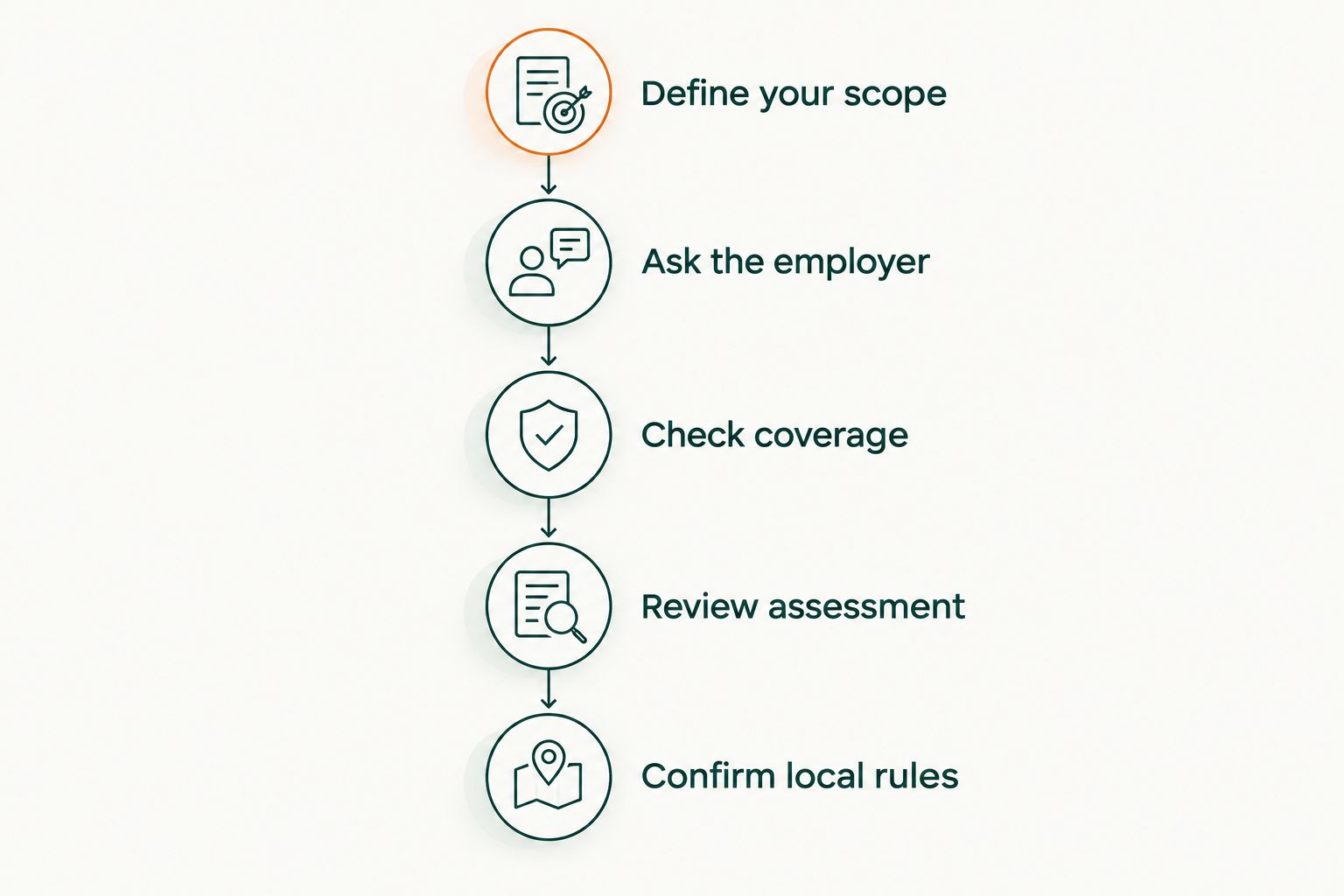
How do you check whether your training will be accepted?
Before paying for training in 2026, complete these steps in order. You are checking a specific teaching plan, not seeking a promise that one certificate works everywhere.
1. Define your scope
Write down the classes you want to teach: mat, apparatus, online, in person, group, or individual. Include the audience and setting so your questions are specific.
For example, asking whether a course supports beginner mat teaching produces a clearer answer than asking whether it makes you fully qualified. Keep equipment-based ambitions separate until you have checked the relevant practical training.
2. Ask the employer
If you have a studio or facility in mind, request its training requirements before enrolling. Ask whether it evaluates the provider, syllabus, practical assessment, observation, practice teaching, or a separate audition.
Get the answer in writing. A training provider cannot bind an employer to accept its certificate, and a general statement about recognition does not answer a particular studio's hiring question.
3. Check coverage
Describe your intended activities to an insurance provider. Ask which qualifications and teaching settings it accepts and whether coverage includes the equipment and delivery format you plan to use.
Do not assume that coverage for an employed role extends to your own classes. Review the relevant policy wording and clarify exclusions before you teach.
4. Review assessment
Ask what you must do to pass and what evidence of teaching ability the provider evaluates. Separate written knowledge checks from practical demonstrations, and establish whether you receive feedback on cueing, observation, and exercise selection.
A completion certificate is meaningful only when you understand what completion required. Confirm any reassessment conditions and the award's exact name before enrollment.
5. Confirm local rules
Check the government requirements relevant to your location and business arrangement. Distinguish permission to operate a business from a professional teaching qualification.
If you intend to use rented premises or teach from home, check the conditions for that setting as well. Your course certificate does not replace permission to use a space for classes.
Why Pilates certification requirements vary
Requirements differ because teaching situations differ. For your 2026 enrollment decision, concentrate on these factors rather than searching for a certificate that promises universal acceptance:
- Teaching scope: Mat instruction and apparatus instruction call for different practical preparation. Confirm the activities your training actually assesses.
- Employer policy: A studio determines its hiring criteria. Ask about the specific role, not whether online certification is accepted in general.
- Insurance terms: Coverage depends on the policy and the activities you disclose. Check equipment, delivery format, and qualifications together.
- Assessment evidence: Studying anatomy and demonstrating teaching ability are different achievements. Find out how each is evaluated.
- Business setting: Independent classes, employment, home teaching, and rented premises involve different arrangements. Check the conditions attached to yours.
- Credential pathway: A provider's certificate and a separate independent credential have different requirements. Verify whether a separate application or examination is involved.
Keep those answers together as your enrollment checklist. If the curriculum does not match your intended teaching scope, choose a better-matched route rather than relying on the certificate's wording.
Can you teach Pilates with an online certification?
An online Pilates certificate is not automatic permission to teach every class. Its suitability depends on the curriculum, assessments, your demonstrated skills, and the requirements of the employer or insurer involved.
For first-time instructors, flexible study helps you fit learning around existing commitments. The trade-off is that you must examine how practical teaching is developed and assessed rather than assuming video lessons alone establish readiness.
Ask how you will practice giving instructions, observe a learner's response, and change an exercise when appropriate. If your goal involves apparatus, confirm hands-on preparation separately from introductory equipment content.
Does dance or fitness experience replace Pilates teacher training?
Dance or fitness experience does not establish Pilates teaching competence by itself. Being comfortable performing movement is different from selecting exercises, explaining them clearly, and responding to another person's needs.
The distinction applies even when Pilates is part of cross-training for dancers: participating in conditioning and teaching that conditioning are different roles. Assess your readiness through teaching practice and feedback, not through your own performance alone.
If you already teach another movement discipline, identify what transfers and what still needs study. Familiarity with groups can help you organize a class, but it does not replace learning Pilates-specific exercises, progressions, equipment use, or the limits of your teaching scope.
Is a course certificate the same as an independent credential?
A course certificate and an independent credential are different awards. A training provider sets the requirements for its course; a separate credentialing organization sets its own eligibility and assessment requirements.
Before enrolling in 2026, ask for the exact award name. Then ask whether any independent examination is included, requires a separate application, or has prerequisites beyond the course.
Do not infer an independent credential from phrases such as professional certification or teacher training. Equally, do not assume every employer requires the same independent award. Check the role you want and the credential pathway you intend to follow.
What should you budget beyond tuition?
TeachPilates lists tuition at $497 for its self-paced online instructor course. Treat that figure as course tuition, not as a statement of your complete cost to begin teaching.
Build your budget around the requirements you have confirmed:
- Practice and equipment: Establish where you will practice and whether you need separate apparatus access.
- Assessment: Check whether reassessments or additional practical evaluations carry separate charges.
- Independent credentials: Confirm separate application or examination costs if you choose that pathway.
- Teaching setup: Check insurance, premises, equipment, and any business registration expenses relevant to your plan.
- Additional requirements: Ask your intended employer about CPR, first aid, or other conditions before making purchases.
Do not buy every possible add-on before defining your teaching scope. First establish what your intended role requires, then confirm which expenses your course tuition includes.
When is this self-paced course a good fit?
TeachPilates is best for first-time instructors seeking flexible online Pilates certification foundations. Its stated curriculum covers anatomy, mat instruction, introductory Reformer concepts, cueing, and business skills.
The practical advantage is self-paced study. You can organize your learning around existing commitments rather than selecting a course solely because its timetable fits.
The boundary matters just as much: introductory Reformer concepts are not a substitute for dedicated hands-on apparatus qualification. If your target role requires supervised apparatus practice or a particular independent credential, confirm how you will meet those requirements separately.
For a 2026 enrollment decision, use one rule: enroll when the curriculum matches your next teaching goal and you understand the remaining requirements. Do not enroll on the assumption that a certificate guarantees employment, earnings, or studio acceptance.
FAQ
Do you have to be certified to teach Pilates in the United States?
There is no single nationwide U.S. Pilates teaching license, but employers, insurers, and local authorities set different requirements. Check the rules for your intended role and location before teaching.
Can I teach Pilates without any training?
Do not treat the absence of a nationwide license as evidence that you are ready to teach. Complete relevant training, demonstrate practical teaching skills, and confirm employer and insurance requirements.
Will every studio accept an online Pilates certification?
An online Pilates certificate does not guarantee acceptance by every studio. Ask your intended employer about the provider, curriculum, practical assessment, and audition requirements before enrolling.
Does mat certification qualify me to teach Reformer classes?
Mat certification does not by itself establish Reformer teaching competence. Confirm dedicated apparatus training, hands-on practice, and assessment requirements for the role you want.
How much is the TeachPilates instructor course?
TeachPilates lists tuition at $497 for its self-paced online instructor course. Check separately for expenses related to practice, insurance, independent credentials, or your teaching setup.
Do I need an independent credential after my course?
An independent credential is a separate pathway, not an automatic part of every instructor course. Check your intended employer's requirements and the credentialing organization's eligibility rules.
Do I need CPR or insurance before teaching Pilates?
Check CPR and insurance requirements with your employer, facility, and insurance provider before teaching. A course certificate does not establish that you have met those separate conditions.
One last thing
Before enrolling, write one sentence describing exactly what you want to teach, to whom, and where. Send that same sentence to the course provider, your intended employer, and an insurer.
Specific questions produce comparable answers. You are ready to choose training when those answers agree on your next step—not simply when a course offers a certificate.