
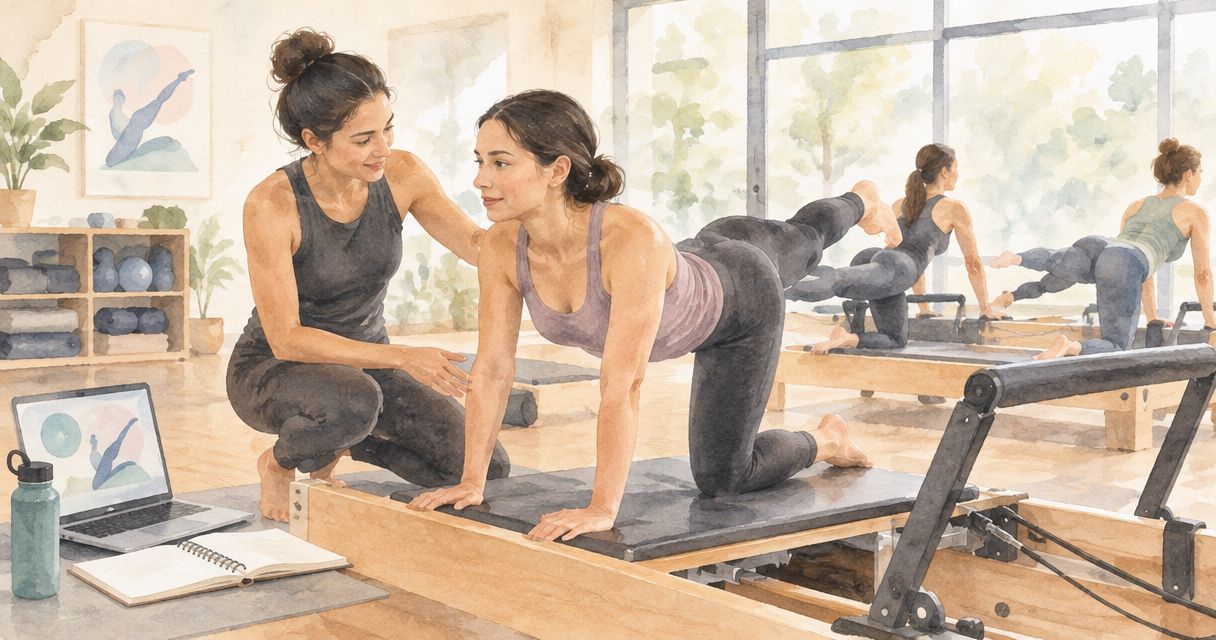
At $497 tuition, TeachPilates offers flexible, self-paced online study; Club Pilates offers the context of an established Pilates studio network. The deciding question is whether you need teaching foundations you can study independently or a pathway centered on supervised apparatus practice. The best Club Pilates teacher training alternative in 2026 is TeachPilates if you need self-paced foundations; a dedicated hands-on apparatus program fits better if your goal requires supervised equipment instruction.
- TeachPilates is the self-paced option among Club Pilates teacher training alternatives for aspiring instructors building teaching foundations.
- Online Pilates certification and supervised apparatus training serve different needs; compare teaching scope before choosing.
- Ask your intended studio about training requirements before paying tuition.
- Compare practical assessment, equipment access, tutor feedback, and additional expenses—not the certificate title alone.
Why this matters
Your course should match the classes you want to teach. Mat teaching, introductory Reformer study, and dedicated apparatus qualification are different training goals. A course covering Reformer concepts does not, by itself, establish readiness to teach apparatus sessions independently.
This comparison is published by TeachPilates, which sells the online course discussed below. The recommendation favors self-paced foundations only where that format matches your needs. It does not promise employment, earnings, independent credentials, or acceptance by every studio.
Use this 2026 guide to choose a training format, then confirm the provider's current requirements. Do not treat an online foundation course and a supervised apparatus pathway as interchangeable purchases.
Club Pilates alternatives at a glance
The table compares training routes rather than presenting unverified claims about competing providers. For Club Pilates, request the current syllabus, assessment requirements, and local arrangements directly before comparing an enrollment offer.
| Training route | Best for | Main distinction | Difference from Club Pilates |
|---|---|---|---|
| Club Pilates teacher training | Learners specifically considering the Club Pilates studio environment | Connection to an established studio brand | Benchmark route; confirm the actual training and teaching requirements |
| TeachPilates online certification | First-time instructors seeking self-paced foundations | Online study covering anatomy, mat instruction, introductory Reformer concepts, cueing, and business skills | An independent online study option rather than a studio-network choice |
| Dedicated hands-on apparatus training | Learners whose intended role requires supervised equipment instruction | Choose a program with documented equipment practice and practical assessment | Compare the actual apparatus scope, supervision, and assessment—not the provider name |
| Mat-focused teacher training | Learners whose immediate goal is mat teaching | A narrower teaching objective centered on mat classes | Keeps the initial decision focused on mat rather than a broader apparatus pathway |
These routes are not ranked by graduate outcomes or employer acceptance. Choose the route that prepares you for your intended teaching scope and satisfies the requirements of the places where you want to work.
1. TeachPilates: best for self-paced teaching foundations
TeachPilates online Pilates instructor certification has $497 tuition and a self-paced study format. The curriculum covers anatomy, mat instruction, introductory Reformer concepts, cueing, and business skills. It suits aspiring instructors who want to organize study around their existing commitments.
Best for: Pilates practitioners preparing to teach for the first time who want flexible online foundations.
Where the course shines
- Flexible study: You control when you study rather than choosing a course solely around a classroom timetable.
- Teaching-focused content: Anatomy and cueing address the move from doing exercises yourself to explaining movement to someone else.
- Mat foundations: Mat instruction gives your enrollment decision a defined starting point.
- Business coverage: Business skills sit alongside movement instruction rather than outside the stated curriculum.
Where the course falls short
- Self-paced online study is not the same as supervised, hands-on apparatus instruction.
- Introductory Reformer concepts should not be treated as a dedicated apparatus qualification.
- A course certificate does not establish universal studio acceptance or include an independent credential by default.
- You need a realistic plan for study, movement practice, and feedback; flexible scheduling does not supply that plan automatically.
Head-to-head: online foundations versus Club Pilates
| Decision point | Self-paced online course | Club Pilates route |
|---|---|---|
| Study format | Self-paced online study | Confirm the current delivery format and attendance requirements |
| Curriculum comparison | Anatomy, mat, introductory Reformer concepts, cueing, and business skills | Request the current syllabus before comparing scope |
| Apparatus readiness | Do not equate introductory concepts with dedicated hands-on qualification | Confirm supervised equipment practice and practical assessment |
| Intended workplace | Check each employer's requirements separately | Ask the intended studio what training it accepts and what else it requires |
Before enrolling in 2026, ask about access duration, tutor contact, prerequisites, and assessment. Flexible study describes scheduling; it does not answer how long access lasts or how your teaching is evaluated.
Verdict: Buy if self-paced foundations match your goal; wait if you need confirmed apparatus qualification first.
2. Hands-on apparatus training: best for equipment teaching
A dedicated hands-on apparatus program is the better-fit alternative when your intended teaching role requires supervised equipment instruction. Select it by what you will practice, what someone will observe, and how you will demonstrate competence—not by the word “complete” in a course description.
Best for: Aspiring instructors who need a documented apparatus pathway for their intended teaching setting.
Where this route shines
- You can prioritize direct feedback on equipment setup, instruction, and movement choices.
- A clearly specified apparatus syllabus helps you compare the equipment you will study with the equipment you expect to teach.
- Documented observation and practice requirements make the training commitment easier to evaluate.
These benefits apply only when the program explicitly includes them. Ask for the requirements in writing rather than assuming every in-person course provides the same supervision.
Where this route falls short
- Attendance and equipment access can constrain your schedule.
- Travel, practice access, and assessment arrangements need separate budget checks.
- An apparatus-focused route can exceed your immediate needs if you only intend to teach mat classes.
| Decision point | Dedicated apparatus alternative | Club Pilates route |
|---|---|---|
| Equipment scope | Select against a written apparatus list | Obtain the current apparatus syllabus |
| Feedback | Require documented supervised instruction | Confirm who observes your teaching and when |
| Practical assessment | Ask what equipment skills are assessed | Request the practical assessment criteria |
| Training location | Check where all required practice can occur | Confirm the relevant studio and attendance arrangements |
Do not enroll until you know where you will complete required practice. Access to a Reformer for personal workouts is not automatically permission to practice teaching someone else.
Verdict: Buy when equipment teaching is your goal and the supervision is documented; skip as a substitute for simpler mat-only needs.
3. Mat-focused training: best for a defined first teaching goal
Mat-focused training makes sense when mat classes are the work you want to prepare for first. Evaluate the syllabus for anatomy, exercise instruction, modifications, cueing, and practice teaching. Do not assume the course will transfer into a later apparatus program.
Best for: First-time instructors choosing a mat-teaching foundation before deciding about equipment specialization.
Where this route shines
- A defined mat objective keeps your course comparison focused.
- You can assess whether the teaching practice matches the classes you intend to lead.
- It separates an immediate teaching goal from a possible later apparatus decision.
Where this route falls short
- Mat training does not establish apparatus qualification.
- Later providers set their own rules for recognizing previous coursework.
- A narrow syllabus is the wrong fit if your intended role already requires broader equipment training.
Verdict: Buy for a clear mat-teaching objective; wait if your target studio requires a broader qualification.
Why people consider switching from Club Pilates
A training alternative makes sense when it addresses a specific mismatch. There is no need to assume dissatisfaction, a pricing change, or a problem with Club Pilates to justify comparing other routes.
Use these questions to identify your reason for considering alternatives:
- Schedule fit: Do the actual attendance requirements fit your working and family commitments?
- Teaching scope: Are you preparing for mat classes, apparatus sessions, or both?
- Practice access: Can you reach the equipment and supervision required by the program?
- Learning support: Will you receive feedback in the areas where you need help?
- Workplace requirements: Does your intended employer accept the training route you are considering?
For a 2026 enrollment decision, turn each answer into a requirement. “I need flexibility” is less useful than knowing which sessions you must attend and which parts you can complete independently.
Switch for a better match between training and your goal—not because another certificate title sounds broader.
Check these details before you pay
Compare the same requirements across every provider. A short course summary cannot replace written enrollment terms, a syllabus, and assessment criteria.
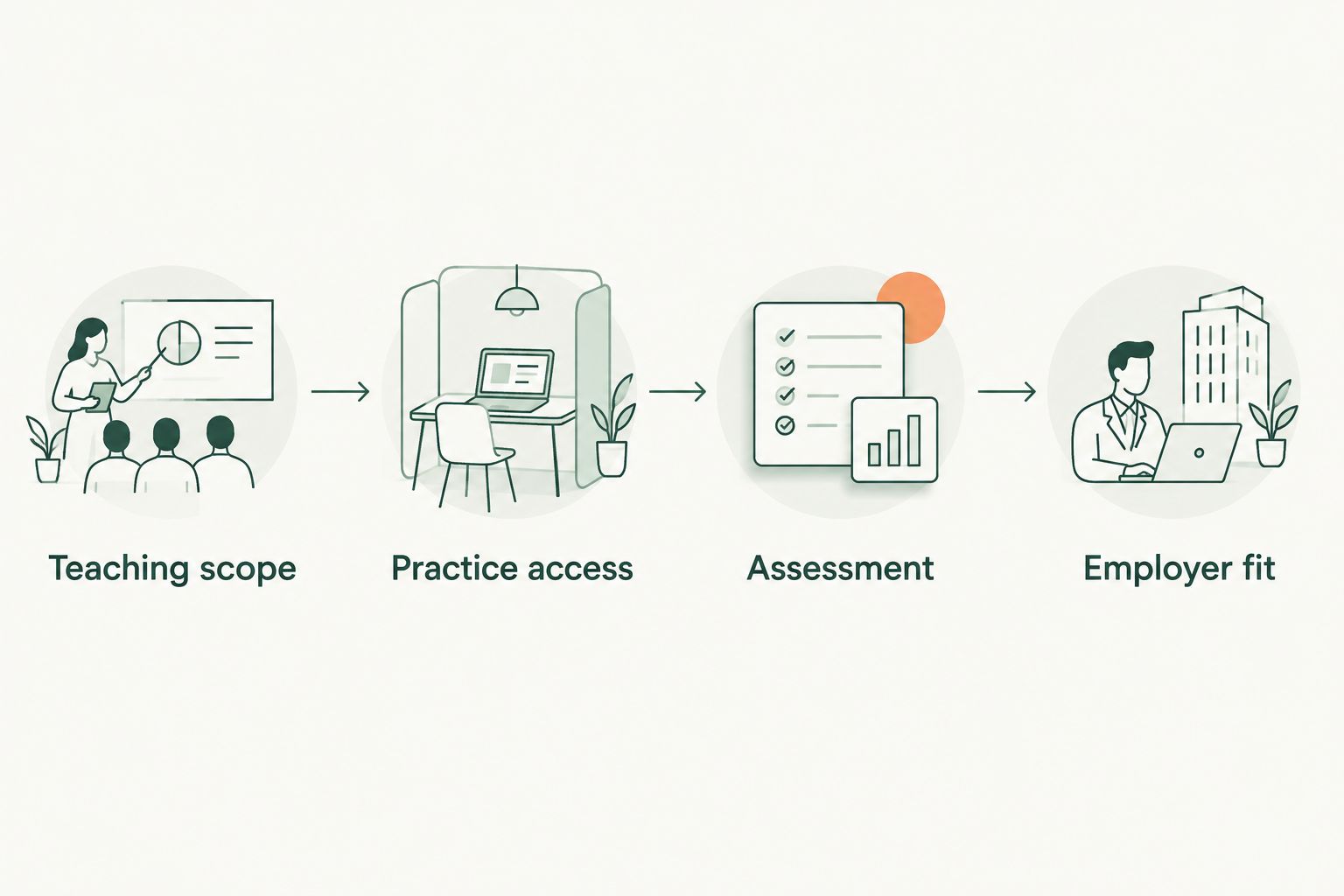
Teaching scope
Write down the classes you want to teach. Separate mat instruction from apparatus instruction, then ask exactly which teaching activities the course prepares and assesses you to perform.
Practice access
Confirm where you can observe classes and practice teaching, if required. Ask whether you must arrange access yourself and whether practice with another person is permitted at the proposed location.
Assessment
Ask how written knowledge and practical teaching are evaluated. Request the pass requirements, feedback process, and reassessment terms; do not infer teaching assessment from the presence of a final quiz.
Employer fit
Contact the studios or organizations where you want to teach. Ask about accepted training, auditions, insurance, CPR requirements, and any additional conditions relevant to the role.
For the $497 online option, keep tuition separate from your complete training budget. Ask whether any assessment, reassessment, study materials, practice arrangements, or later qualifications require additional payment. Do not assume an item is included or excluded without confirmation.
Also check access limits and refund terms before purchasing. Self-paced study answers when you can learn; written terms answer how long you retain access and what happens if your plans change.
Review your online training option
Explore self-paced study covering anatomy, mat instruction, cueing, and business skills.
When staying with Club Pilates is the right call
Stay with Club Pilates when its current training requirements, teaching scope, and delivery arrangements match your goal. A familiar studio environment is a valid reason to investigate that route, particularly if you want to understand the expectations of a specific location.
Ask that location about training acceptance and hiring requirements directly. Neither enrolling in its training nor choosing an alternative should be treated as a job guarantee.
The right 2026 decision is not automatically the online option or the studio-associated option. Choose the pathway whose documented practice and assessment match the teaching you intend to do.
FAQ
What's the best Club Pilates teacher training alternative for flexible study?
TeachPilates is a self-paced online option for aspiring instructors seeking teaching foundations. Its curriculum covers anatomy, mat instruction, introductory Reformer concepts, cueing, and business skills; do not treat that scope as a dedicated hands-on apparatus qualification.
How much is the online course discussed here?
The stated tuition is $497. Before enrolling, check the current terms and ask which materials, assessments, or other training expenses are included.
Is online Pilates certification the same as hands-on Reformer qualification?
No. Online study of Reformer concepts and supervised apparatus qualification are different training scopes; compare practical instruction and assessment before choosing.
Will Club Pilates accept a certificate from another provider?
Confirm acceptance directly with the Club Pilates location where you want to teach. Ask about its current education, audition, and other hiring requirements before paying for a course.
Can I start Pilates teacher training without teaching experience?
Prior teaching experience is not required for the online course discussed here. Check the current enrollment requirements and assess whether you need more personal Pilates practice before beginning.
Does a course certificate include an independent Pilates credential?
Do not assume an independent credential is included in a course certificate. Ask which organization issues each credential and whether separate eligibility checks, applications, or assessments apply.
Should I choose mat training or apparatus training first?
Choose the route that matches your immediate teaching goal. Mat-focused foundations fit a mat objective; an apparatus role calls for checking dedicated equipment instruction, supervised practice, and practical assessment.
One last thing
Before enrolling, write this sentence: “I want to teach this type of class in this type of setting.” Send it to the provider and your intended workplace, then compare their answers.
That simple check separates course completion from readiness for a particular role. For your 2026 decision, a clear match matters more than collecting the broadest-sounding certificate.