
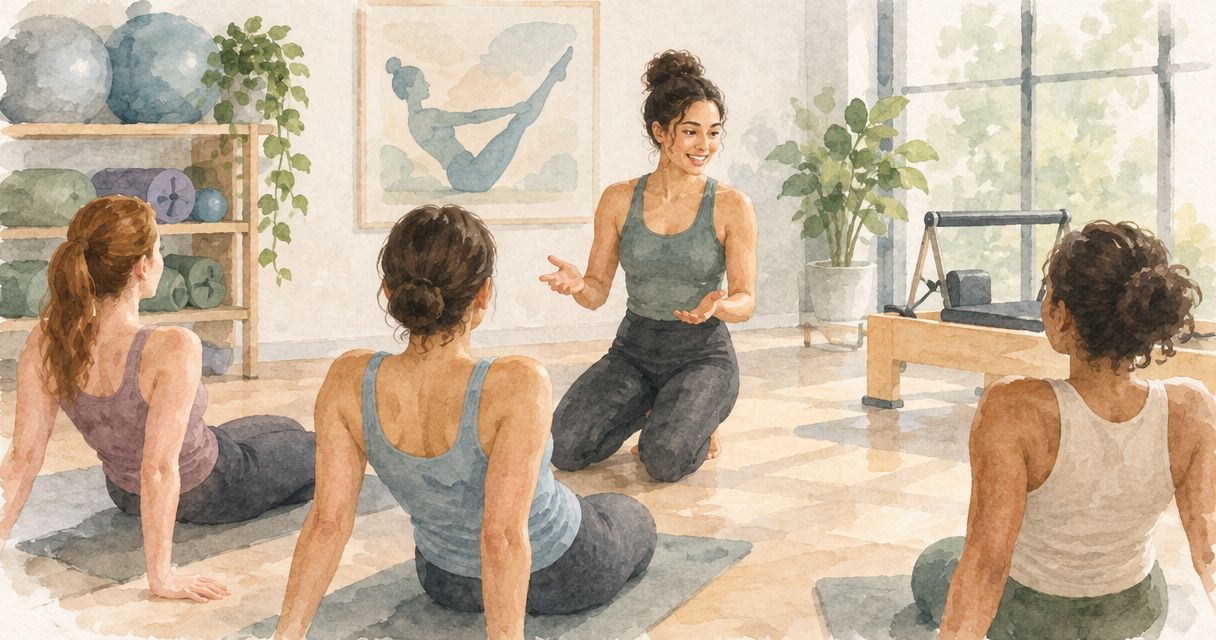
Yes—you can become a Pilates instructor without a fitness background, and $497 tuition with flexible, self-paced study offers an online starting point. You still need to learn anatomy, practice teaching, and meet the requirements of the course and the setting where you want to work. Introductory Reformer lessons are not the same as dedicated hands-on apparatus qualification.
- You can become a Pilates instructor without a fitness background; check course prerequisites before enrolling.
- Teachpilates offers self-paced online Pilates instructor certification for $497, covering anatomy, mat instruction, cueing, and business skills.
- Choose training that matches your intended teaching scope, not just a certificate title.
- Introductory Reformer concepts do not replace dedicated hands-on apparatus training.
Why this matters
Your starting background and your readiness to teach are different questions. You do not need to arrive as a personal trainer, dancer, or experienced teacher to begin learning. You do need a course and practice plan that address what you have not learned yet.
For a 2026 enrollment decision, start with the Teachpilates course information, then compare the curriculum with your intended teaching role. This guide is published by Teachpilates to help you decide whether its training format fits your starting point—not to promise employment or acceptance by every studio.
Can you become a Pilates instructor without a fitness background?
Yes. A fitness career is not a prerequisite for beginning Pilates instructor education; the relevant checks are the provider’s entry requirements, the teaching skills you develop, and the requirements of your intended workplace.
Use this sequence before you enroll:
- Check eligibility. Ask whether the course requires previous qualifications, Pilates experience, or an entry assessment. Do not assume that every provider uses the same rules.
- Choose your teaching scope. Decide whether you want to begin with mat teaching or pursue hands-on Reformer and other apparatus instruction.
- Inspect the curriculum. Look for anatomy, exercise instruction, cueing, modifications, lesson planning, and assessment details.
- Plan practical learning. Identify how you will observe teaching, practice explaining exercises, and receive feedback.
- Check the next gate. Ask your intended studio, venue, or insurer what evidence it requires before you commit to training.
Your first goal is not to look like an established instructor. It is to choose training that makes the route from practitioner to teacher clear.
What does “no fitness background” mean for your training?
Not having taught exercise is different from never having practiced Pilates. Name your actual starting point so you can ask useful enrollment questions rather than treating every beginner as the same.
| Starting point | Best for your next step | Useful foundation | Limitation to address |
|---|---|---|---|
| Pilates practitioner, no teaching experience | Learning to instruct other people | Familiarity with taking a class | Doing an exercise does not establish teaching skill |
| New to Pilates and teaching | Building personal familiarity alongside foundational study | A clear beginner’s perspective | You need to learn both the movements and how to explain them |
| Fitness professional, new to Pilates | Checking how existing skills fit Pilates training | Previous experience explaining exercise | Another qualification does not establish Pilates-specific competence |
None of these starting points settles whether you will become a capable instructor. Choose your next step according to the gap you need to close. A confident practitioner still needs teaching practice; an experienced trainer still needs Pilates-specific education.
If you are completely new, take part in Pilates lessons while investigating instructor training. Use that experience to understand the activity you want to teach, not as a substitute for formal learning.
Which training format fits a first-time instructor?
In 2026, compare training formats by how you will learn and demonstrate skills. A convenient schedule matters, but convenience does not answer whether you will receive the practical preparation you need.
| Training format | Best for | Main advantage | Main limitation to check |
|---|---|---|---|
| Self-paced online study | Learners who need control over study times | You can organize study around existing commitments | Confirm feedback, practical assessment, and access terms |
| Scheduled in-person training | Learners who want live observation and interaction | You can ask questions during a shared session | Attendance requirements must fit your schedule |
| Blended training | Learners seeking online study with planned practical sessions | Different learning tasks can happen in different settings | Check exactly which practical elements are included |
Do not read a format label as a quality guarantee. An online course needs clear assessment information; an in-person course needs a curriculum and teaching scope that match your goals.
Teachpilates is best for aspiring Pilates instructors seeking self-paced online study in anatomy, mat teaching, cueing, and business skills. Its $497 course also covers introductory Reformer concepts. If your goal is hands-on apparatus instruction, plan dedicated practical training rather than treating introductory content as a full apparatus qualification.
What should you learn before teaching someone else?
You do not need to know everything before enrolling. You need to understand what the training should help you learn—and what you must keep practicing after reading a lesson.
Anatomy
Connect anatomical terms to movement and teaching decisions. Being able to name a muscle is different from explaining an exercise clearly or recognizing when a question exceeds your knowledge.
Ask how anatomy appears in lessons and assessments. Look for more than vocabulary memorization.
Mat instruction
Learn exercise setup, purpose, sequencing, and appropriate adaptations within your training. Your own ability to perform a movement does not show that you can teach it to someone with a different starting point.
Practice explaining the setup before demonstrating. Notice whether your learner understands what to do without copying every movement you make.
Cueing
Practice giving a clear instruction, watching the response, and changing your explanation when needed. More words are not automatically better cues.
For a learning exercise, record a 5-minute practice lesson and review it for clarity. This is a suggested practice task, not a certification requirement or a measure of readiness to teach independently.
Teaching boundaries
Keep exercise instruction separate from diagnosis and treatment. If someone asks you to interpret pain or manage a medical condition beyond your qualifications, refer the question to an appropriately qualified professional.
Being a trustworthy instructor includes knowing when not to answer.
Business basics
Understand the administrative side of your intended teaching arrangement. Ask about insurance, venue requirements, client communication, and the boundaries of the service you intend to offer.
Business lessons help you ask better questions. They do not guarantee clients, income, or a teaching position.
Why the route into teaching varies
Your route depends on what you already know and what you intend to teach. Use these factors to build a personal training plan rather than borrowing another learner’s completion schedule.
- Pilates familiarity: If the exercises are new to you, include personal practice alongside study.
- Teaching experience: If you have never instructed others, make explaining, observing, and responding a deliberate part of practice.
- Intended scope: Mat instruction and hands-on apparatus instruction require different preparation.
- Study format: Self-paced learning gives you scheduling control, but you still need to organize study and practical work.
- Assessment requirements: Written knowledge and demonstrated teaching skill answer different questions; inspect how each is assessed.
- Workplace expectations: Check the requirements of the studio, venue, or insurer relevant to your plans.
For your 2026 plan, keep course completion and workplace eligibility as separate checkpoints. Neither the course title nor your enthusiasm answers both.
What should you check before paying tuition?
Check the route from enrollment to assessment before comparing certificate names. The $497 tuition gives you a concrete starting figure, but a useful budget also identifies which parts of your intended training and teaching setup sit outside tuition.
Ask the provider these questions:
- What prior experience or qualifications do I need?
- Which teaching activities does the course prepare me for?
- How are written knowledge and practical teaching assessed?
- What feedback or tutor support is included?
- How long can I access the learning materials?
- Are assessment attempts, materials, or other required items charged separately?
- Is an independent credential separate from the provider’s certificate?
Then ask questions specific to your destination. If you want studio work, send the studio the curriculum and assessment details. If you want apparatus teaching, establish where hands-on learning and equipment access fit.
Do not assume any additional charge applies without checking. Equally, do not assume that tuition includes every expense associated with starting to teach.
How do you turn study into teaching practice?
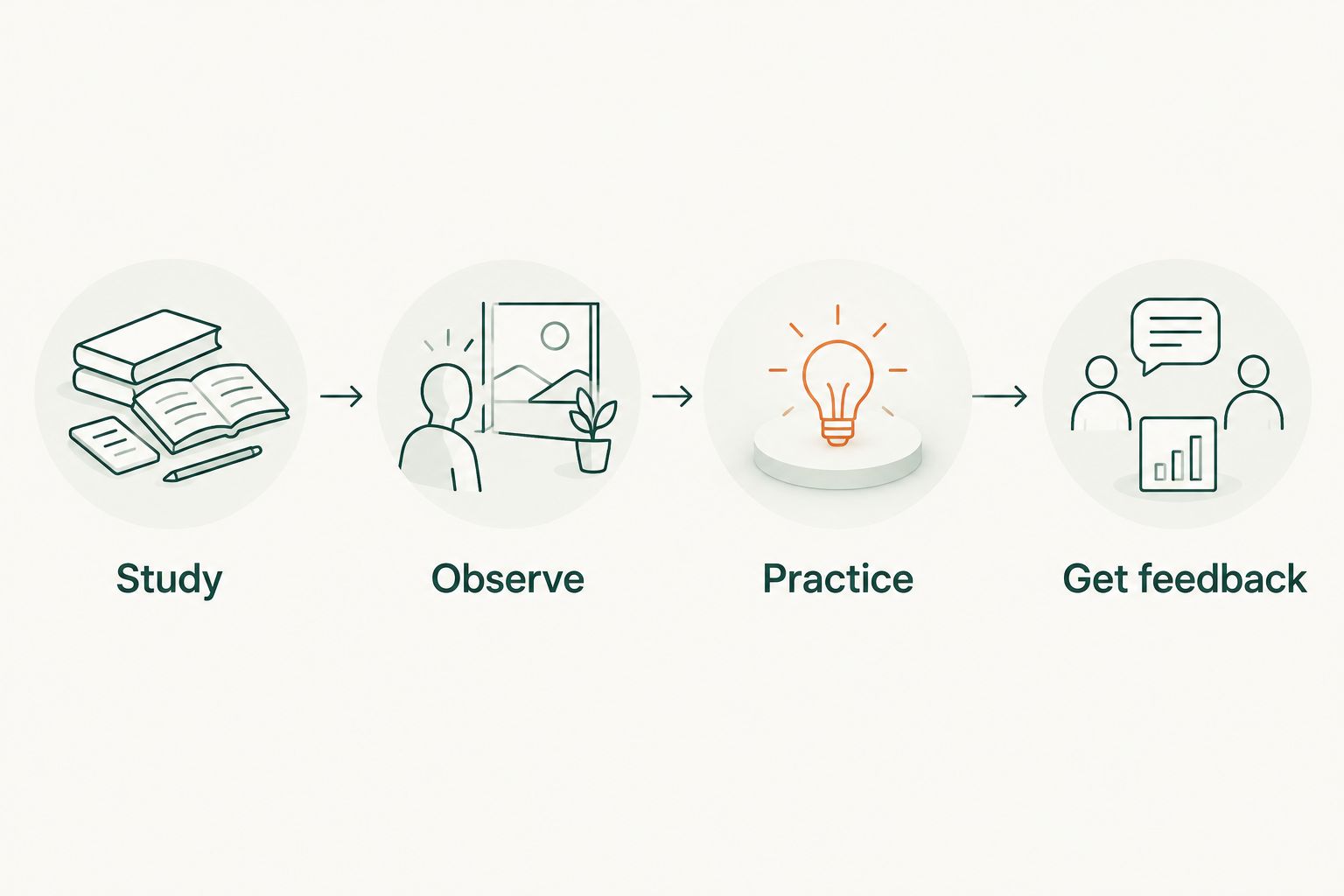
Use a repeatable learning sequence: Study, Observe, Practice, Get feedback. Keep the sequence focused on a specific teaching task so that feedback leads to a clear next action.
- Study: Learn an exercise’s setup, purpose, and relevant anatomy within your course.
- Observe: Watch how an instructor explains the task and responds to the learner.
- Practice: Explain a short sequence within the boundaries of your training.
- Get feedback: Ask what was unclear, review your instructions, and repeat the task.
Create a 1-page practice plan that records the task, the feedback, and your next attempt. Treat this as a study aid, not evidence that you have completed a provider’s required hours or passed an assessment.
The useful question is not whether practice felt comfortable. It is whether your instructions became clearer and whether you can explain the changes you made.
Do you need a personal training qualification first?
You do not need to assume a personal training qualification is the first step toward Pilates instructor training. Check the Pilates provider’s entry requirements directly before enrolling in an unrelated course as preparation.
If a workplace requires another qualification, include that requirement in your plan. Otherwise, focus your preparation on the Pilates knowledge and teaching skills your chosen course expects.
Can you teach Reformer after an online Pilates course?
Introductory Reformer content does not, by itself, establish hands-on apparatus teaching competence. Ask exactly what equipment instruction, supervised practice, and practical assessment the course includes.
For a 2026 Reformer teaching plan, match your training to the equipment and teaching responsibilities involved. A broad curriculum description is not enough to confirm readiness.
Does course certification include an independent credential?
A course certificate does not automatically include an independent credential. Treat them as separate unless the provider explicitly confirms the relationship and any additional requirements.
Ask who issues each credential, what assessment it requires, and whether your intended workplace accepts it. Do not infer independent recognition from the word “certified.”
FAQ
Can I become a Pilates instructor if I have never worked in fitness?
Yes, you can begin Pilates instructor training without a previous fitness career. Check the provider’s prerequisites and plan to develop anatomy knowledge, exercise instruction, cueing, and practical teaching skills.
How much is the Teachpilates online course?
Teachpilates lists $497 tuition for its self-paced online Pilates instructor certification course. Check the current course terms and ask which assessment, access, and support arrangements are included.
Do I need teaching experience before enrolling?
Previous teaching experience is not required for the beginner pathway described here. Confirm the entry requirements of your chosen course, because providers set their own prerequisites.
Can I study Pilates instruction while working full time?
Self-paced study lets you organize learning around work commitments. You still need to allocate time for study, personal practice, teaching practice, and any required assessments.
Is online Pilates certification enough for every studio?
No, an online course certificate does not guarantee acceptance by every studio. Ask the studio to review the specific curriculum, teaching scope, and assessment requirements before you enroll.
Can I teach Reformer after learning introductory concepts?
Introductory Reformer concepts are not the same as dedicated hands-on apparatus qualification. Confirm the practical training and assessment needed for the teaching role you want.
Will a Pilates certificate guarantee me a job?
No, a Pilates certificate does not guarantee a job or earnings. Employers and teaching venues assess their own requirements, and you need to check those separately from course completion.
One last thing
Before choosing a course in 2026, write down the first class you want to teach: the setting, the participants, and whether you intend to use a mat or apparatus. Then ask the provider to explain how its curriculum and assessment prepare you for that specific class.
Choose training backward from the teaching responsibility, not forward from the certificate name. That makes your enrollment decision clearer—and keeps your first step focused on the skills you actually need.