
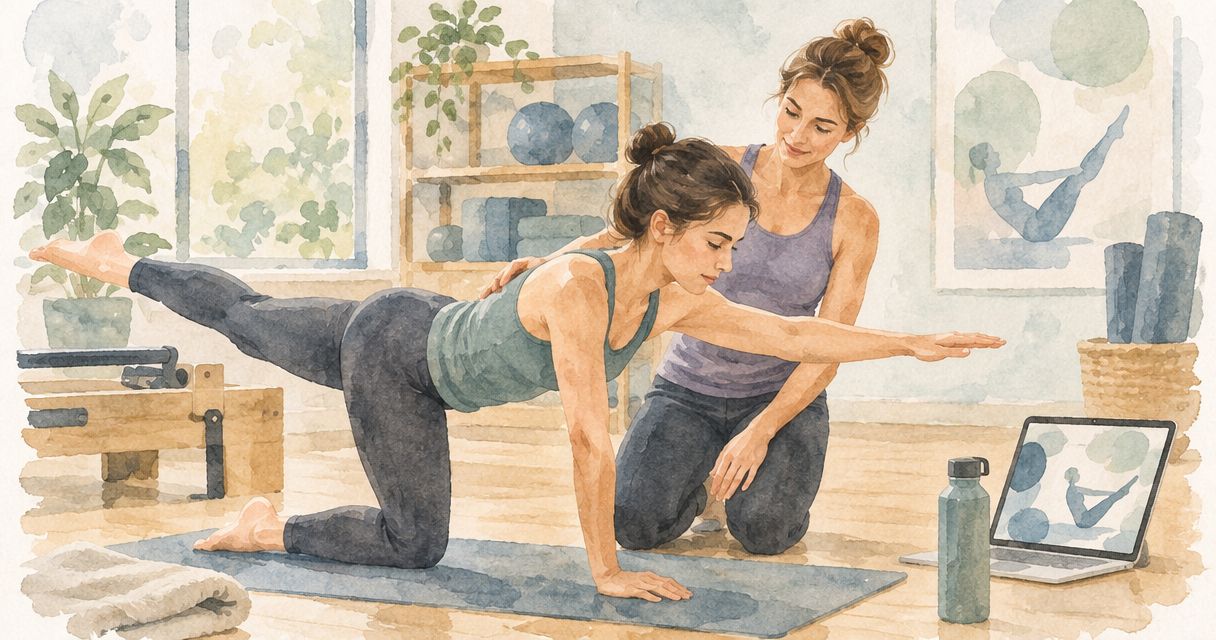
Yes—you can pursue Pilates instructor training with a back injury, provided the course requirements and physical participation fit your individual circumstances. A $497 course with flexible self-paced study gives you control over your study schedule, but it does not replace medical advice or guarantee that practical assessments can be adapted to your needs.
- Pilates instructor certification back injury decisions depend on medical guidance, assessment requirements, and your intended teaching scope.
- Teachpilates offers self-paced Pilates instructor training for $497; flexible scheduling does not guarantee assessment accommodations.
- Ask about practical demonstrations before enrolling, not after you reach the exam.
- Mat-teaching foundations and introductory Reformer concepts are not the same as dedicated hands-on apparatus qualification.
Can you become a Pilates instructor with a back injury?
A back injury does not answer the enrollment question by itself. You need to establish what physical activity is appropriate for you, what the training provider requires, and whether those requirements match the work you want to do.
Use these steps before committing to a course:
- Get clinical guidance. Describe the actual activities involved in training to your treating clinician, rather than asking only whether Pilates is appropriate.
- Check entry requirements. Ask the provider about prerequisites and any health-related participation requirements.
- Review assessments. Establish whether you must demonstrate exercises, submit recordings, teach another person, or attend practical sessions.
- Confirm adjustments. Request written confirmation of any agreed changes to how you participate or demonstrate competence.
- Match your goal. Check whether the course prepares you for the teaching setting and equipment you intend to use.
The distinction between written and practical assessments matters here. Being able to study anatomy does not establish that you can complete every physical assessment, and difficulty demonstrating an exercise does not establish what adjustments a provider will accept.
Why this matters
You are making an education decision and a health decision. Keep them separate. A course provider explains its training requirements; your treating clinician advises you about your injury and appropriate activity.
For your 2026 enrollment decision, avoid treating a flexible timetable as proof that the entire qualification fits your circumstances. Self-paced learning answers when you study, not whether you can safely perform a required movement or meet a practical standard.
This guide is published by Teachpilates, which offers online Pilates instructor certification. It is course-selection guidance, not a diagnosis, rehabilitation plan, or assurance that a particular employer will accept a credential.
What should you ask your clinician before training?
Bring a description of the course activities to your appointment. Explain whether the program involves floor transitions, exercise demonstrations, equipment use, observation, or practice teaching, and identify which activities are confirmed requirements.
Ask questions that connect the clinical advice to your training:
- Which training activities should I avoid or modify?
- What should make me stop an activity and seek further advice?
- Are there restrictions relevant to sitting, standing, floor work, or demonstrations?
- When should we review my participation plan?
- What information should I give the course provider about my functional restrictions?
Ask for guidance about activities, not a blanket promise that training is safe. The phrase “Pilates instructor course” does not describe every movement or assessment you will encounter.
Do not use this article to choose exercises for an injured back. Your diagnosis, symptoms, treatment, and recovery stage belong in a conversation with a qualified healthcare professional who knows your situation.
Which training format fits your circumstances?
Compare formats by their actual participation requirements, not by the assumption that online means physically easy or that in-person means unsuitable. For a 2026 course comparison, request the timetable, assessment rules, and attendance expectations before deciding.
| Training format | Best for | Practical advantage | Limitation to check |
|---|---|---|---|
| Self-paced online | Learners who need control over study timing | Lets you organize independent study around your circumstances | Flexible study does not establish practical assessment flexibility |
| Scheduled in-person | Learners who prioritize attending practical instruction | Provides an opportunity to learn in a shared physical setting | Attendance and physical participation requirements need checking |
| Hybrid | Learners seeking online study alongside practical attendance | Combines different learning settings | Required sessions can still create fixed participation commitments |
These are format-selection criteria, not promises about every provider. A self-paced course can still have deadlines or assessment rules; an in-person provider must confirm any adjustments rather than leaving you to assume them.
Choose the format whose requirements you can meet, not simply the one that sounds gentlest. Ask about tutor feedback as well: how a provider evaluates your teaching matters alongside how it delivers lessons.
What does the $497 self-paced course cover?
Teachpilates offers a self-paced online Pilates instructor certification course covering anatomy, mat instruction, introductory Reformer concepts, cueing, and business skills. Tuition is $497, and the course is intended for practitioners preparing to teach, including first-time instructors.
Teachpilates Pilates instructor training fits aspiring teachers who want self-paced study and mat-teaching foundations. The advantage is control over your study schedule; the limitation is that online study and introductory equipment content do not replace dedicated hands-on apparatus qualification.
Before enrolling in 2026, confirm the practical requirements, assessment format, access period, and any proposed participation adjustments directly with the provider. Do not assume that tuition includes an independent credential, specialist rehabilitation training, or acceptance by your preferred studio.
Your back injury is not a reason to skip those questions. It makes the answers more important because you need a course you can complete within the applicable requirements, not merely a course you can begin.
How should you check assessment accommodations?
Ask about the learning outcome and the assessment method separately. A provider needs to decide whether an adjustment changes only how you show a skill or changes the skill being assessed.
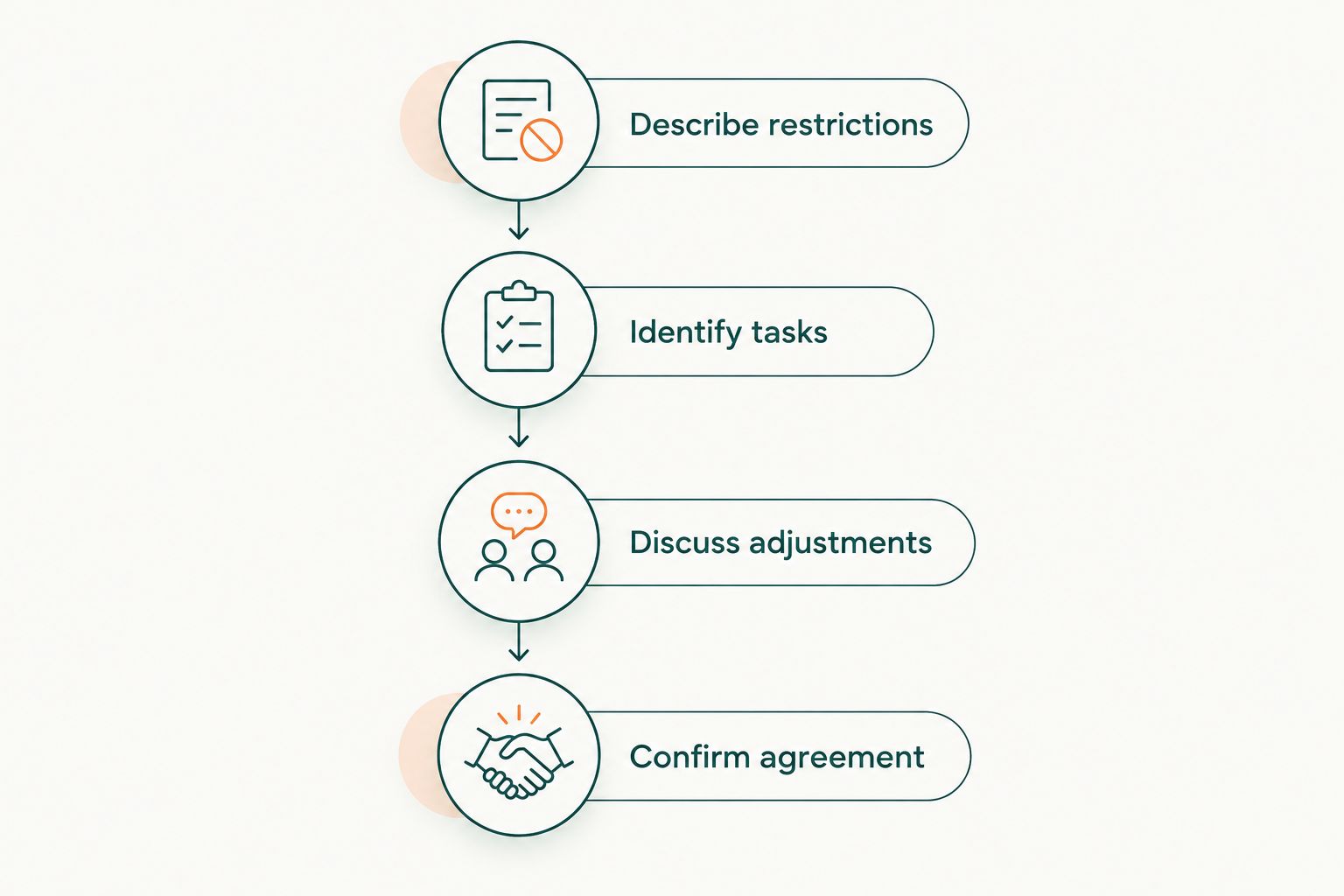
Use this sequence when contacting admissions:
- Describe restrictions. Explain relevant functional limitations without providing unnecessary personal medical detail.
- Identify tasks. Request a clear list of required demonstrations, teaching activities, recordings, and attendance.
- Discuss adjustments. Ask what alternatives the provider permits for the specific tasks affected.
- Confirm agreement. Keep written confirmation of approved arrangements and any remaining requirements.
A useful request is specific: explain that you need to understand how a named practical task is assessed and whether an alternative method is permitted. Avoid relying on a general reassurance that the course is accessible.
An adjustment is not confirmed until the provider agrees to it. Do not assume that verbal cueing, a substitute demonstrator, or a modified movement will satisfy an assessment simply because it sounds workable.
Why your training plan varies
There is no universal completion schedule for someone with a back injury. Build your 2026 plan around confirmed requirements and clinical advice rather than someone else’s recovery story.
The relevant factors are:
- Your activity restrictions. Clinical guidance determines which physical tasks need discussion with the provider.
- The assessment method. Written learning, movement demonstrations, and practice teaching involve different demands.
- The training format. Independent study and scheduled attendance create different planning commitments.
- The teaching scope. Mat instruction and apparatus teaching require separate attention when evaluating preparation.
- The provider’s rules. Access periods, completion deadlines, and approved adjustments affect your route through training.
- Your intended workplace. Employer expectations need checking before you choose a credential.
These factors explain why a fixed recovery-to-certification timetable would be misleading. Set study goals you can revise, and agree on any necessary changes with the relevant clinician or provider rather than pushing through to meet an arbitrary date.
Can I study while I am not ready to demonstrate exercises?
You can ask to separate knowledge-based study from physical participation, but the provider must confirm that its course structure permits this. Do not assume that starting theory grants an extension, postpones an assessment, or changes the completion requirements.
Ask which lessons you can complete independently and when practical evidence is due. Then compare that schedule with your clinical guidance and the course access terms.
Do I have to demonstrate every Pilates exercise?
Your course provider determines what you must demonstrate to pass its assessments. There is no substitute for reviewing the actual requirements and getting any proposed alternative approved before enrollment.
Being an effective teacher involves more than performing movements: you also need to explain, observe, and respond appropriately. That does not mean a provider will waive demonstration requirements, or that an employer will use the same assessment standard.
Does certification qualify me to teach back rehabilitation?
A Pilates instructor certificate does not, by itself, establish that you are qualified to diagnose or treat back injuries. Your own injury experience also does not replace clinical education or authorize rehabilitation services.
Keep your teaching within your training and any applicable professional requirements. If rehabilitation work is your goal, investigate the qualifications and supervision that role requires rather than interpreting a general Pilates course as clinical preparation.
What should you confirm before paying tuition?
For a 2026 enrollment, keep a short written record of the answers that determine whether the course fits. Include entry requirements, practical assessments, approved adjustments, access limits, and the qualification awarded on successful completion.
Also ask about costs beyond the stated tuition. Equipment access, external assessments, insurance, or workplace requirements are items to investigate—not charges you should assume are included or required by every course.
Enroll when the course requirements, your participation plan, and your teaching goal align. Pause the decision if a practical requirement remains unclear. Getting a specific answer before paying is more useful than discovering a mismatch during assessment.
Review your training options
Explore the $497 self-paced course, then confirm practical requirements before enrolling.
FAQ
Can I get Pilates instructor certification with a back injury?
Yes, you can pursue Pilates instructor certification with a back injury if the provider’s requirements and your participation plan fit your circumstances. Discuss physical activity with your treating clinician and confirm assessment requirements before enrolling.
Is online Pilates certification better if I have back pain?
Online Pilates certification offers study flexibility, but it is not automatically the better choice for someone with back pain. Compare practical requirements, feedback, deadlines, and approved adjustments rather than choosing by delivery format alone.
How much is the Teachpilates online course?
Teachpilates Pilates instructor training has $497 tuition and uses self-paced online study. Confirm the assessment requirements, access terms, and whether any separate costs apply before enrolling.
Can I pass without performing movements my clinician has restricted?
Only the course provider can confirm whether an approved alternative will satisfy its assessment requirements. Ask before enrolling and do not disregard clinical restrictions to complete a demonstration.
Will my certificate let me teach Reformer classes?
Do not assume introductory Reformer concepts qualify you for dedicated apparatus teaching. Check the course’s assessed scope and the requirements of the setting where you intend to teach.
How long should I wait after a back injury before starting?
Your treating clinician should guide your return to physical activity; there is no single waiting period this article can prescribe. Separately, ask the provider whether knowledge-based study can begin before practical participation.
Will a studio accept my certification if I have a back injury?
You need to confirm credential and teaching requirements directly with the studio. Course completion does not guarantee employment or establish how a particular workplace handles participation adjustments.
One last thing
Before enrolling, write down how you would explain an exercise without demonstrating it, then ask the provider how that skill is taught and assessed. Use the exercise to identify a training question—not to assume you can replace required demonstrations.
Your enrollment decision should rest on an agreed participation plan, not your willingness to tolerate pain. Choose training that supports your teaching goal while respecting the boundaries set by your healthcare professional and course provider.