

Teachpilates offers a $497, self-paced Pilates instructor course; when assessing cueing and modifications, look for evidence that you can give clear instructions, observe a learner’s response, and adjust the task within your teaching scope. Before enrolling in 2026, check how those skills are assessed, what feedback you receive, and whether any practical assessment carries a separate fee.
- Teachpilates offers a $497, self-paced Pilates instructor course covering anatomy, mat and reformer instruction, cueing, and business skills.
- Choose assessment evidence that shows teaching decisions, not just exercise recall.
- Check whether modifications, tutor feedback, and practical reassessment appear in the course requirements.
- Distinguish mat-teaching foundations and introductory Reformer concepts from dedicated hands-on apparatus qualification.
How should a Pilates instructor course assess cueing and modifications?
A useful practical assessment shows what you say, what you notice, and what you change. Knowing an exercise name is different from helping another person understand and perform the movement. Ask for assessment criteria that make that distinction explicit.
Teachpilates is best for aspiring instructors seeking self-paced online study across anatomy, mat and reformer instruction, cueing, and business skills. Review the Teachpilates course alongside your intended teaching role, then confirm the practical assessment and feedback arrangements before paying.
Use this comparison to evaluate the evidence a course requests. These are assessment formats to ask about, not a statement that any particular provider includes them.
| Assessment format | Best for | What it can demonstrate | What it cannot establish alone |
|---|---|---|---|
| Written questions | Checking knowledge | Your explanation of anatomy, exercise choices, and teaching decisions | How clearly you instruct another person |
| Recorded teaching | Reviewing delivered instructions | Your cue sequence, pacing, and response to visible movement | How you respond to situations outside the recording |
| Live teaching | Observing real-time decisions | How you notice confusion and adapt instructions as a session unfolds | Competence across every population or apparatus |
| Modification discussion | Examining your reasoning | Why you change a task and where you draw scope boundaries | Whether you can deliver that change clearly in practice |
The strongest enrollment question is specific: ask what evidence demonstrates that you can teach a movement and adjust it appropriately. A statement that the course includes cueing does not explain how that skill is assessed.
Why this matters
Your own Pilates experience helps you understand movement, but teaching asks something different of you. You need to make an instruction understandable to someone who does not share your experience, vocabulary, or confidence.
A learner might misunderstand a cue without lacking strength or mobility. If you respond by adding more instructions, you have not necessarily solved the problem. Assessment should help separate unclear communication from a task that needs changing.
For your 2026 enrollment decision, treat curriculum coverage and demonstrated teaching ability as separate questions. Check both before deciding that a course matches your goal.
What should a cueing assessment show?
Look for criteria that describe observable teaching behavior rather than vague promises about confidence. You should be able to understand what satisfactory teaching looks like before you submit an assessment.
Clear setup
A learner needs to understand the starting position and intended action. Your instructions should establish those essentials without burying them beneath every detail you know about the exercise.
Ask whether assessors review setup instructions separately from later movement cues. That distinction helps you identify whether a learner became confused before the movement even began.
Purposeful language
Anatomical language is useful when it clarifies the task; it is not a substitute for understandable instructions. Assessment should examine whether your chosen words help the learner act, rather than merely show that you remember terminology.
For a practice exercise, explain the same movement in everyday language and then in anatomical terms. Compare which explanation communicates the task more directly, without treating either vocabulary style as automatically better.
Observation and response
Giving a cue is only part of teaching. You also need to observe whether the learner understood it and decide whether to repeat, rephrase, demonstrate, or change the task.
Ask whether the assessment includes that response. A polished explanation delivered without observing the learner provides different evidence from teaching that responds to what actually happens.
Appropriate pacing
A learner needs an opportunity to act on an instruction. An assessment should examine whether your delivery leaves room for movement and observation, rather than rewarding a constant stream of speech.
Judge a cue by the task it communicates, not by how technical it sounds. During practice, identify the essential action first and remove explanations that do not help communicate it.
What should a modification assessment show?
A modification needs a reason. Ask whether you must explain the original teaching goal, the difficulty you observed, the change you chose, and the boundary of your competence.
That explanation matters because changing an exercise and teaching an alternative are not automatically the same decision. You should be able to describe what the learner is now being asked to do.
Preserve a clear teaching goal
Before changing the task, identify what you are trying to teach. Otherwise, you cannot explain whether the adjustment still serves the lesson or shifts the learner to a different objective.
A useful assessment question asks you to connect your choice to that objective. It should not reward a long list of alternatives without any explanation of when you would use them.
Distinguish misunderstanding from task difficulty
A learner who does not understand an instruction needs clarification. A learner who understands the instruction but cannot manage the current task needs a different teaching decision.
Practice explaining that distinction without diagnosing the learner. Your role is to describe what you observe and make an appropriate instructional choice within your training.
Recognize when not to continue
A modification is not permission to teach outside your competence. If a learner reports pain or a situation exceeds your training, do not treat a smaller movement as proof that continuing is appropriate.
Ask how the course assesses stopping decisions and scope boundaries. Do not assume that general modification content qualifies you to manage injuries, provide rehabilitation, or teach specialist populations.
How can you evaluate a course before enrolling?
Use this sequence to turn broad course descriptions into specific enrollment questions. Keep the answers together so you can compare the published curriculum with the assessment requirements.
- Define your goal. Write down whether you want to teach mat classes, pursue apparatus training, or build foundations before further study. Do not use a broad certification title as a substitute for a defined teaching scope.
- Request the criteria. Ask what an assessor looks for in setup, cueing, observation, modifications, and professional boundaries. Confirm whether those criteria are available before assessment submission.
- Check the evidence. Find out whether you complete written questions, teaching recordings, live assessments, or another format. Ask how the format demonstrates the skills you want to develop.
- Confirm feedback. Establish who reviews your work, what feedback covers, and what happens if your submission needs improvement. Check any associated charges and deadlines before enrolling.
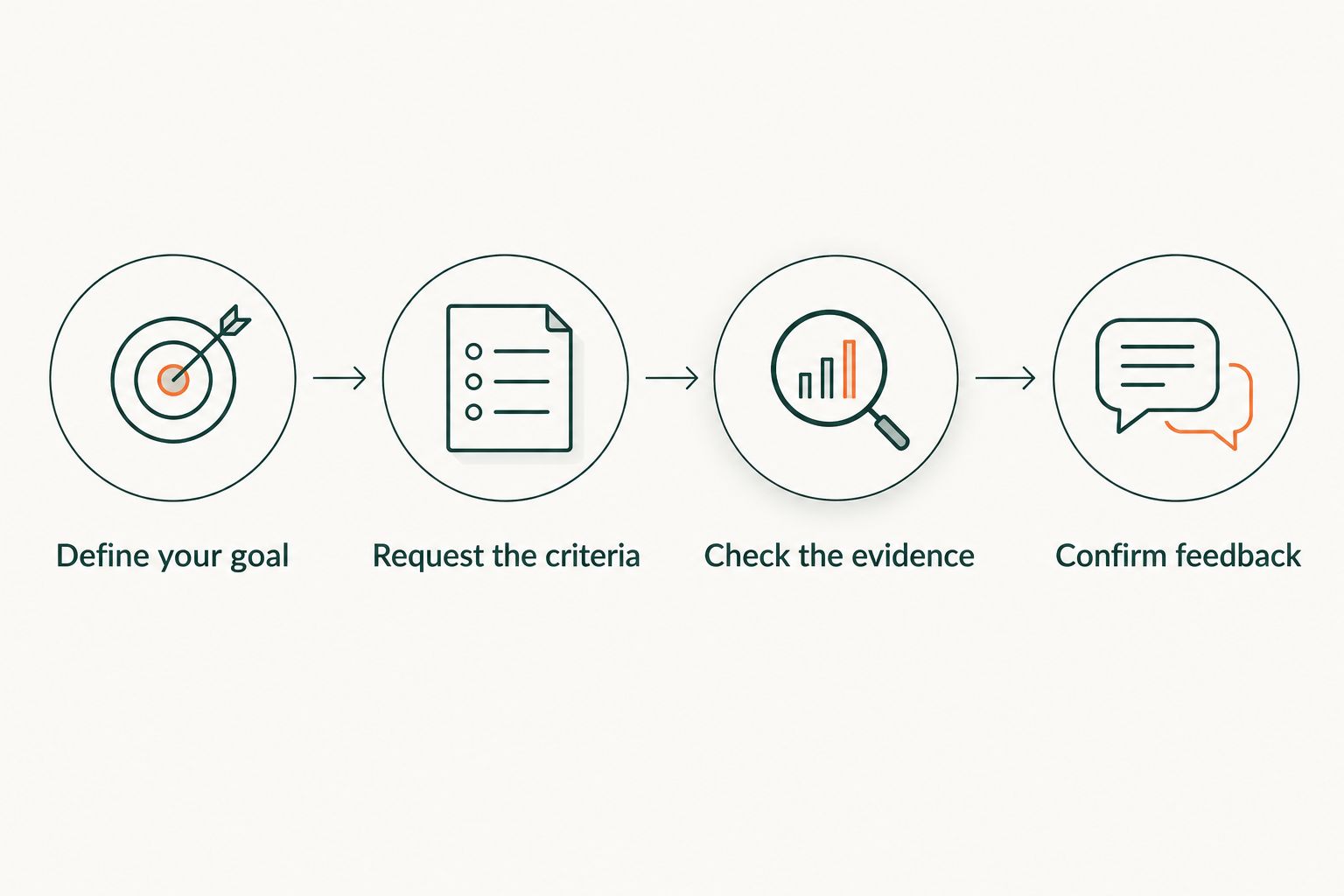
For your 2026 comparison, record the provider’s answers rather than relying on a course title or promotional summary. Use the same questions for each provider so you compare teaching scope and assessment arrangements on equal terms.
The guide to written versus practical assessments can help you separate knowledge checks from evidence of delivered teaching.
Why assessment requirements vary
The appropriate assessment depends on what the training claims to prepare you to teach. Use these factors to decide whether the evidence matches the promised scope:
- Teaching scope: Mat instruction and apparatus instruction require different teaching contexts. Ask what the qualification actually covers.
- Curriculum content: Anatomy knowledge, cue delivery, and business skills are different subjects. Check how each is assessed rather than expecting one test to demonstrate everything.
- Delivery format: Recorded and live teaching provide different opportunities for observation. Confirm what interaction the assessor can see.
- Modification expectations: Explaining an adjustment and delivering it to a learner demonstrate different aspects of your decision-making.
- Feedback arrangements: An assessment result and corrective teaching feedback serve different purposes. Ask whether you receive both and how you act on the feedback.
Do not rank a course by the apparent difficulty of its assessment alone. Choose an assessment process that provides relevant evidence for the teaching you intend to do.
How does self-paced online study fit practical teaching?
Self-paced study lets you work through learning material around your schedule. It does not answer every question about practice, observation, feedback, or assessment deadlines.
Teachpilates combines $497 tuition with flexible self-paced study and curriculum coverage across anatomy, mat and reformer instruction, cueing, and business skills. The practical limitation to address before enrollment is how you will develop and demonstrate teaching skills beyond understanding the lesson material.
For a 2026 study plan, separate study time from teaching practice. Watching an explanation, performing a movement yourself, and instructing another person are different activities; make room for the activities your course requires.
Before committing, confirm:
- Whether you need another person for teaching submissions.
- Whether an assessor reviews delivered cueing and modifications.
- What tutor feedback is available and how you request it.
- Whether course access or assessment submission has a deadline.
- Whether your intended workplace accepts the training for the role you want.
Introductory Reformer concepts should not be treated as proof of dedicated hands-on apparatus qualification. If apparatus teaching is your goal, ask explicitly about equipment practice, supervised teaching, and the qualification’s stated scope.
Review your instructor training options
Explore self-paced study with $497 tuition, then confirm assessment requirements against your teaching goal.
Can a written exam prove that I can cue a class?
A written exam can demonstrate your explanation of cueing principles, but it does not show you delivering instructions to a learner. Ask what practical evidence complements the knowledge assessment and how that evidence is reviewed.
Does learning modifications qualify me to teach injured clients?
Learning modifications does not by itself establish competence to manage injuries or provide rehabilitation. Check the training’s stated scope and obtain appropriate guidance when a learner’s needs exceed your competence.
FAQ
What should I look for in a Pilates instructor course in 2026?
Look for a Pilates instructor course whose curriculum, assessment, feedback, and teaching scope match your intended role. Ask how you demonstrate cueing and modifications, not just whether those topics appear in the syllabus.
How much is the Teachpilates course?
Teachpilates tuition is $497 for its self-paced online Pilates instructor certification course. Before enrolling, confirm assessment arrangements and any costs beyond tuition that apply to your study plan.
Can I study at my own pace and still practice teaching?
You can plan teaching practice alongside self-paced study. Confirm the course’s practice requirements, assessment deadlines, and whether you need another person for submissions.
What is the difference between a cue and a modification?
A cue communicates how to perform a task; a modification changes the task. Clarifying an instruction and changing an exercise are different teaching decisions, so ask how the course assesses both.
Is recorded teaching better than a written assessment?
Recorded teaching is better suited to showing delivered instructions, while written assessment is suited to explaining knowledge and reasoning. Neither format alone establishes competence across every teaching situation.
Does Reformer content mean I am qualified to teach apparatus classes?
Reformer content alone does not establish dedicated hands-on apparatus qualification. Confirm equipment practice, assessment requirements, and the qualification’s stated teaching scope before treating it as preparation for an apparatus role.
Does course certification include an independent credential?
Do not assume course certification includes an independent credential. Check who issues the certificate and whether a separate examination, application, or eligibility requirement applies to the credential you want.
One last thing
Before your 2026 enrollment decision, ask for an example of assessment feedback rather than only an example lesson. A lesson shows how material is presented; feedback shows how a provider identifies a teaching problem and directs you toward improvement.
Make that your final check. You are choosing how you will learn to teach another person, not simply how you will finish studying.