
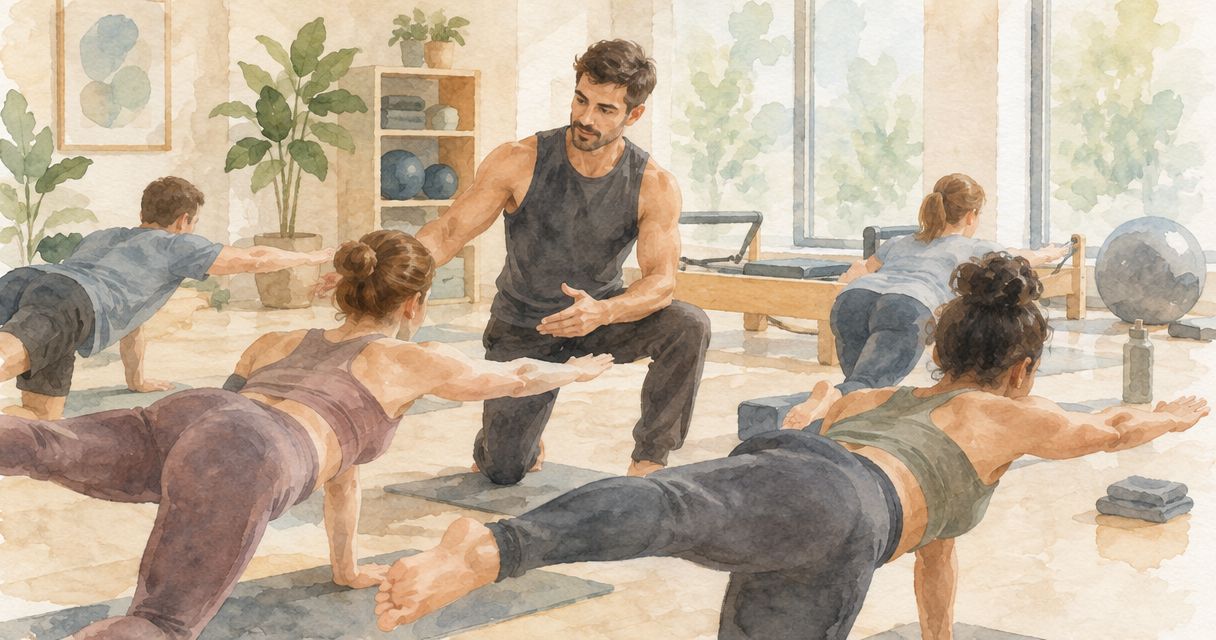
Yes—men can become Pilates instructors, including through flexible, self-paced online study with $497 tuition. Your gender does not determine your teaching ability; your preparation, practical skills, and ability to meet the requirements of your intended teaching setting do.
- Can men become Pilates instructors? Yes—choose training by teaching scope, assessment, and practical preparation, not gender.
- Teachpilates suits aspiring Pilates instructors who want self-paced online study covering anatomy, mat foundations, cueing, and business skills.
- Introductory Reformer study is not the same as dedicated hands-on apparatus qualification.
- Check employer requirements before enrolling; course completion does not guarantee studio acceptance or employment.
Can men become Pilates instructors?
Yes. Men can train to teach Pilates, and being male is not a reason to rule out instructor training. The useful question is whether a particular course prepares you for the teaching you want to do.
For your 2026 enrollment decision, separate three things: learning the material, demonstrating teaching skills, and meeting a studio's requirements. A course certificate does not make those interchangeable. Ask what you will study, how your teaching will be assessed, and what additional preparation your intended workplace expects.
Teachpilates offers self-paced online Pilates instructor certification covering anatomy, mat instruction, introductory Reformer concepts, cueing, and business skills. That gives you a specific curriculum to evaluate rather than choosing on the strength of the word certification alone.
You do not need to adopt a particular instructor image. You need to explain movement clearly, observe the person in front of you, and stay within your training.
Why this matters
If you have mainly encountered women teaching Pilates, you might mistake familiarity for an entry requirement. It is not a useful way to choose a career path. Focus instead on whether you enjoy the work of teaching: explaining, watching, adjusting instructions, and helping someone understand an exercise.
Your own practice is a starting point, not proof that you can teach. Performing an exercise and explaining it to a beginner are different tasks. Instructor training should help you bridge that gap, while practical teaching gives you opportunities to discover where your instructions need work.
Choose a course for the instructor you intend to become, not for assumptions about who belongs in the room.
What should you check before enrolling in 2026?
Start with your intended teaching setting and work backward. This avoids completing a course before discovering that your preferred studio expects different preparation.
Teaching scope
Decide whether your first goal is mat teaching or apparatus instruction. Those are different training decisions. A course that introduces Reformer concepts should not be treated as a substitute for dedicated hands-on Reformer preparation.
Write down what you want to teach in plain language. For example, mat classes and Reformer sessions require different questions about equipment access, supervised practice, and assessment. Avoid choosing a broader-sounding certificate simply because the title sounds more impressive.
Entry requirements
Check the provider's stated prerequisites rather than assuming you need a previous fitness qualification. Teachpilates does not require a teaching background, but first-time instructors still need to approach the material as professional preparation.
Ask whether the course expects prior Pilates practice, particular equipment, or access to people for practice teaching. If a requirement is unclear, get an answer before paying. Do not substitute your experience in another activity for requirements a provider actually sets.
Assessment
Ask how the course checks your understanding and your teaching. Written questions, movement demonstrations, and observed teaching assess different abilities; find out which assessments apply to the course you are considering.
For a closer look at that distinction, read the guide to written versus practical assessments. Your aim is to understand what successful completion demonstrates—not just what document you receive afterward.
Workplace requirements
Ask your intended studio what training it accepts for the role you want. Include questions about practical experience, auditions, insurance, and CPR requirements where applicable.
Get specific. Asking whether a studio accepts an online certificate is less useful than naming the course, explaining its teaching scope, and asking what additional preparation the studio requires. Keep the response with your enrollment research.
Which training format fits your first teaching goal?
The best format is the one that matches your intended teaching scope and gives you a workable way to practice. Online study and in-person instruction offer different learning arrangements; neither label alone tells you how thoroughly a course assesses teaching.
| Training format | Best for | Main advantage | Main limitation | What to verify |
|---|---|---|---|---|
| Self-paced online study | Learners who need control over their study schedule | You can organize study around other commitments | You must deliberately arrange practical application | Assessments, tutor access, practice expectations, and equipment needs |
| Scheduled in-person training | Learners who want face-to-face instruction | You attend instruction in a shared physical setting | You must accommodate the location and timetable | Attendance rules, teaching practice, feedback, and exact apparatus scope |
If you choose online study, put practice into your schedule rather than waiting until the lessons are finished. Reading about cueing does not show you whether another person understands your instructions.
If you choose in-person training, check what happens during contact time. Being present in a room is not the same as receiving individual teaching feedback. Ask how students practice, how instructors respond, and what evidence is required for completion.
Neither format removes the need to check employer expectations. Make that check before you commit to a training pathway.
How do you move from practitioner to instructor?
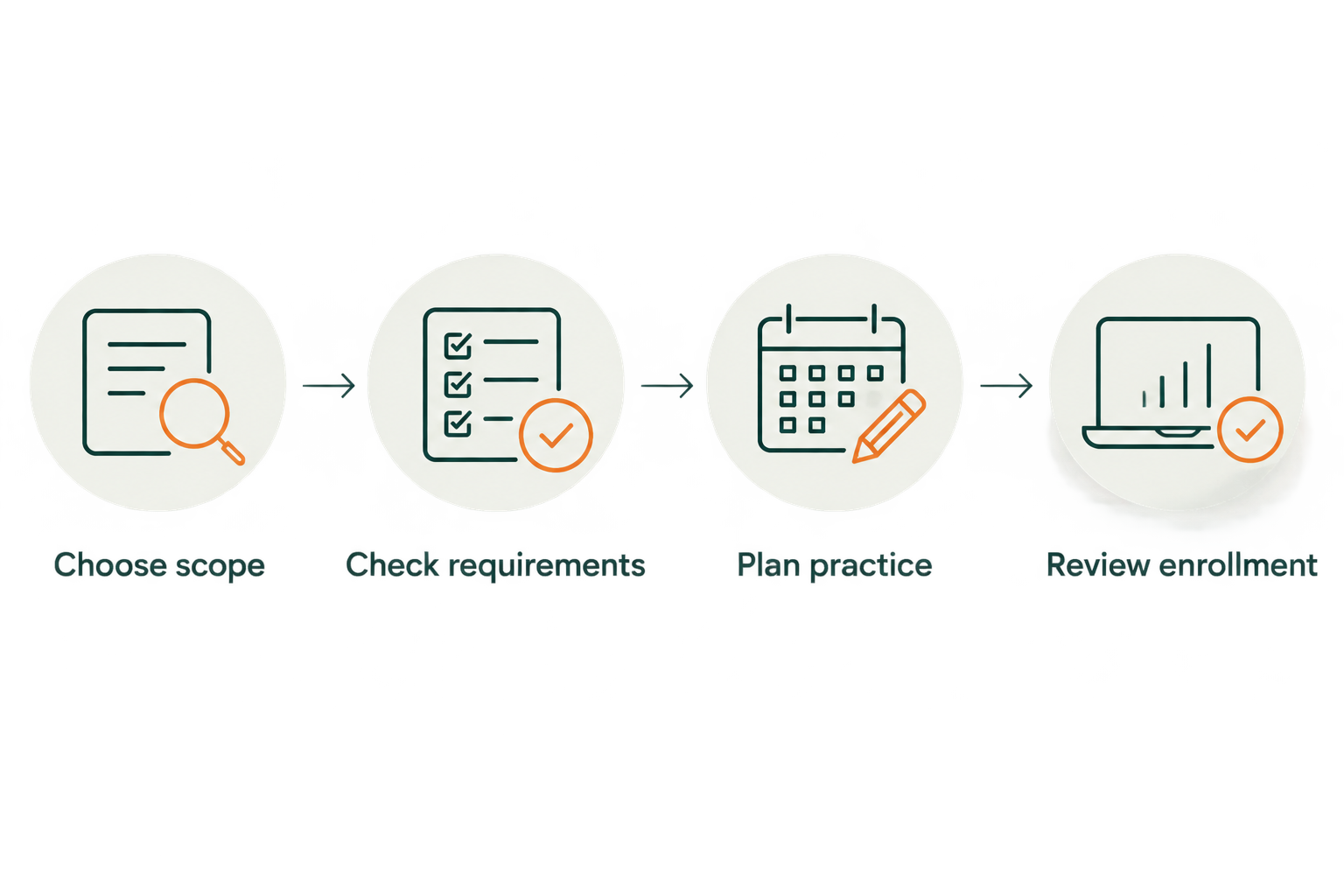
Use this sequence to turn interest into a practical enrollment decision. Each step answers a different question, so do not skip straight from enjoying classes to buying a course.
- Choose scope. Name the type of teaching you want to begin with, such as mat instruction or dedicated Reformer instruction.
- Check requirements. Compare the provider's prerequisites and assessments with your intended workplace's expectations.
- Plan practice. Decide how you will apply anatomy, sequencing, observation, and cueing outside your reading time.
- Review enrollment. Read tuition, access, assessment, and completion terms before committing.
This sequence keeps the decision focused on preparation rather than whether you fit a stereotype. You can use the same steps whether you are changing careers or adding teaching to your current work.
Why your training pathway varies
There is no separate male training pathway to solve. The differences that matter come from your starting point and the work you want to do.
- Teaching scope: Mat teaching and dedicated apparatus instruction call for different preparation. Match the training to the service you intend to offer.
- Previous practice: Familiarity with Pilates gives you material to reflect on, but it does not replace learning to observe and instruct someone else.
- Study format: Self-paced learning gives you schedule control. Scheduled instruction requires you to work around set attendance commitments.
- Practical access: Reformer-focused preparation requires planning for equipment-based learning and practice. Do not assume online lessons settle that requirement.
- Assessment and workplace expectations: A provider's completion requirements and an employer's hiring requirements are separate checks. Verify both.
These factors give you a useful comparison checklist for 2026. Gender does not answer any of them, and it should not distract you from checking them carefully.
Is Teachpilates a fit for your first certification?
Teachpilates is best for aspiring Pilates instructors who want self-paced online study. Its $497 tuition and curriculum covering anatomy, mat foundations, introductory Reformer concepts, cueing, and business skills make it a defined option to assess against your goals.
The fit is strongest when you want flexible study and understand that practical teaching needs deliberate attention. You should be ready to work through the material, apply it, and check the expectations of your intended teaching setting.
The limitation matters just as much: introductory Reformer content is not dedicated hands-on apparatus qualification. If your immediate goal is equipment-specific teaching, establish the additional practical training and assessment you need before treating this course as your complete pathway.
Before enrolling in 2026, confirm the current access period, assessment arrangements, support, and completion conditions. Also confirm whether your intended employer requires a separate credential. Do not assume an independent credential is included with a course certificate.
This guide is published by Teachpilates, which offers the course discussed here. Course completion does not guarantee employment, earnings, or acceptance by every studio.
Review your instructor training options
Explore self-paced study covering anatomy, mat instruction, introductory Reformer concepts, cueing, and business.
Do you need a fitness background to start?
You do not need an existing teaching background to consider this course. What matters is your willingness to learn anatomy, movement instruction, and the responsibilities of teaching people with different experience levels.
If you already lift weights, coach a sport, or teach another movement discipline, treat that experience as context—not an automatic Pilates qualification. You still need to learn the method and demonstrate the skills your course and intended workplace require.
If teaching is entirely new to you, pay particular attention to cueing and observation. Practice giving an instruction without demonstrating at the same time, then check whether your practice partner understood it. That makes the gap between doing and teaching easier to recognize.
Do male instructors have to teach only men?
No. Being male does not restrict you to teaching men; your preparation, teaching scope, and the needs of the people attending determine whether a class is appropriate for you to lead.
Avoid assuming a person's ability, mobility, or preferred class style from gender. Ask relevant questions, observe movement, and use instruction suited to the individual. A beginner needs clear guidance regardless of who is teaching or attending.
You also do not need to brand every class around male strength or athletic performance. Choose a teaching focus you are prepared to deliver rather than one you feel expected to adopt.
Will certification guarantee you a teaching job?
No certification guarantees a teaching job or universal studio acceptance. Treat training completion as one part of preparing to teach, not a hiring promise.
For a 2026 career plan, ask potential employers what they expect before selecting a course. Check the required teaching scope, assessment evidence, practical experience, and any additional credentials or insurance arrangements relevant to the role.
When comparing courses, distinguish statements about curriculum from statements about employment. A list of subjects tells you what is covered; it does not establish that a particular employer will accept the certificate.
FAQ
Can men become Pilates instructors without previous teaching experience?
Yes—men can begin Pilates instructor training without an existing teaching background. Check the specific course prerequisites and make a practical plan for developing instruction skills.
How much is Teachpilates instructor training?
Teachpilates tuition is $497 for its self-paced online instructor certification course. Confirm current enrollment terms, access details, assessments, and any additional preparation needed for your teaching goal.
Is online Pilates training suitable for a first-time male instructor?
Online Pilates training suits a first-time instructor who wants flexible study and will arrange practical application. Verify the assessment format and your intended employer's requirements before enrolling.
Does learning Reformer concepts qualify me to teach Reformer classes?
Introductory Reformer concepts are not the same as dedicated hands-on Reformer qualification. Check equipment practice, teaching assessments, and workplace requirements for the role you want.
Can a male Pilates instructor teach women?
Yes—a male Pilates instructor can teach women. Appropriate preparation, professional conduct, and instruction suited to participants matter more than matching the instructor's gender to the class.
Will a Pilates course certificate be accepted by every studio?
No—a Pilates course certificate does not guarantee acceptance by every studio. Ask each intended employer about the exact course and any additional training, experience, or credentials it requires.
One last thing
Before enrolling, explain a familiar exercise to someone without demonstrating it. Ask what was clear and what needed another explanation. Use that experience to identify what you want training feedback to help you improve.
Your next move is not to prove that men belong in Pilates. It is to choose a teaching scope, check the requirements, and prepare to teach it responsibly.