
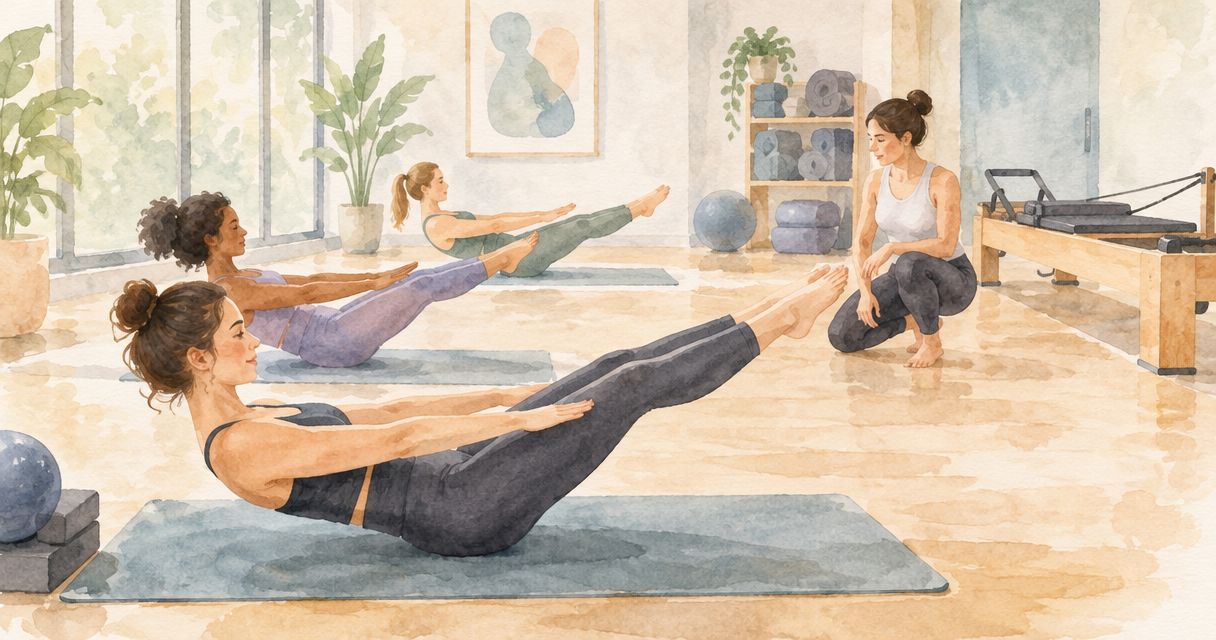
Mat training can count toward Reformer Pilates certification when the receiving provider accepts your previous coursework, but a mat certificate does not establish apparatus-specific teaching competence. TeachPilates offers $497 tuition and flexible self-paced study covering anatomy, mat instruction, introductory Reformer concepts, cueing, and business skills; distinguish that foundation from a dedicated hands-on Reformer qualification.
- Mat training counts toward reformer pilates certification only when the receiving provider accepts the specific coursework or hours.
- TeachPilates suits aspiring instructors seeking self-paced foundations, not a substitute for dedicated hands-on apparatus qualification.
- Ask separately about admission prerequisites, transferable coursework, practice hours, and practical assessment.
- Get written confirmation before paying for training you expect to transfer.
Can mat training count toward Reformer Pilates certification?
Yes, when the receiving program explicitly accepts it. The useful question is not simply whether you have completed mat training. It is which requirements that training satisfies in the program you want to enter.
For your 2026 enrollment decision, separate these possible outcomes:
| Treatment of previous mat training | What it means | Best for | Limitation |
|---|---|---|---|
| Admission prerequisite | Your mat background satisfies an entry requirement | Applicants checking eligibility | Admission does not mean coursework is waived |
| Accepted foundation coursework | Named previous lessons satisfy named curriculum requirements | Applicants seeking to avoid repeating accepted material | Acceptance applies only to the content confirmed |
| Accepted documented hours | Specified previous hours count toward a stated requirement | Applicants with detailed training records | Observation, personal practice, and teaching are different activities |
| No formal credit | You complete the receiving program's requirements without exemptions | Applicants choosing a different training pathway | Previous study helps your learning but does not reduce requirements |
Do not treat these outcomes as interchangeable. A provider can accept your certificate for admission while still requiring every Reformer lesson, practice activity, and assessment.
Use these steps before you enroll:
- Name the destination program. Ask about the exact Reformer pathway you intend to take, rather than the provider's general attitude toward prior learning.
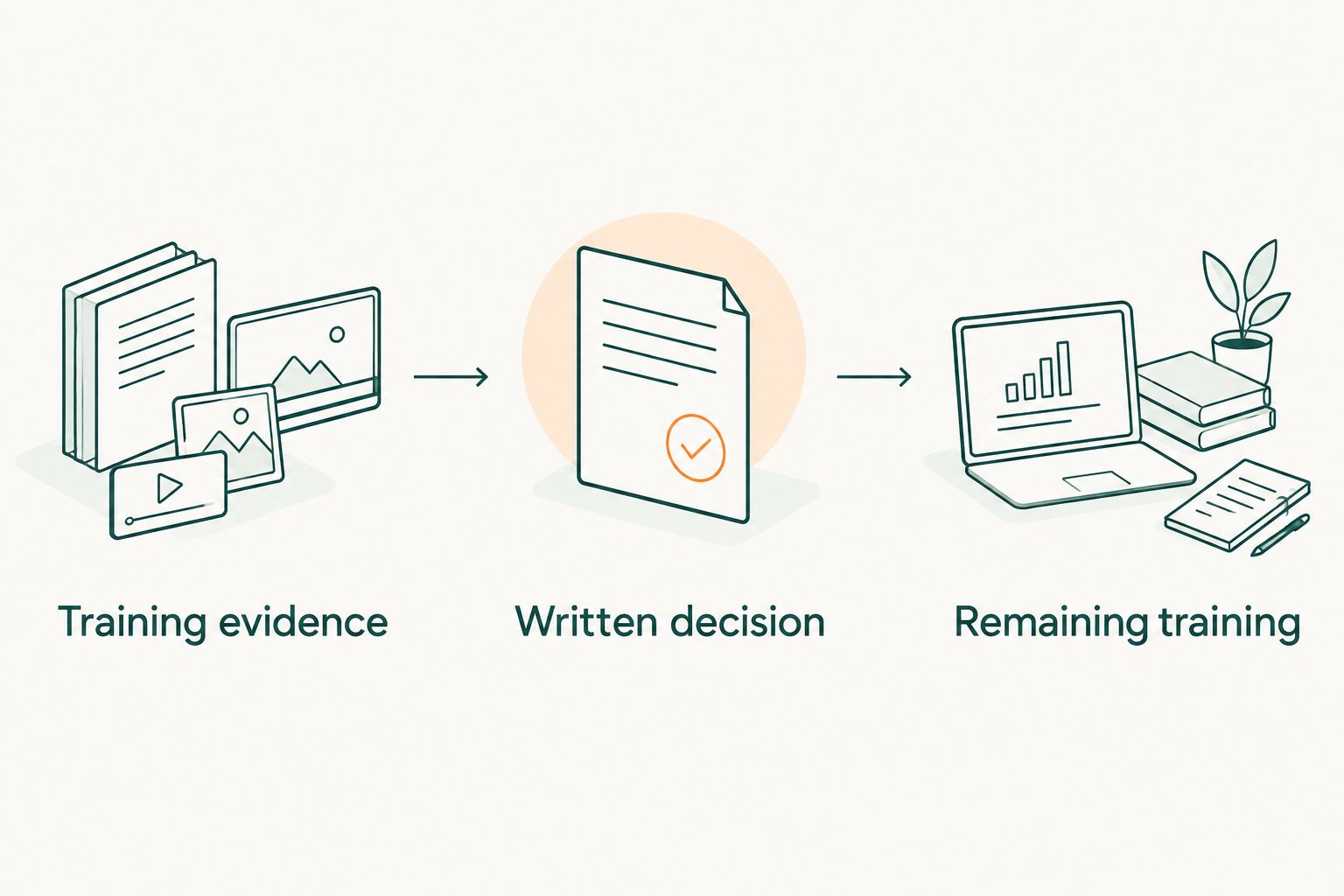
- Send your training evidence. Provide your certificate, syllabus, assessment information, and records that distinguish observation from practice and teaching.
- Request a requirement-by-requirement decision. Ask what is accepted, what remains, and whether the decision affects tuition, attendance, or assessment.
- Check the apparatus requirements. Confirm how you will learn equipment setup, spring selection, transitions, and teaching on the Reformer itself.
- Keep the written response. Save the decision with the course terms before committing to the pathway.
Why this matters
An exemption is useful only when it removes a requirement you would otherwise need to complete. Being told that your mat experience is valuable does not answer that question.
Start with transferring prior Pilates training if you already hold a certificate. Your goal is a written explanation of how previous study fits the next course, not a general reassurance that you have a good foundation.
Keep your 2026 training plan tied to the work you want to do. If your goal is teaching on a Reformer, evaluate the apparatus instruction and assessment first; treat any accepted mat coursework as a separate benefit.
Mat training: useful foundations, not automatic apparatus credit
Mat training gives you relevant material to present for review: anatomy, movement principles, exercise instruction, and cueing. The receiving provider decides whether your previous coverage matches its requirements.
Best for: building and documenting teaching foundations before apparatus study. Its advantage is that you arrive with material to build on. Its limitation is that mat exercises do not demonstrate how you manage a moving carriage, adjust equipment, or teach someone using springs and straps.
Compare actual learning outcomes rather than course titles. Two courses can both mention anatomy while assessing different knowledge or applying that knowledge to different teaching situations.
Your syllabus is more useful than a certificate alone because it shows what the training covered. Include assessment descriptions where available, so the provider can distinguish material you encountered from skills you were required to demonstrate.
Do not relabel mat teaching as Reformer teaching in your records. Accurate records give the receiving provider a clear basis for its decision and help you identify the practice you still need.
Introductory Reformer study: preparation, not a hands-on substitute
Introductory Reformer content belongs in a different category from a dedicated apparatus qualification. It can introduce terminology and concepts without establishing that you can set up equipment and teach safely in person.
Best for: understanding the apparatus pathway before committing to dedicated training. The advantage is preparation. The limitation is that exposure to a concept and demonstrated teaching competence are different outcomes.
TeachPilates is best for aspiring Pilates instructors seeking self-paced foundations rather than a substitute for dedicated hands-on Reformer qualification. Its stated curriculum includes anatomy, mat and Reformer instruction, cueing, and business skills; evaluate that scope against your intended teaching role.
If you choose this route, ask your intended next provider to review the curriculum before assuming any part transfers. Do not describe an introductory lesson as an apparatus qualification simply because the equipment appears in the course.
Dedicated Reformer training: assess the apparatus skills directly
A Reformer pathway should be evaluated against the apparatus work you intend to teach. Ask how the course addresses setup, equipment adjustments, exercise selection, transitions, observation, and practical teaching assessment.
Best for: learners whose intended teaching role includes Reformer instruction. Its advantage is direct alignment with that goal. Its limitation is the need to arrange whatever equipment access, supervised work, and attendance the selected program requires.
Do not infer those requirements from the word online or in-person. Request the actual delivery and assessment details, including where practical work happens and who evaluates it.
For a 2026 course comparison, put the remaining requirements beside your existing training records. That comparison shows whether accepted foundations meaningfully reduce duplication or simply satisfy admission requirements.
Why acceptance of mat training varies
Prior learning is a matching exercise. These are the factors to ask the receiving provider to explain:
- Curriculum match: Which previous learning outcomes match the destination course, and which apparatus-specific outcomes remain?
- Training evidence: What documentation does the provider need beyond your completion certificate?
- Activity type: Does the requirement concern observation, personal practice, assisted teaching, or teaching assessed by an instructor?
- Assessment match: Does your previous assessment demonstrate the knowledge or practical skill the destination course requires?
- Pathway scope: Are you entering a Reformer-only pathway, a broader apparatus course, or a program that includes mat foundations?
- Current policy: Which transfer terms apply to your intended intake, and when does the provider make the final decision?
Ask about each factor separately. A clear answer about curriculum does not settle the question of accepted hours, and accepted hours do not establish that an assessment is waived.
What evidence should you send before enrolling?
Send a readable record of what you learned and what you completed. Organize it around the destination course's requirements rather than asking an admissions adviser to interpret an unexplained folder of files.
Include the following where your previous provider supplied them:
- Completion evidence: Your certificate and the name of the course completed.
- Curriculum: Module descriptions, learning outcomes, and exercise coverage.
- Assessment details: Written tasks, practical assessments, and completion requirements.
- Activity records: Logs that identify observation, personal practice, and teaching separately.
- Training terms: Any information needed to confirm the version or scope of your completed course.
If a record does not exist, say so directly. Do not reconstruct hours from memory and present them as verified logs.
Ask the receiving provider to identify any missing evidence before you enroll. That leaves you with a practical next step: obtain the document, complete the outstanding requirement, or choose a pathway that fits your records.
How should you compare the remaining training commitment?
Compare what you still need to complete, not just the advertised course description. A course with accepted prior learning can still require substantial apparatus study, and an admission exemption does not necessarily change the payment terms.
For your 2026 plan, request an itemized explanation of remaining tuition, assessment charges, equipment access, travel, and any repeat-assessment terms. These are questions to verify with the provider, not assumed charges attached to every course.
Keep access conditions separate from self-paced study. Ask whether there is a completion deadline, whether learning materials remain accessible afterward, and whether tutor support follows the same timetable.
A useful decision record has three headings: accepted learning, remaining training, and total commitment. Under total commitment, include both money and the practical arrangements needed to finish. That makes an exemption easier to judge without mistaking it for a complete shortcut.
What should you ask before paying?
Ask the provider to answer these questions in writing:
- Does my mat training satisfy admission requirements, curriculum requirements, or both?
- Which named lessons or activities would I not need to repeat?
- Which documented hours are accepted, and under which activity category?
- Which Reformer practice and teaching requirements remain?
- Do I still complete every written and practical assessment?
- Does acceptance change tuition, course access, or the completion deadline?
- What course certificate is awarded, and is any independent credential separate?
Then ask the studio where you hope to teach what qualifications and practical demonstrations it expects. Course completion and a particular employer's hiring requirements are separate decisions.
Do not pay on the strength of an unspecified transfer promise. If the provider cannot identify the requirement being waived, plan on completing it until you receive a clear decision.
Can I skip Reformer practical training if I already teach mat?
Mat teaching experience does not establish Reformer teaching competence. Ask the receiving provider which apparatus-specific practice and assessment requirements remain, even when it accepts your foundation coursework.
Your existing teaching experience gives you relevant evidence to discuss. It does not answer equipment-specific questions on its own, so keep confidence in your teaching separate from the scope of your demonstrated skills.
Does accepted mat training make certification faster?
Accepted mat training reduces your remaining work only when the provider removes a requirement. If it merely satisfies admission criteria, your course workload stays as specified.
Ask for a revised completion plan rather than assuming a shorter timeline. Equipment access, scheduled assessments, and required practical work still need to fit your calendar.
Is an online foundation course the right first step?
An online foundation course fits when you want self-paced study and understand the difference between foundational instruction and apparatus qualification. It is not the right substitute when your immediate requirement is a dedicated hands-on Reformer credential.
This guide is published by TeachPilates, which offers the online course discussed here. Choose according to your intended teaching scope, the verified curriculum, and the receiving provider's written requirements—not an assumption of universal studio acceptance.
Review your foundation training option
Explore self-paced study covering anatomy, mat instruction, introductory Reformer concepts, cueing, and business skills.
FAQ
Does mat Pilates certification automatically count toward Reformer certification?
No. Mat Pilates certification counts only where the receiving provider explicitly accepts it for a named requirement. Ask whether acceptance concerns admission, coursework, documented hours, or assessment.
Can I teach Reformer Pilates with only a mat certificate?
A mat certificate alone does not demonstrate Reformer-specific teaching competence. Check the apparatus training and assessment expected by your intended employer and the scope of your completed course.
Which documents should I send for a prior-learning review?
Send your certificate, syllabus, assessment details, and available activity logs. Keep observation, personal practice, and teaching records clearly separated.
Will accepted mat training reduce my course tuition?
Accepted mat training does not establish a tuition reduction. Ask the receiving provider to confirm payment terms separately from curriculum exemptions.
Does self-paced online study include an independent credential?
Self-paced delivery does not establish that an independent credential is included. Verify the course award and any separate eligibility, examination, or application requirements.
What should I check before enrolling in 2026?
Before enrolling in 2026, confirm accepted prior learning, remaining apparatus requirements, practical assessment, access terms, and total commitment. Keep the provider's written response with your enrollment documents.
One last thing
Ask what changes if your mat training is accepted. If the answer names no change to admission, coursework, practice, or assessment, you have recognition of your background—not a defined exemption.
Keep that distinction at the center of your decision. You are choosing the training needed for your intended teaching role, not collecting certificates with overlapping titles.