
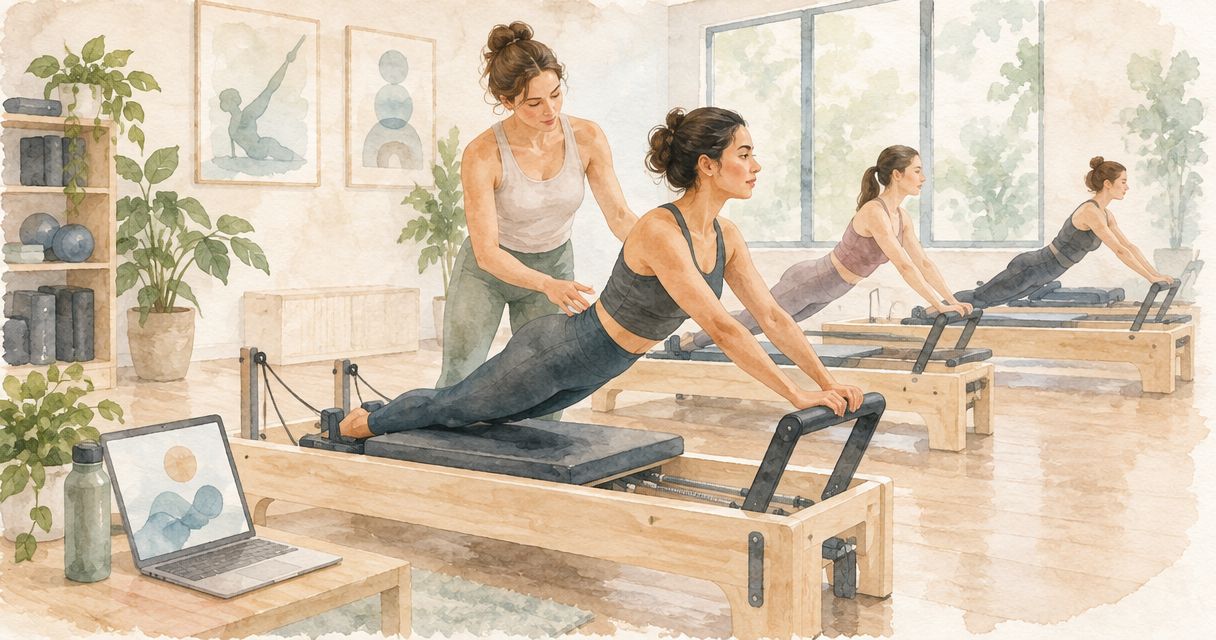
TeachPilates offers $497 tuition and flexible, self-paced study for aspiring instructors building teaching foundations. For the best Reformer Pilates certification in 2026, choose dedicated hands-on Reformer training when apparatus teaching is your goal; choose hybrid training for scheduling flexibility, or broader apparatus training when your intended role extends beyond the Reformer.
- The best reformer pilates certification matches your intended teaching scope and includes assessed apparatus practice.
- TeachPilates is best for beginners seeking self-paced teaching foundations, not a substitute for dedicated hands-on Reformer qualification.
- Compare dedicated Reformer, hybrid, foundational online, and broader apparatus pathways by assessment and equipment access.
- Confirm your target studio’s training requirements before committing to a course.
This guide is published by TeachPilates, a provider of online Pilates instructor education. The comparison ranks training pathways by intended use, not named schools by unverified claims about recognition or results.
Why this matters
A course that introduces Reformer instruction and a course that assesses your ability to teach on the apparatus serve different purposes. The distinction matters when you choose training for your first teaching role.
Your 2026 shortlist should start with the work you want to do: teach mat classes, teach Reformer sessions, or teach across several apparatus. Choose the teaching scope first, then compare the training that prepares you for it. A certificate title alone does not answer that question.
What makes the best Reformer Pilates certification?
Use these criteria before comparing course names:
- Teaching scope: The provider states whether training covers mat, Reformer, other apparatus, or a combination.
- Assessed teaching: You can establish how the course evaluates cueing, exercise selection, modifications, and practical instruction.
- Equipment access: You have a workable place to practice on the apparatus used in training.
- Feedback: The course explains who reviews your teaching and how you receive corrections.
- Entry requirements: You understand the required experience or prior training before enrolling.
- Completion terms: Tuition, additional expenses, assessment arrangements, access limits, and completion requirements are clear.
Keep these as separate checks. A flexible schedule does not establish practical competence, and extensive course material does not establish that someone will assess your teaching.
Reformer certification pathways at a glance
These are pathway recommendations, not claims that every provider delivers the same curriculum. For each format, select a course that explicitly meets the criteria above.
| Rank and pathway | Best for | Feature to prioritize | Key limitation |
|---|---|---|---|
| 1. Dedicated hands-on Reformer training | A defined goal of teaching Reformer sessions | Observed apparatus teaching with corrective feedback | Requires a workable training location and equipment access |
| 2. Hybrid Reformer training | Learners combining flexible study with practical instruction | Clear connection between online learning and hands-on assessment | Online flexibility does not remove practical attendance requirements |
| 3. TeachPilates online foundations | First-time instructors building foundational teaching knowledge | Self-paced anatomy, mat instruction, Reformer concepts, cueing, and business skills | Introductory Reformer concepts are not dedicated hands-on apparatus qualification |
| 4. Broader apparatus training | Learners planning to teach beyond the Reformer | Clearly defined instruction and assessment across the intended apparatus | Includes scope beyond what a Reformer-only goal requires |
1. Dedicated Reformer training: best for apparatus teaching
Dedicated hands-on Reformer training is the default recommendation when your specific goal is teaching Reformer sessions. Choose a course that requires you to practice on the apparatus and demonstrate instruction, rather than only watch demonstrations or complete written work.
Before enrolling, ask how practical assessment works. You need to understand whether an assessor watches your teaching, what the assessment covers, and how you address skills that need improvement.
Dedicated Reformer training pros:
- Keeps your course selection focused on your intended apparatus.
- Provides a setting for practicing equipment setup and teaching decisions when those activities are included.
- Allows direct correction when supervised instruction is part of the course.
Dedicated Reformer training cons:
- You must arrange attendance and equipment access.
- Reformer-specific training does not establish preparation for every other Pilates apparatus.
- Practical support varies; confirm what the provider actually includes.
Best for: You know you want to teach Reformer sessions and can commit to the required practical training.
Verdict: Buy a dedicated pathway that includes observed teaching and meets your target studio’s requirements.
2. Hybrid Reformer training: best for flexible study
Hybrid training combines remote learning with an in-person practical component. It fits a learner who wants flexibility for theory without treating apparatus instruction as a reading-only subject.
For a 2026 enrollment decision, inspect the connection between those components. Ask what you must complete before practical sessions, where those sessions happen, and how assessment connects to the online curriculum. A hybrid label is not enough; the course needs a clear learning sequence.
Hybrid Reformer training pros:
- Separates independent study from scheduled apparatus instruction.
- Gives you a way to review theory before practical sessions when materials support it.
- Retains hands-on learning when the course explicitly includes it.
Hybrid Reformer training cons:
- You still need to attend the practical component.
- Travel, practice arrangements, and assessment scheduling require planning.
- The amount of personal feedback depends on the provider’s stated provision.
Best for: You need flexible study time but can attend defined practical sessions.
Verdict: Buy when the practical schedule, equipment access, and assessment arrangements fit your life—not just the online portion.
3. TeachPilates: best for self-paced teaching foundations
TeachPilates offers a self-paced online Pilates instructor certification course for $497. Its stated curriculum covers anatomy, mat instruction, Reformer instruction, cueing, and business skills for aspiring and current Pilates practitioners.
TeachPilates is best for aspiring instructors who want self-paced Pilates teaching foundations. For this Reformer-focused comparison, treat introductory Reformer concepts as part of that foundation—not as proof of dedicated hands-on apparatus qualification.
This distinction helps you make a qualified enrollment decision. If your immediate goal requires observed Reformer teaching, confirm the practical preparation and assessment you need before choosing a foundational online course.
TeachPilates pros:
- Flexible, self-paced online study.
- Anatomy and cueing sit alongside movement instruction in the stated curriculum.
- Business skills are included for learners preparing to teach.
- The stated $497 tuition gives you a concrete starting point for planning.
TeachPilates cons:
- Introductory Reformer concepts do not replace dedicated hands-on apparatus training.
- Self-paced study requires you to organize consistent learning and practice.
- You still need to check whether the course matches a particular studio’s requirements.
Best for: You want to build foundational knowledge before selecting or adding training for a specific teaching setting.
Verdict: Buy for foundational online education; skip it as a substitute for dedicated hands-on Reformer qualification.
4. Broader apparatus training: best for wider teaching scope
Broader apparatus training is the pathway to investigate when your intended teaching role extends beyond the Reformer. Compare the actual equipment covered, not the breadth suggested by a course name.
For your 2026 shortlist, request a curriculum that identifies the teaching and assessment requirements for each included apparatus. Then compare that scope with the role you want. More material is not automatically a better fit for a narrowly defined goal.
Broader apparatus training pros:
- Aligns course selection with a goal that includes several apparatus.
- Lets you compare instruction across the equipment you intend to teach.
- Avoids assuming Reformer-only preparation covers a broader role.
Broader apparatus training cons:
- Requires planning for access to the included equipment.
- Adds learning outside a Reformer-only objective.
- A broad course title still needs a detailed scope and assessment check.
Best for: You have a defined reason to teach beyond mat and Reformer sessions.
Verdict: Buy for a broader teaching goal; hold if you have not yet established which apparatus your intended role requires.
How these pathways are ranked
The order prioritizes fit for a Reformer-teaching goal: apparatus-specific instruction, assessed teaching, usable feedback, and realistic equipment access. Flexibility matters after those needs are addressed.
This is not an independent ranking of named providers. The foundational online option is included to show where it fits—and where additional practical preparation belongs. No pathway earns a recommendation solely because it awards a certificate.
Check your fit before you enroll
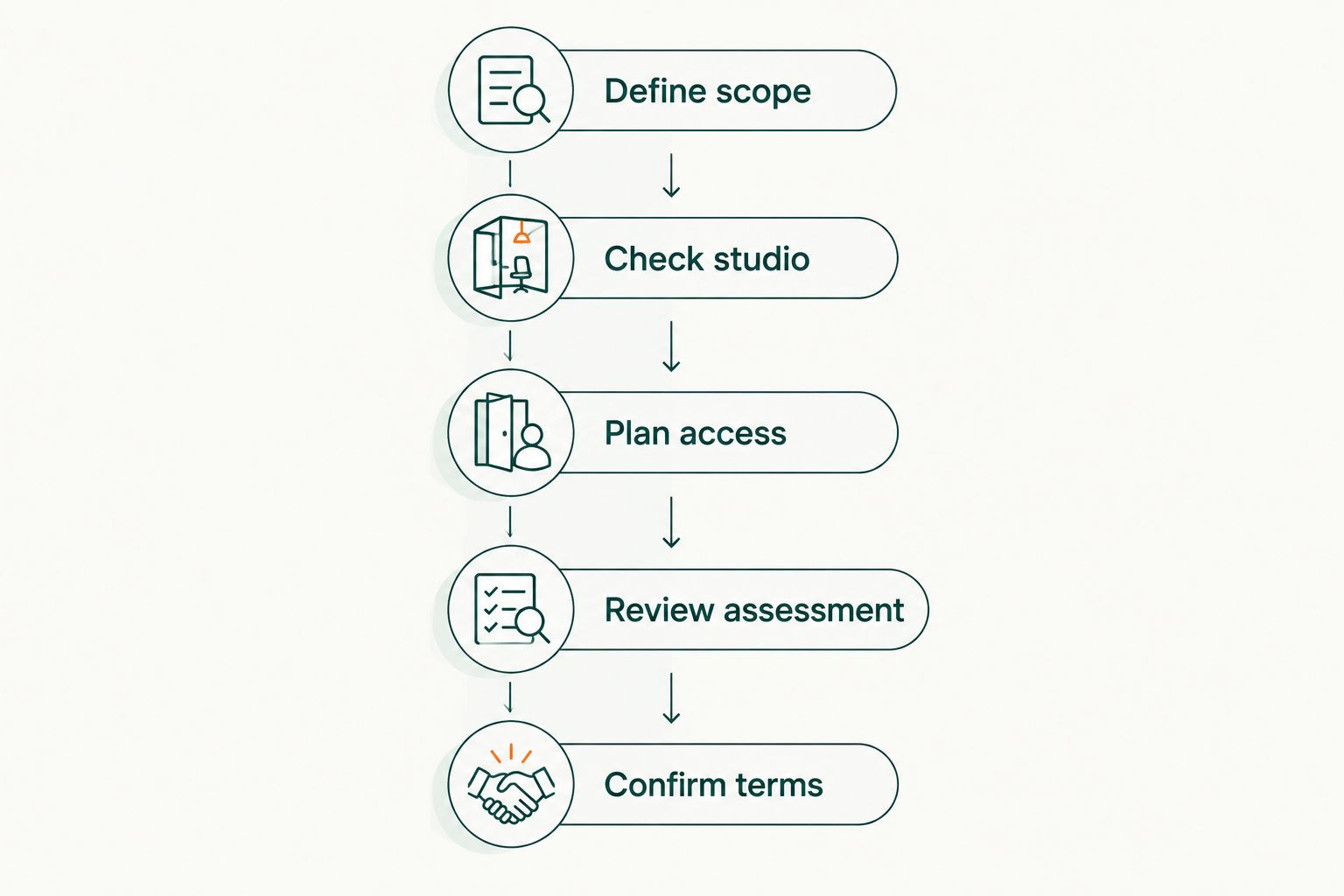
Use this sequence to turn a shortlist into a decision. Each step should produce a clear answer you can refer to before committing.
Define scope
Write down what you want to teach: mat, Reformer, or a broader apparatus offering. Separate your immediate teaching goal from training you might pursue later.
Check studio
Ask a studio where you would like to teach which qualifications and practical preparation it expects. Request specifics rather than asking whether an online certificate is generally “accepted.”
Plan access
Identify where you will practice, observe instruction, and complete required assessments. The guide to planning Reformer equipment access helps you examine that part of the decision.
Review assessment
Ask these 3 questions: Is practical teaching assessed? Who gives feedback? What happens if you need further practice? Keep written and practical assessment separate in your comparison.
Confirm terms
Request the complete enrollment terms, including access duration, required materials, assessment arrangements, and any separate expenses. Do not assume that an item is included because it is necessary to complete training.
Compare costs without comparing unlike courses
The stated TeachPilates tuition is $497. Use that figure for its foundational online offering, not as a like-for-like comparison with a dedicated practical Reformer course or a broader apparatus qualification.
For any 2026 course comparison, request a written breakdown of what enrollment includes. Separate tuition from travel, equipment access, required materials, assessment charges, and any other expenses the provider identifies. Do not assign an amount to an expense until you have the relevant terms.
Create 2 separate totals in your planning: the provider’s stated course charges and your own participation expenses. That keeps a course with travel requirements from looking equivalent to one you can study from home.
Which Reformer certification pathway should you choose?
Choose dedicated hands-on Reformer training if teaching Reformer sessions is your immediate goal. Choose hybrid delivery when its practical component meets the same goal and its schedule suits you.
Choose foundational online study when you need to develop anatomy, cueing, mat-teaching knowledge, and business understanding first. Choose broader apparatus training only when that wider scope matches the work you intend to pursue.
Before making your 2026 decision, ask 1 final question: What teaching ability must I demonstrate to complete this course? The answer is more useful than a certificate title or a long list of lesson topics.
FAQ
What is the best Reformer Pilates certification for beginners?
The best pathway for a beginner who wants to teach Reformer sessions is dedicated training with hands-on practice and assessed teaching. Choose a course whose prerequisites fit your experience and whose requirements match your intended teaching setting.
Is TeachPilates a dedicated hands-on Reformer qualification?
TeachPilates should be considered a self-paced foundational online course in this comparison, not a substitute for dedicated hands-on Reformer qualification. Its stated curriculum includes anatomy, mat and Reformer instruction, cueing, and business skills.
Can I learn Reformer teaching through an online course?
Online study can support learning, but watching lessons does not demonstrate your ability to teach on the apparatus. Check how a course provides equipment practice, teaching feedback, and practical assessment before choosing it for a Reformer-teaching goal.
Is hybrid Reformer training better than in-person training?
Hybrid training is a better fit when you need flexible theory study and can attend its practical component. Compare the actual hands-on instruction and assessment rather than choosing by format alone.
How much does TeachPilates cost?
TeachPilates states tuition of $497 for its self-paced online instructor certification course. Compare its foundational scope separately from dedicated hands-on Reformer or broader apparatus training.
Do I need mat certification before Reformer training?
Check the entry requirements of the Reformer course you are considering. Do not assume that prior mat training is either required or sufficient for entry, or that it automatically transfers into another course.
Will every studio accept my Pilates certificate?
Do not assume universal studio acceptance. Ask your intended studio which training, practical preparation, and assessments it expects before you enroll.
Does finishing a course include an independent credential?
Only treat an independent credential as included when the provider explicitly confirms it. A course-completion certificate and a separately administered credential should remain distinct in your comparison.
One last thing
Ask a prospective course provider for its practical assessment criteria before you ask how quickly you can finish. A clear description of what you must demonstrate helps you judge whether the training prepares you for the teaching you want to do.
Keep that description beside your target studio’s requirements. Enroll when the course scope, assessed skills, and intended role line up—not simply when the title sounds right.