
Best overall for flexible foundational study: Teachpilates, with $497 tuition and self-paced online learning; best for supervised mat instruction: practical mat teacher training; best for Reformer-led studios: dedicated hands-on Reformer training. The best Pilates certification for studio owners in 2026 matches the classes you intend to teach, not just the certificate you receive.
- Teachpilates is the best Pilates certification for studio owners seeking flexible online foundations, not dedicated hands-on apparatus qualification.
- Choose supervised mat training when observed practice and feedback are your main priorities.
- Choose dedicated Reformer training before treating introductory apparatus concepts as teaching preparation.
- Match certification scope, assessments, equipment access, and insurer requirements before enrolling.
Why this matters
Your first training decision should start with your proposed class schedule. Teaching mat classes, running Reformer sessions, and offering instruction across several apparatus categories require different preparation.
Owning the business does not settle whether you are ready to teach its classes. Separate your operating responsibilities from your instructor-training needs, then choose a course that addresses the latter.
Teachpilates online Pilates certification is best for aspiring owner-instructors who want flexible foundational study. Its curriculum covers anatomy, mat instruction, introductory Reformer concepts, cueing, and business skills. Do not treat that scope as a substitute for dedicated hands-on apparatus qualification.
This guide is published by Teachpilates. The ranking compares training pathways by teaching purpose; it does not claim to verify or rank competing providers.
What makes the best certification for a studio owner?
Use these criteria to evaluate your 2026 shortlist before comparing course names:
- Teaching scope: Match the syllabus to mat classes, Reformer sessions, or the specific apparatus you plan to use.
- Practical assessment: Check whether someone evaluates your teaching, not only your ability to answer written questions.
- Equipment access: Establish where you will practice and whether supervised equipment work forms part of the course.
- Study format: Choose self-paced, scheduled, or blended learning according to the structure you need.
- Enrollment requirements: Ask about prior Pilates experience, prerequisite training, and any required preparation.
- Complete commitment: Confirm tuition, additional fees, access limits, assessments, and required travel before paying.
No single criterion replaces the others. A course that fits your calendar but misses your teaching scope is the wrong purchase; so is a practical pathway you cannot attend consistently.
Studio-owner certification pathways at a glance
These are distinct training choices, not interchangeable credentials. For each pathway, verify that the individual provider actually includes the features listed as your selection requirements.
| Rank and option | Best for | Standout feature or selection requirement | Key limitation |
|---|---|---|---|
| 1. Teachpilates online Pilates certification | Flexible foundational study alongside ownership preparation | Self-paced curriculum covering anatomy, mat instruction, introductory Reformer concepts, cueing, and business skills | Does not replace dedicated hands-on apparatus qualification |
| 2. Supervised mat teacher training | Owners preparing to lead mat classes | Choose a course with observed teaching and corrective feedback | Mat preparation does not establish Reformer teaching readiness |
| 3. Dedicated hands-on Reformer training | Owners planning Reformer-led classes | Choose equipment-specific practice and practical assessment | A Reformer pathway does not automatically cover other apparatus |
| 4. Full-apparatus teacher training | Owners intending to teach across several apparatus categories | Require a clearly defined apparatus syllabus and assessment scope | Broader coverage creates additional practice and access commitments |
1. Teachpilates: best for flexible online foundations
Teachpilates offers a self-paced online Pilates instructor certification course with $497 tuition. You study anatomy, mat instruction, introductory Reformer concepts, cueing, and business skills without committing to a fixed classroom timetable.
That format fits a first-time instructor who needs to organize study around existing responsibilities. It also gives you business-related material alongside teaching foundations, rather than asking you to think about studio ownership only after completing your course.
Best for: Aspiring owner-instructors who want flexible foundational study and understand the boundary between introductory apparatus content and dedicated practical qualification.
Course pros:
- Self-paced online study lets you arrange learning around your schedule.
- Anatomy and cueing sit alongside mat instruction in the curriculum.
- Business skills are included in the stated course scope.
- Introductory Reformer concepts provide context for further apparatus training.
Course cons:
- Introductory Reformer content is not dedicated hands-on apparatus qualification.
- Self-paced study requires you to create and maintain your own routine.
- The course should not be treated as proof of universal studio or insurer acceptance.
Before enrolling in 2026, ask for the current assessment format, access period, tutor-support arrangements, and any additional charges. Check whether your intended teaching setting requires evidence beyond the course certificate.
Verdict: Buy for flexible foundations; skip it as a substitute for hands-on apparatus training.
2. Supervised mat training: best for leading mat classes
Supervised mat teacher training is the better-fit pathway when your immediate goal is teaching mat classes with direct feedback. Select a course that explicitly includes observation of your instruction, opportunities to revise your cues, and practical assessment.
The useful distinction is not simply online versus in person. It is whether an assessor watches you teach and gives you specific corrections. A scheduled classroom course without meaningful teaching feedback does not meet that selection standard.
Best for: First-time owner-instructors who want external structure and feedback before leading mat classes.
Supervised mat training pros:
- Observed teaching gives you a way to identify unclear instructions.
- Scheduled sessions provide an external study structure.
- Mat-focused preparation matches a mat-first teaching plan.
Supervised mat training cons:
- Fixed attendance requirements reduce scheduling flexibility.
- Travel and venue access add planning commitments where attendance is required.
- Mat training alone does not establish apparatus teaching competence.
Ask how much of the practical work involves you teaching rather than watching demonstrations. Also ask what happens when a learner needs further practice before passing.
Verdict: Buy when supervised mat teaching is your priority; skip it as your only preparation for a Reformer studio.
3. Hands-on Reformer training: best for Reformer-led studios
Dedicated hands-on Reformer training is the right pathway when your teaching plan centers on the Reformer. Choose a course that addresses equipment setup, exercise instruction, observation, and assessed teaching on the apparatus.
Do not use the word Reformer in a syllabus as your only decision criterion. Introductory concepts and supervised apparatus teaching are different commitments. Your selection should reflect the work you intend to perform with clients.
Best for: Owners who intend to personally teach Reformer sessions and need equipment-specific preparation.
Hands-on Reformer training pros:
- Equipment-specific practice matches the intended teaching environment.
- Supervised teaching creates opportunities for apparatus-related feedback.
- A clearly defined practical assessment gives you a concrete preparation target.
Hands-on Reformer training cons:
- You need reliable access to suitable equipment for required practice.
- Attendance and supervision requirements limit flexibility.
- Reformer coverage does not automatically include other apparatus categories.
Resolve your Reformer training equipment access before selecting dates. For a 2026 enrollment, request the current attendance, practice, and assessment requirements in writing rather than relying on a general course summary.
Verdict: Buy for a Reformer-led teaching plan; wait if you cannot meet the equipment-access requirements.
4. Full-apparatus training: best for broader teaching scope
Full-apparatus teacher training is the pathway to investigate when you intend to teach across several apparatus categories. Require an explicit equipment list: a broad course label does not tell you exactly what is taught or assessed.
Choose this route because you need the teaching scope, not because a longer certificate sounds more persuasive. If you plan to hire apparatus instructors rather than teach those sessions yourself, separate their qualification requirements from your own development plan.
Best for: Aspiring owner-instructors with a defined plan to teach across multiple apparatus categories.
Full-apparatus training pros:
- A broader syllabus can align with a broader personal teaching role.
- Apparatus-specific assessment requirements help you identify preparation needs.
- A defined pathway gives you a framework for organizing practice across equipment.
Full-apparatus training cons:
- You must arrange access to every apparatus required by the course.
- Broader scope adds study, attendance, and practice commitments.
- Some content will be unnecessary if your intended role remains mat-only.
Before committing, ask which components must be completed before assessment and whether earlier training receives any credit. Do not assume transfer arrangements exist.
Verdict: Buy for a defined multi-apparatus teaching role; skip unnecessary scope for a mat-only plan.
How to choose before you enroll
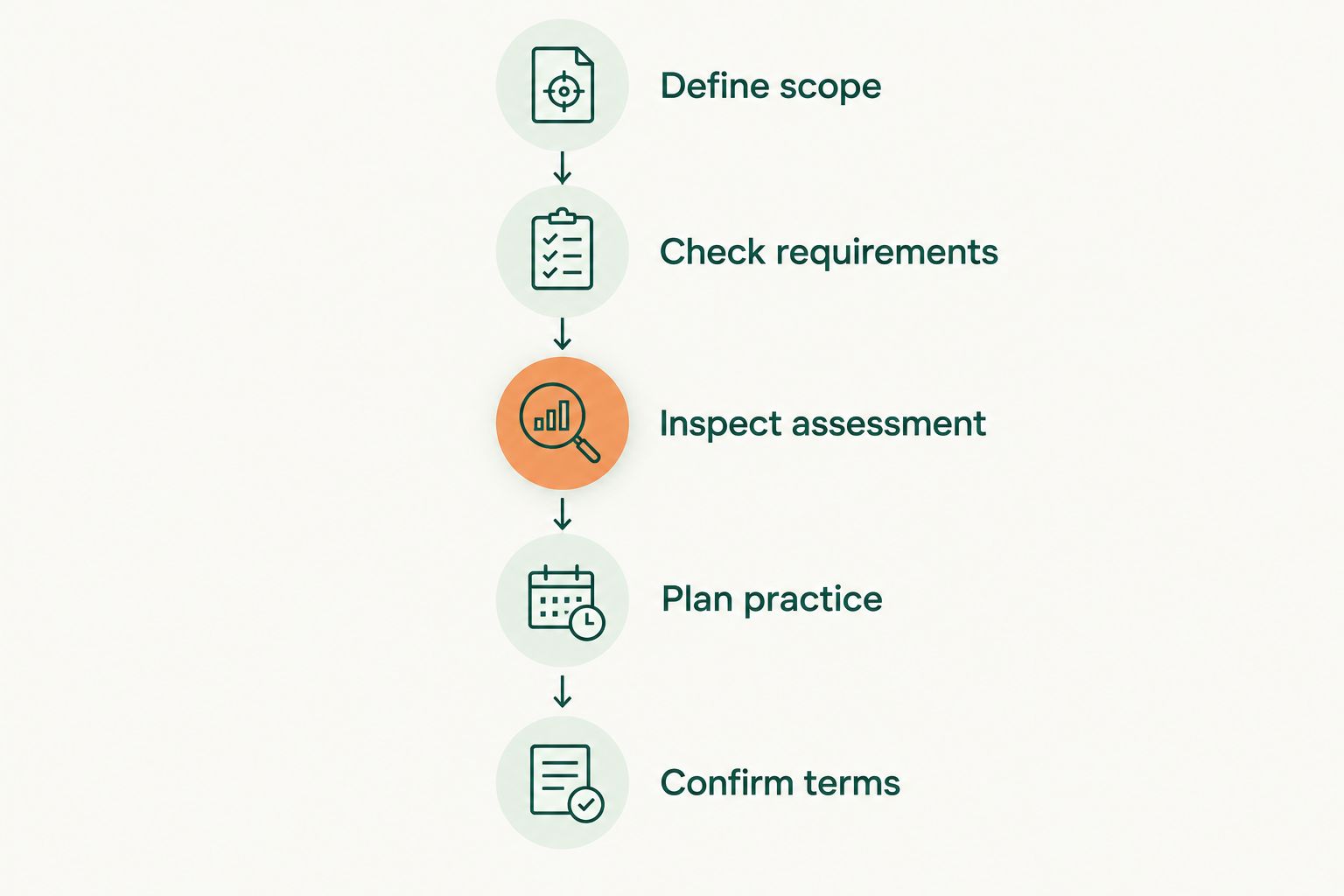
Use this sequence to turn a shortlist into an enrollment decision. Keep the answers in writing so you can compare course commitments against the same teaching goal.
Define scope
Write a 1-page teaching brief listing the classes you intend to lead yourself. Separate mat, Reformer, and other apparatus instruction; put business ownership duties in a different section.
Check requirements
Ask the provider about prerequisites and ask your intended insurer about qualification requirements. If you also plan to teach at another studio, ask that studio which training it accepts before paying.
Inspect assessment
Request a description of written and practical assessments. Ask who reviews teaching, what feedback you receive, and what happens if an assessment needs to be repeated.
Plan practice
Identify where you will study and practice, who can observe your teaching, and how you will access required equipment. Do not build your schedule around facilities you have not arranged to use.
Confirm terms
For a 2026 enrollment, confirm tuition, additional charges, access duration, refund terms, and completion requirements. Keep those terms with your enrollment records.
A useful final check is to explain the course back to yourself without using its title. State what you will learn, how teaching is assessed, and what further preparation your planned classes require.
How the pathways are ranked
The order starts with flexible foundations for a first-time owner-instructor, then moves toward more specific practical teaching needs. It is a decision tree, not a claim that online learning outperforms supervised apparatus training.
The criteria are teaching scope, practical assessment, equipment access, study format, prerequisites, and the complete enrollment commitment. Choose the pathway that satisfies your actual teaching role; do not award extra credit for content you will not use.
Which certification should you choose?
Choose Teachpilates for flexible online Pilates certification foundations while you prepare for ownership. Choose supervised mat training when direct feedback is the missing piece, and dedicated hands-on Reformer training when Reformer instruction is your immediate goal.
For your 2026 decision, use the proposed class schedule as the filter. If a course does not prepare you for the classes you intend to teach, its convenience does not fix the mismatch.
Review your training starting point
Explore self-paced study covering anatomy, mat instruction, introductory Reformer concepts, cueing, and business skills.
FAQ
What's the best Pilates certification for studio owners?
The best Pilates certification for studio owners matches the classes they intend to teach. Choose flexible foundational study for an online starting point, supervised mat training for observed mat teaching, or dedicated hands-on apparatus training for equipment-specific instruction.
Is online Pilates certification enough to open a studio?
Online Pilates certification does not establish that every requirement for opening a studio has been met. Separate your teaching preparation from business requirements, and confirm qualification expectations with your insurer and any organizations you intend to work with.
Do I need Reformer certification if I only teach mat classes?
Choose training that matches your mat-teaching role rather than adding Reformer training solely for a broader course title. If your teaching plans later include Reformer sessions, investigate dedicated hands-on preparation before adding those sessions.
Does introductory Reformer content qualify me to teach Reformer classes?
Introductory Reformer content is not a substitute for dedicated hands-on apparatus qualification. Check the course's practical instruction, equipment access, assessment scope, and acceptance requirements for your intended setting.
Should I choose mat or full-apparatus teacher training?
Choose mat training for a mat-focused teaching plan and investigate full-apparatus training when you intend to teach across several apparatus categories. Ask for the exact equipment syllabus instead of relying on the course title.
What should I ask about Pilates instructor assessments?
Ask whether assessments evaluate written knowledge, practical teaching, or both. Confirm who assesses your work, what feedback is provided, and the requirements for repeating an assessment.
Does a course certificate include an independent credential?
Do not assume a course certificate includes an independent credential. Ask the provider to identify exactly what is awarded and whether any separate application, examination, or eligibility requirements apply.
One last thing
Before you enroll, outline a 10-minute practice-teaching session for your intended class format. List what you would need to explain, demonstrate, observe, and correct, then ask each provider where its curriculum teaches and assesses those tasks.
That exercise connects the purchase to the work. Buy preparation for the class you intend to lead, not a certificate title you cannot translate into teaching.