
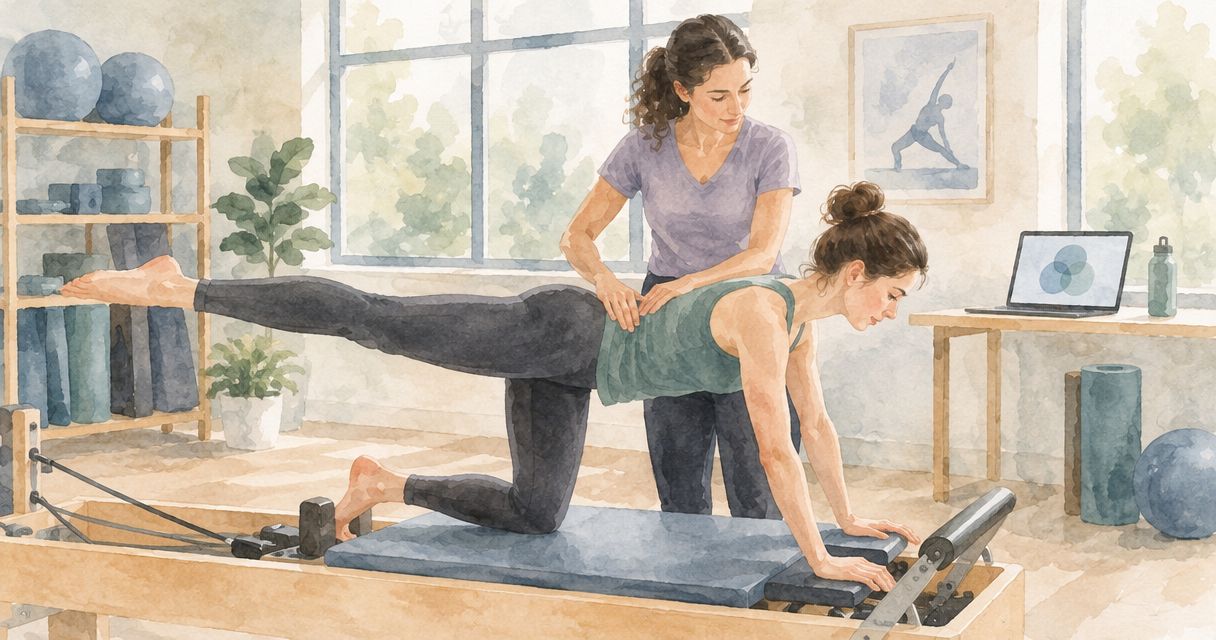
Best for flexible online foundations: TeachPilates, with $497 tuition and self-paced study. Best for mat-only teaching: dedicated mat training. Best for equipment-based teaching: hands-on Reformer training. The best Pilates certification for physical therapists in 2026 depends on what you intend to teach—not simply how much anatomy you already know.
- TeachPilates is the best Pilates certification for physical therapists seeking flexible online foundations among the training formats compared here.
- Choose dedicated mat training for mat-only teaching; choose hands-on Reformer training for apparatus instruction.
- Physical therapy knowledge does not replace Pilates cueing practice, equipment instruction, or teaching assessment.
- Match certification scope, practical assessments, and employer requirements before enrolling.
Why this matters
Your physical therapy background gives you a reason to examine training closely, not skip its teaching components. Understanding movement and teaching a Pilates session are different tasks. You need to select exercises, communicate clearly, observe responses, and adjust instruction without losing the session's purpose.
TeachPilates publishes this guide and offers the online course listed first. This is a comparison of training formats, not a claim that one credential wins across every clinic, studio, or teaching role. The alternatives below are training pathways rather than named providers with unverified course details.
For your 2026 enrollment decision, start with your intended teaching setting. A mat class, an equipment-based studio session, and physical therapy treatment do not call for an identical training purchase.
What makes the best Pilates certification for physical therapists?
Judge each course against these criteria before comparing its certificate title:
- Teaching scope: Does training prepare you for mat instruction, Reformer instruction, or a broader apparatus repertoire? A curriculum mention is not the same as dedicated practical qualification.
- Observed teaching: Look for assessment that requires you to teach, not only recall information. Ask who evaluates your instruction and what happens when corrections are needed.
- Equipment practice: For apparatus teaching, establish where you will practice setup, operation, transitions, and instruction under appropriate supervision.
- Schedule fit: Compare self-paced study with fixed teaching sessions. Protect time for physical practice as well as reading and watching lessons.
- Credential fit: Check the requirements of your intended employer, insurer, and any independent credential you plan to pursue.
- Full commitment: Review tuition alongside assessment requirements, equipment access, travel, access limits, and any separate credentialing steps.
A course is a good fit when its teaching scope matches your next role. Extra content is useful only if you can practice and apply it.
Pilates certification options at a glance
| Training option | Best for | Standout feature | Key limitation |
|---|---|---|---|
| TeachPilates online course | Flexible foundations alongside clinical work | Self-paced anatomy, mat and Reformer content, cueing, and business skills | Reformer content must not be treated as a dedicated hands-on apparatus qualification |
| Dedicated mat training | Teaching mat classes without an apparatus focus | Concentrated mat-teaching preparation | Does not establish Reformer or full-apparatus competence |
| Hands-on Reformer training | Teaching Reformer sessions | Equipment-specific practice and instruction | Requires access to equipment and scheduled practical work |
| Full-apparatus training | Teaching across multiple apparatus types | Broader equipment-focused study | Broader scope creates more practice and access commitments |
The table compares what each pathway is for. Individual providers set their own prerequisites, assessments, access terms, and certificate requirements; confirm those details before paying.
1. TeachPilates: best for flexible online foundations
TeachPilates offers self-paced online Pilates instructor certification covering anatomy, mat and Reformer instruction, cueing, and business skills. It fits practitioners who want to begin instructor education without organizing their entire study schedule around fixed classroom dates.
For a physical therapist, the decision is whether you need a flexible foundation or an equipment-specific practical pathway. TeachPilates is best for physical therapists seeking self-paced Pilates teaching foundations rather than a dedicated hands-on apparatus qualification. Treat the Reformer material as introductory preparation, not proof that you have completed supervised apparatus training.
TeachPilates pros:
- Self-paced study lets you plan learning around your existing work commitments.
- Anatomy and cueing sit within the same curriculum rather than separate study purchases.
- Mat and Reformer content introduce different teaching contexts.
- Business skills address a part of instructor preparation beyond exercise selection.
TeachPilates cons:
- Online content does not replace hands-on equipment practice.
- A course certificate does not establish acceptance by every studio or insurer.
- You must confirm assessment methods, access terms, and any additional practical requirements before enrollment.
Best for: Your first instructor-training step when flexibility matters and you understand the limits of online apparatus instruction.
Verdict: Buy for flexible foundations; skip as a substitute for dedicated hands-on Reformer qualification.
2. Dedicated mat training: best for mat-only teaching
Dedicated mat training keeps your initial teaching goal narrow: learning to instruct Pilates without making apparatus operation the center of your course. Choose a program with clearly documented mat coverage, practice-teaching expectations, and assessment requirements.
This is the strongest fit when your next role is specifically mat teaching. Do not select it merely because you expect your physical therapy background to make the course easy. The useful question is whether it develops your ability to teach someone else.
Dedicated mat training pros:
- Keeps study focused on the repertoire you intend to teach.
- Avoids making Reformer access a prerequisite for mat practice.
- Supports deliberate work on verbal cueing and class sequencing.
Dedicated mat training cons:
- Does not prepare you to operate or teach unfamiliar apparatus.
- Later apparatus training remains a separate decision.
- Assessment quality depends on the provider, not the mat-training label.
Ask whether you must demonstrate exercise instruction, adaptations, and a complete session. Also ask whether prior learning receives formal credit; do not assume your professional qualification automatically reduces course requirements.
Best for: Physical therapists planning mat-only classes or private mat instruction.
Verdict: Buy when mat teaching is the defined goal; hold if your intended role requires Reformer instruction.
3. Hands-on Reformer training: best for Reformer teaching
Hands-on Reformer training is the appropriate pathway when your intended teaching role depends on equipment-specific competence. Select a course that explicitly includes practical equipment instruction and assessed teaching rather than relying on the word Reformer in a syllabus.
Your clinical experience remains useful, but it is not a substitute for learning the apparatus. You need opportunities to practice setup, spring selection, transitions, client positioning, and cueing with the equipment you will use.
Hands-on Reformer training pros:
- Focuses practice on the apparatus required for the role.
- Creates opportunities to receive feedback on equipment handling.
- Connects verbal instruction with the practical demands of a moving carriage.
Hands-on Reformer training cons:
- Requires a workable equipment-access plan.
- Scheduled practical sessions reduce study flexibility.
- Reformer qualification does not automatically cover other apparatus.
Before enrolling in 2026, ask who supplies the equipment and where practice happens between teaching sessions. Clarify whether required hours involve observation, personal practice, or actually teaching another person.
Best for: Physical therapists intending to teach Reformer sessions in a setting that accepts the chosen training.
Verdict: Buy for a defined Reformer role; wait if you cannot arrange the required equipment practice.
4. Full-apparatus training: best for a broader studio role
Full-apparatus training is the pathway to investigate when your intended role spans several pieces of Pilates equipment. Check the exact apparatus covered rather than assuming every course uses the same definition of full training.
Breadth is not automatically better. If your immediate goal is a mat class, buying a broader pathway adds requirements that do not directly serve that first teaching assignment.
Full-apparatus training pros:
- Suits a role that genuinely requires several apparatus types.
- Lets you examine how instruction changes across equipment.
- Provides a broader training target than mat-only or Reformer-only study.
Full-apparatus training cons:
- Requires access to the apparatus included in the course.
- Creates a larger practical commitment than a narrowly defined teaching goal.
- Still requires verification of employer acceptance and assessment standards.
Ask the provider to separate course attendance, personal practice, observation, and assessed teaching. A long curriculum is not evidence that each practical skill receives individual feedback.
Best for: Physical therapists pursuing a clearly defined multi-apparatus teaching role.
Verdict: Buy for confirmed breadth requirements; skip when you only need mat foundations.
How we ranked these training pathways
This ranking prioritizes teaching-goal fit, practical preparation, schedule flexibility, and credential clarity. It does not assign unsupported scores or rank named competitors without verified provider information.
Online foundations appear first for readers beginning instructor education around an existing professional schedule. Dedicated mat, hands-on Reformer, and full-apparatus pathways each win for a different teaching goal. A physical therapist with a confirmed Reformer position should choose the Reformer pathway over the default online recommendation.
Check these details before you enroll
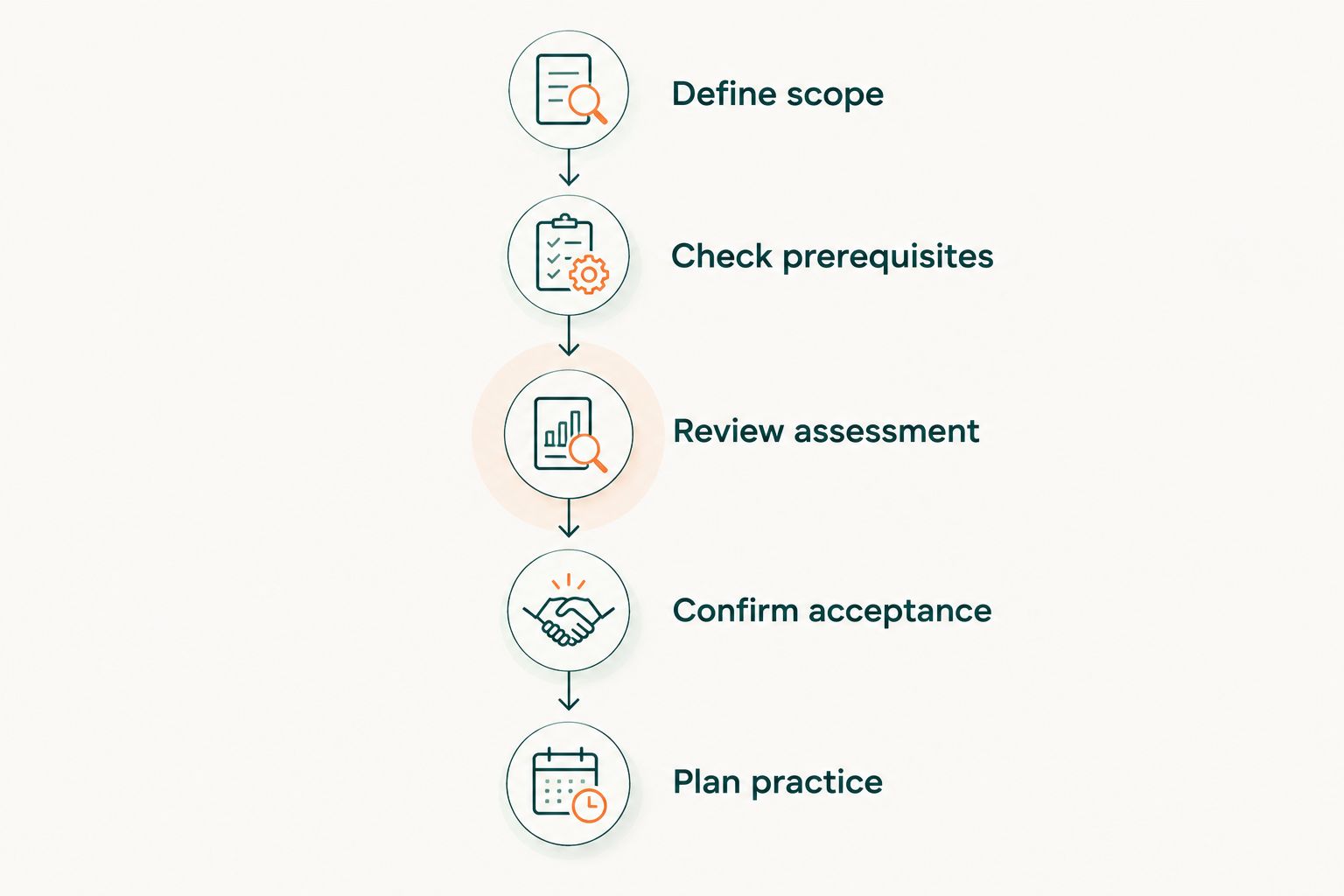
Use the same sequence for every course on your 2026 shortlist. Get specific answers in writing so you can compare requirements rather than impressions.
Define scope
Write down the service you intend to offer: mat classes, Reformer sessions, or broader apparatus teaching. Separate Pilates instruction from physical therapy services when describing your plan. A Pilates course certificate does not itself expand your professional license or settle your practice's regulatory obligations.
Check prerequisites
Ask about required Pilates experience, previous coursework, and equipment familiarity. Submit your physical therapy qualification for review if you want credit for prior learning. Only the provider can confirm whether that qualification changes its entry or completion requirements.
Review assessment
Request the assessment format, passing requirements, retake terms, and feedback process. As a personal preparation exercise, record a 10-minute teaching segment, review 3 exercise transitions, and rewrite 2 unclear cues. These are suggested practice targets, not course requirements or evidence of certification readiness.
Confirm acceptance
Ask your intended studio or employer which qualifications it accepts and whether it requires an audition or additional practical assessment. Review employer requirements for online Pilates certification before assuming a course certificate satisfies a hiring standard.
Plan practice
Identify your practice space, equipment access, and feedback source. For online study, schedule teaching practice separately from lesson completion. For apparatus study, confirm that access arrangements cover the practice you are actually required to complete.
Which Pilates certification should you choose?
Choose flexible online foundations when you are beginning instructor education and need control over your study schedule. Choose dedicated mat training for a mat-only role, hands-on Reformer training for equipment-specific instruction, and full-apparatus training only when that broader scope serves a defined goal.
For your 2026 decision, the decisive distinction is not online versus prestigious-sounding. It is whether the training, practice, assessment, and acceptance requirements line up with what you plan to teach.
Do not buy a broader course to avoid making that decision. Define the role first.
Review your instructor training option
Explore self-paced study covering anatomy, mat instruction, introductory Reformer concepts, cueing, and business skills.
FAQ
What's the best Pilates certification for a physical therapist?
The best Pilates certification matches your intended teaching scope. Choose flexible online foundations for an initial teaching pathway, dedicated mat training for mat classes, or hands-on Reformer training for equipment-specific teaching.
Does being a physical therapist automatically qualify me to teach Pilates?
A physical therapy qualification does not by itself demonstrate Pilates teaching competence. Check the training, practical assessment, and credential requirements of the setting where you intend to teach.
Is online Pilates certification enough for Reformer teaching?
Online curriculum alone is not evidence of dedicated hands-on Reformer qualification. Verify equipment practice, observed teaching, assessment, and acceptance requirements before choosing a Reformer teaching pathway.
Can my anatomy education count toward Pilates certification?
Prior anatomy education counts toward a course only when that provider formally accepts it. Request a written decision about exemptions or credit rather than assuming your physical therapy qualification reduces the requirements.
Should I choose mat or full-apparatus Pilates training?
Choose mat training for a mat-only teaching goal and investigate full-apparatus training for a role requiring several apparatus types. Confirm the equipment included and the practical commitments before enrolling.
Does Pilates course completion include an independent credential?
Do not assume an independent credential is included with a course certificate. Ask whether a separate application, eligibility review, examination, or other requirement applies to the credential you want.
Does Pilates certification guarantee studio acceptance or a job?
Pilates certification does not guarantee studio acceptance or employment. Ask the intended employer about accepted qualifications, practical experience, and audition requirements before committing to training.
One last thing
Before enrolling, explain one familiar exercise without using anatomical terminology. Ask your practice partner to describe what they understood and where they needed clarification. Your existing knowledge matters, but your next training purchase should help you turn knowledge into clear instruction—not merely repeat material you already know.