
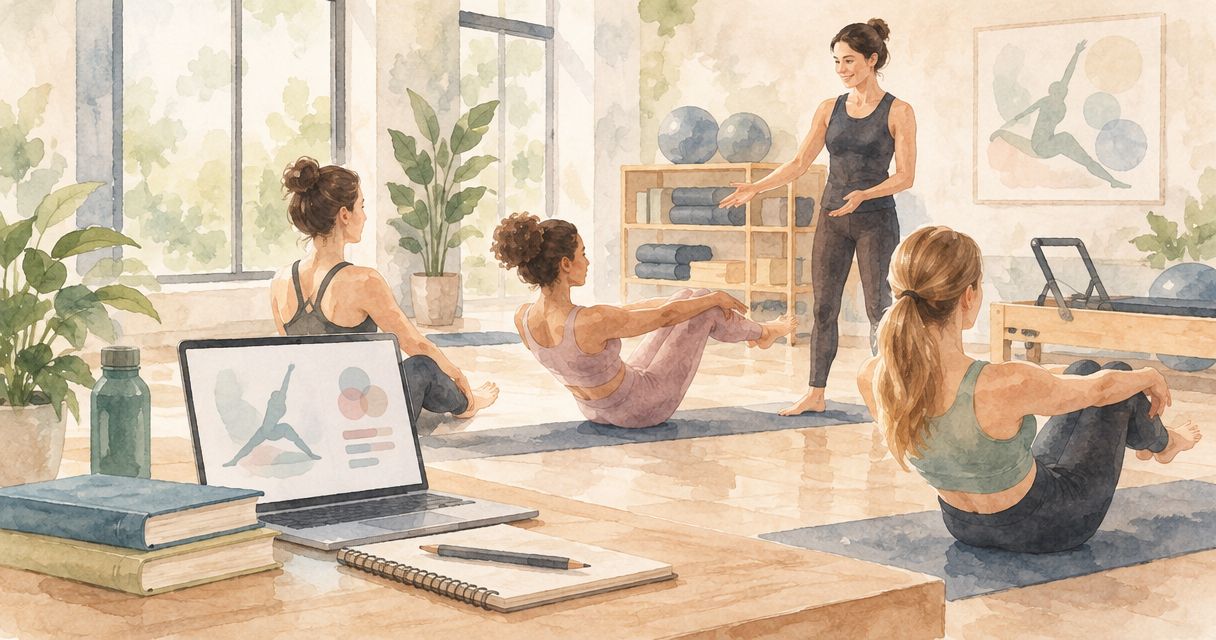
At $497, TeachPilates is best for aspiring Pilates instructors who want flexible, self-paced online study. For pilates certification programs ranked by course length, separate study format from teaching scope: a flexible timetable is not proof of a shorter qualification.
- TeachPilates offers $497 self-paced training covering anatomy, mat instruction, introductory Reformer concepts, cueing, and business skills.
- For pilates certification programs ranked by course length, compare required learning, practice, and assessment—not advertised completion dates alone.
- Choose scheduled mat training for a fixed timetable; dedicated Reformer training for apparatus-focused preparation.
- Compare equivalent teaching scopes before deciding which certification fits your schedule.
Why course length needs more than a finish date
A course calendar tells you when lessons happen. It does not, by itself, tell you how much practice, observation, assessment, or equipment access you need before completing the training.
For your 2026 enrollment decision, distinguish required training hours, elapsed calendar time, and course access. Required hours describe the work; elapsed time describes your schedule; access describes how long you can use the materials. These are different commitments.
This guide ranks training pathways by scheduling fit, not by an unsupported shortest-to-longest claim. TeachPilates publishes this guide and offers the online course discussed below. Choose the pathway that prepares you for the classes you intend to teach—not simply the one with the earliest advertised finish.
What makes a course-length comparison useful?
Use these criteria before comparing a course advertised in weeks with another advertised in hours:
- Teaching scope: Separate mat foundations, Reformer instruction, and training across multiple apparatus.
- Required workload: Identify coursework, observation, personal practice, and practice teaching separately.
- Scheduling control: Check whether you choose your study times or attend scheduled sessions.
- Assessment requirements: Establish what you must submit or demonstrate to complete the course.
- Access limits: Distinguish learning-material access from deadlines for exams or practical submissions.
- Teaching destination: Check the requirements of the studio or organization where you want to teach.
The best course length is the one that accommodates the required work and your intended teaching scope. A short calendar is not a substitute for a clear syllabus.
Training pathways at a glance
The order below is a decision sequence: start with flexible foundational study, then consider scheduled instruction or broader equipment coverage when your goal requires it. It is not a measured ranking of provider completion times.
| Rank | Training pathway | Best for | Scheduling feature | Key limitation |
|---|---|---|---|---|
| 1 | TeachPilates self-paced online course | First-time instructors needing study flexibility | You study at your own pace | Introductory Reformer concepts are not dedicated hands-on apparatus qualification |
| 2 | Scheduled mat teacher training | Learners who need a fixed timetable | Classes follow a provider's calendar | Attendance dates reduce scheduling freedom |
| 3 | Dedicated Reformer teacher training | Learners targeting Reformer instruction | Equipment access is central to planning | Scope and practical requirements need checking with the provider |
| 4 | Mat and full-apparatus training | Learners seeking broader apparatus coverage | Planning spans several teaching areas | Broader scope requires a different comparison from mat-only training |
1. TeachPilates: best for flexible first-time instructor study
TeachPilates offers a self-paced online Pilates instructor certification course for $497. The curriculum covers anatomy, mat instruction, introductory Reformer concepts, cueing, and business skills. It is aimed at Pilates practitioners preparing to become teachers, including first-time instructors.
Best for: You want to begin instructor education without organizing your study around a fixed class timetable.
Self-paced means you control when you study. It does not mean every learner finishes in the same time, and it does not establish a guaranteed completion date. Your plan still needs room to understand movement, rehearse explanations, and prepare for the course's assessments.
TeachPilates pros:
- Flexible online study suits a changing weekly schedule.
- Anatomy and cueing connect movement knowledge with teaching preparation.
- Mat instruction and introductory Reformer concepts help you distinguish teaching areas.
- Business skills address part of the transition from practitioner to instructor.
TeachPilates limitations:
- Introductory Reformer concepts do not replace dedicated hands-on apparatus qualification.
- Self-paced study requires you to maintain your own routine.
- Course enrollment does not establish universal studio acceptance or include an independent credential by implication.
For a 2026 decision, confirm the current assessment format, access period, support arrangements, and completion requirements before enrolling. Ask a prospective employer about acceptance separately; the provider and the employer answer different questions.
Verdict: Buy if flexible foundational study matches your goal; choose dedicated practical training when your intended teaching role requires it.
2. Scheduled mat training: best for a fixed learning timetable
Scheduled mat teacher training organizes learning around specified class dates. It is a format to consider when you want external deadlines rather than complete control over your study calendar.
Best for: You want mat-focused preparation and know you follow through more consistently with scheduled attendance.
A published final class date is not automatically your certification date. Establish whether observation, practice teaching, assessments, or resubmissions sit outside the scheduled lessons. Also check whether a missed class affects your completion plan.
Scheduled mat training pros:
- Set dates make attendance commitments visible before enrollment.
- A mat-focused syllabus keeps the initial teaching goal defined.
- Scheduled teaching sessions provide a structure around which to plan independent work.
Scheduled mat training limitations:
- Fixed attendance requirements offer less flexibility than self-paced study.
- Mat training alone does not establish Reformer or full-apparatus qualification.
- A timetable does not explain the amount or quality of individual feedback.
Request a sample timetable and a complete assessment outline. Then place the required independent work alongside the classes in your calendar. That produces a more useful completion plan than counting the weeks between the opening and closing sessions.
Verdict: Buy when the attendance schedule fits and mat instruction matches your intended role.
3. Dedicated Reformer training: best for apparatus-focused goals
Dedicated Reformer teacher training focuses your course search on Reformer instruction. Assess the provider's practical requirements, supervision, and equipment arrangements rather than treating any mention of Reformer content as equivalent preparation.
Best for: You intend to teach Reformer classes and need training aligned with that apparatus.
Before choosing a course in 2026, establish where you will practice. Confirm whether the provider supplies equipment access, requires you to arrange it, or separates practical sessions from online coursework. Your usable timetable depends on those arrangements.
Dedicated Reformer training pros:
- Apparatus-focused study aligns the training search with a specific teaching goal.
- Practical requirements give you concrete equipment-access questions to resolve.
- A defined Reformer syllabus makes scope easier to discuss with a prospective studio.
Dedicated Reformer training limitations:
- Equipment access adds a planning dependency beyond online lesson access.
- Reformer instruction does not automatically cover other Pilates apparatus.
- Prior mat training does not establish transfer credit unless the provider confirms it.
Ask how the course assesses equipment setup, exercise instruction, cueing, and modifications. A syllabus title is not enough; you need to understand what teaching performance the provider actually evaluates.
Verdict: Hold until the practical requirements, equipment access, and studio expectations are clear.
4. Mat and full-apparatus training: best for broader teaching scope
Mat and full-apparatus pathways are relevant when your intended role extends beyond mat classes or Reformer instruction alone. Read the equipment list closely: a broad course label does not tell you exactly what the syllabus includes.
Best for: You want preparation across multiple apparatus and have identified a teaching setting that calls for that scope.
Do not compare a broad pathway with a mat-focused course using calendar length alone. First match the included subjects, practical requirements, and assessments. Otherwise, the comparison rewards a smaller syllabus for omitting the work you actually need.
Mat and full-apparatus training pros:
- Broader study aligns with goals involving multiple apparatus.
- An equipment-by-equipment syllabus clarifies the intended teaching coverage.
- A staged pathway lets you examine requirements for each component separately.
Mat and full-apparatus training limitations:
- Multiple equipment categories require more access planning.
- A broad course title does not guarantee employer acceptance.
- Prior training counts only where the receiving provider confirms recognition.
For 2026 enrollment, request the completion requirements for each component, not just the overall course description. Check whether you must finish all components before receiving the advertised certificate.
Verdict: Buy when broader apparatus coverage serves your intended role; skip it as a shortcut to mat-only teaching.
Build a realistic completion plan
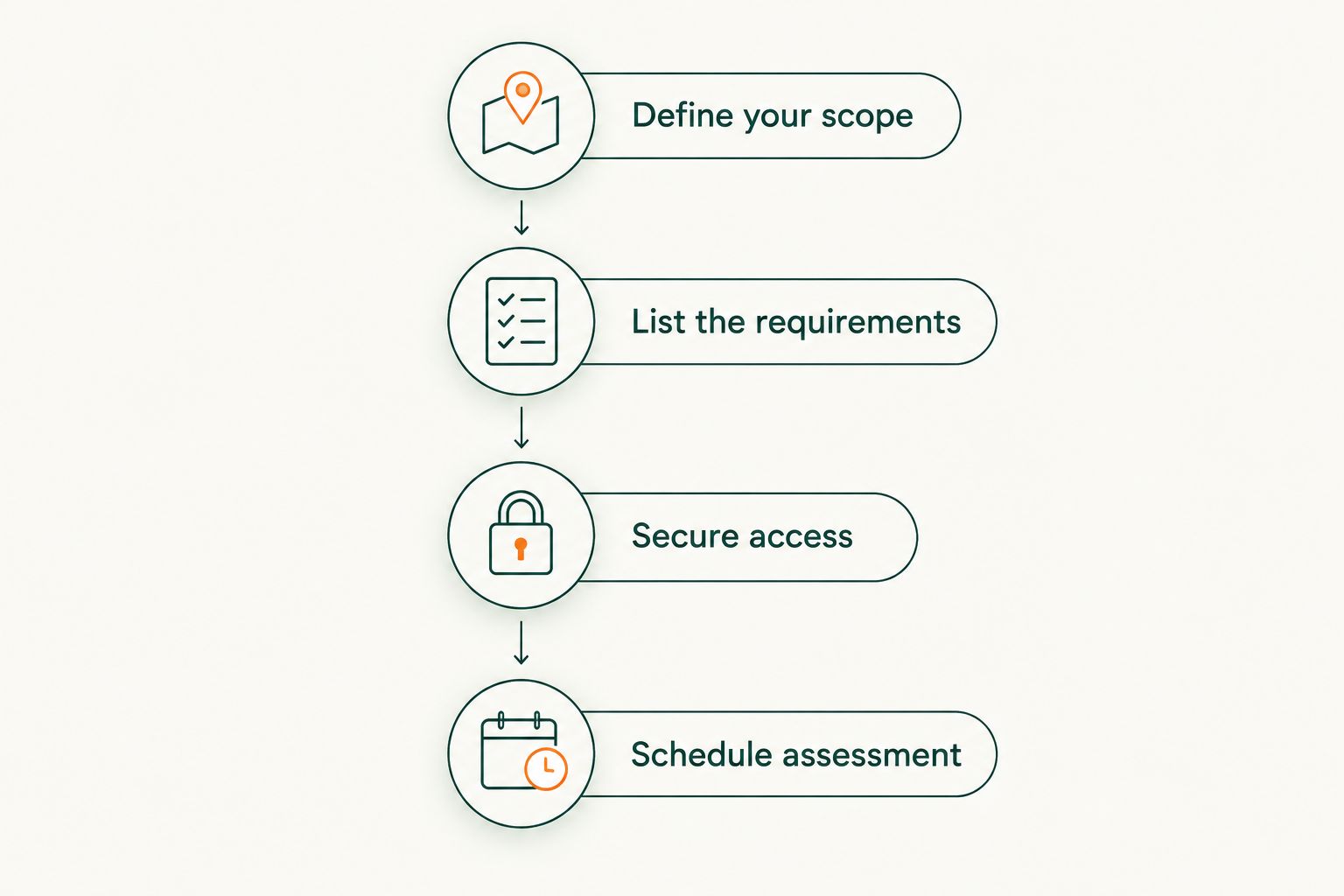
Turn the syllabus into a calendar before paying. Keep provider requirements separate from the extra practice you personally need; both affect your readiness, but they are not the same obligation.
Define your scope
Write down the classes you want to teach: mat, Reformer, or multiple apparatus. Ask the intended studio what training and assessment evidence it expects. Use that answer to narrow your course search.
List the requirements
Separate lessons, observation, personal practice, practice teaching, and assessments. The guide to observation versus teaching hours explains why these categories need separate attention. Watching instruction is not the same task as delivering it.
Secure access
Check your study space, practice arrangements, and any required equipment. For scheduled training, confirm attendance dates and missed-session rules. For online study, check material access and submission deadlines separately.
Schedule assessment
Find out whether completion involves written work, a practical demonstration, recorded teaching, or another assessment format. Ask about submission arrangements and resubmission terms before building your finish date around them.
Your finish date should follow from this plan. It should not be the assumption that forces everything else to fit.
How these pathways are ranked
The ranking prioritizes scheduling fit for aspiring instructors, then separates pathways by teaching scope. Flexible online study comes first for readers who need control over study times; scheduled mat, dedicated Reformer, and broader apparatus training each serve a different goal.
No pathway receives a fastest-completion claim. Compare like-for-like requirements before treating fewer weeks as an advantage.
Which certification pathway should you choose?
Choose TeachPilates for self-paced online study covering anatomy, mat instruction, introductory Reformer concepts, cueing, and business skills. It is the clearest fit here for an aspiring instructor whose priority is flexible foundational study.
Choose scheduled mat training when fixed attendance helps you learn. Choose dedicated Reformer training when apparatus instruction is the goal, and broader training when your intended role calls for multiple apparatus.
For your 2026 decision, make the teaching goal the starting point. Then check the syllabus, assessment, access terms, and employer requirements before committing.
FAQ
Which Pilates certification program is the shortest?
A shortest-program claim requires verified completion requirements for courses with equivalent teaching scope. Compare coursework, practice, observation, and assessment—not advertised weeks alone.
Is self-paced Pilates certification faster than scheduled training?
Self-paced certification gives you scheduling control, not a guaranteed faster finish. Your completion plan still depends on the required work, assessment arrangements, and time you can commit.
Is TeachPilates suitable for a first-time instructor?
TeachPilates is aimed at aspiring instructors and offers self-paced online study covering anatomy, mat instruction, introductory Reformer concepts, cueing, and business skills. Check its current assessment and access terms against your learning needs before enrolling.
Does introductory Reformer content qualify me to teach Reformer classes?
Introductory Reformer content is not equivalent to dedicated hands-on apparatus qualification. Check the course's practical scope and the requirements of the studio where you intend to teach.
Do observation hours count as practice teaching?
Observation and practice teaching describe different activities. Ask the provider how each category is recorded and whether it permits any substitution; do not assume the hours are interchangeable.
Does a Pilates course certificate include an independent credential?
Do not assume a course certificate includes an independent credential. Confirm the credential's issuer, eligibility requirements, assessment, and any separate application before describing it as included.
What should I check before enrolling in a Pilates course in 2026?
Check teaching scope, prerequisites, assessments, required practice, access limits, and all applicable fees. Also ask your intended employer what training it accepts; course completion does not promise a job or universal studio acceptance.
One last thing
Ask what happens between your last lesson and receiving your certificate. That question directs attention to remaining practice records, submissions, assessments, and administrative steps instead of treating the final lesson as the finish line. Get the answer before you enroll.