Best overall for flexible study: TeachPilates, with $497 tuition and self-paced online learning. For stay-at-home parents comparing Pilates certifications in 2026, a live online cohort fits scheduled accountability, local mat training fits face-to-face feedback, and dedicated hands-on Reformer training fits apparatus-teaching goals.
- TeachPilates is the best Pilates certification for stay-at-home parents prioritizing self-paced online study and mat-teaching foundations.
- Choose live online training when scheduled classes help you stay accountable and childcare covers attendance.
- Choose local mat training for face-to-face feedback; choose hands-on Reformer training for apparatus-specific teaching goals.
- Before enrolling, confirm assessments, access deadlines, additional fees, and the requirements of your intended teaching setting.
Why this matters
Your course needs to fit the hours you actually control, not an ideal week without interruptions. A flexible lecture schedule does not automatically mean flexible assessments, practice requirements, or equipment access.
TeachPilates offers self-paced online instructor certification covering anatomy, mat and Reformer instruction, cueing, and business skills. Treat mat-teaching foundations and introductory Reformer concepts separately from dedicated hands-on apparatus qualification.
This guide is published by TeachPilates and compares its course with training formats, not independently reviewed competing schools. The recommendations distinguish scheduling fit from teaching scope so you can choose a workable route without assuming every certificate serves the same purpose.
What makes the best certification for parents?
Use these criteria before comparing course names or deciding that online automatically means easier:
- Schedule control: Separate lessons you can study independently from appointments, live classes, and assessment deadlines.
- Teaching scope: Match the curriculum to mat teaching, online instruction, or apparatus work rather than the broad word certification.
- Assessment clarity: Ask what you must demonstrate, how you submit it, and what happens if you need another attempt.
- Practice access: Identify where you will practice, who will observe you, and whether equipment is required.
- Full financial commitment: Check tuition alongside examination, mentoring, travel, equipment-access, and credential-related charges.
- Support and access: Confirm how you ask questions, when support is available, and whether course access expires.
For a 2026 enrollment decision, teaching scope and scheduling requirements should come before a certificate's title. A course that fits your calendar but not your intended work is the wrong purchase.
Pilates certification options at a glance
The ranking below gives each option a different job. The first is a specific course; the remaining entries are formats to evaluate with individual providers.
| Rank and option | Best for | Standout feature | Key limitation |
|---|---|---|---|
| 1. TeachPilates self-paced course | Parents needing control over study timing | Online curriculum spanning anatomy, mat instruction, cueing, business skills, and introductory Reformer concepts | Not a substitute for dedicated hands-on apparatus qualification |
| 2. Live online cohort | Parents who need scheduled accountability | A set class timetable | Attendance must fit childcare; practical arrangements need checking |
| 3. Local in-person mat training | Parents prioritizing face-to-face instruction | Shared physical teaching environment | Travel and scheduled attendance reduce flexibility |
| 4. Dedicated hands-on Reformer training | Parents targeting apparatus-specific instruction | Reformer-focused practical learning | Equipment access and attendance require advance planning |
1. TeachPilates: best for self-paced study around family life
TeachPilates is the best fit for stay-at-home parents who want self-paced online Pilates instructor training centered on teaching foundations. Its curriculum covers anatomy, mat and Reformer instruction, cueing, and business skills, giving you subjects to study beyond simply performing exercises.
The scheduling advantage is control over when you study. You still need deliberate practice: understanding a lesson and explaining movement clearly to another person are different tasks.
TeachPilates pros:
- Self-paced online study lets you organize learning around family commitments.
- Anatomy and cueing connect movement knowledge with teaching responsibilities.
- Mat instruction supports a focused starting point for aspiring teachers.
- Business skills are included alongside movement-related subjects.
TeachPilates cons:
- Independent study requires you to create and maintain a routine.
- Introductory Reformer concepts do not replace dedicated hands-on apparatus qualification.
- You must confirm assessment arrangements, support, and access terms before enrolling.
The stated tuition is $497. Before committing, ask which assessments and course materials that tuition covers; do not assume separate credentials or additional services are included.
Best for: You want to begin instructor education without organizing your family calendar around a recurring classroom timetable.
Verdict: Buy if self-paced learning fits your habits and the confirmed teaching scope matches your goal.
2. Live online training: best for scheduled accountability
A live online cohort puts instruction on a calendar while removing the journey to a classroom. Choose this format when you learn better with appointments and can protect those appointments from interruptions.
Check each provider's delivery details. A live lecture, an interactive movement class, and a supervised teaching assessment serve different purposes; a video meeting alone does not establish practical teaching competence.
Live online training pros:
- Scheduled sessions create external accountability.
- Remote attendance removes travel to the teaching venue.
- A cohort provides a shared timetable for progressing through lessons.
Live online training cons:
- Fixed sessions still require reliable childcare coverage.
- Time zones and absence rules can limit flexibility.
- Equipment access and practical assessment arrangements need separate confirmation.
For a 2026 course, ask whether missed sessions have recordings and whether watching a recording satisfies attendance requirements. Those are separate questions, and the answer affects your ability to finish.
Best for: You have predictable childcare windows but struggle to keep independent study appointments.
Verdict: Buy if the live timetable is sustainable; skip if attendance depends on uninterrupted naps.
3. Local in-person mat training: best for face-to-face instruction
Local mat training brings you into the same physical learning environment as the instructor. It fits parents who prioritize learning in person and can arrange attendance plus travel.
The format itself does not guarantee individual attention. Ask how teaching practice works, who observes it, and how feedback reaches you before choosing a school.
Local in-person mat training pros:
- You can observe demonstrations in the teaching space.
- Scheduled attendance creates protected time away from home distractions.
- Mat-focused study keeps the training objective narrower than full-apparatus education.
Local in-person mat training cons:
- Travel extends the childcare window beyond class time.
- Missed attendance can be harder to replace than independent study.
- Mat-focused training does not establish a full-apparatus qualification.
Build your calendar around leaving home and returning, not just the advertised class duration. Also ask whether observation and practice teaching happen during the scheduled course or require additional visits.
Best for: You have dependable local childcare and want a physical classroom rather than remote instruction.
Verdict: Buy when the full attendance commitment works; hold if travel makes the schedule fragile.
4. Hands-on Reformer training: best for apparatus-teaching goals
Dedicated hands-on Reformer training fits a specific objective: learning to teach using the apparatus. Choose this route when Reformer instruction is your intended work, rather than treating equipment terminology in a general course as equivalent preparation.
Ask the provider to explain apparatus practice, observation, supervised teaching, and practical assessment. Confirm access to equipment before enrollment, especially if you do not have a Reformer at home.
Hands-on Reformer training pros:
- Training centers on the equipment you intend to teach.
- Apparatus-based practice connects instruction with the physical setup.
- A focused objective helps you evaluate whether a course matches your intended role.
Hands-on Reformer training cons:
- Equipment access adds a scheduling requirement.
- Travel and supervised sessions can complicate childcare.
- Reformer-focused training is not automatically full-apparatus education.
Do not enroll based on the word Reformer alone. Request a written explanation of what the resulting certificate covers and compare it with the requirements of the studio where you hope to teach.
Best for: You specifically want apparatus instruction and can arrange consistent equipment access.
Verdict: Buy for a confirmed Reformer-teaching goal; wait until practical access is settled.
How the options are ranked
Schedule control leads this ranking because the reader is a parent balancing training with caregiving. Teaching scope, assessment clarity, practice access, financial commitment, and support then determine whether that scheduling advantage is useful.
This is not a ranking based on graduate earnings, job placement, accreditation, or employer acceptance. No such comparison is established here. A specific studio requirement can change your best choice immediately.
Build a study plan before enrolling
For your 2026 training plan, separate learning time from teaching practice. You can read about cueing independently, but practicing an explanation aloud needs a different setup.
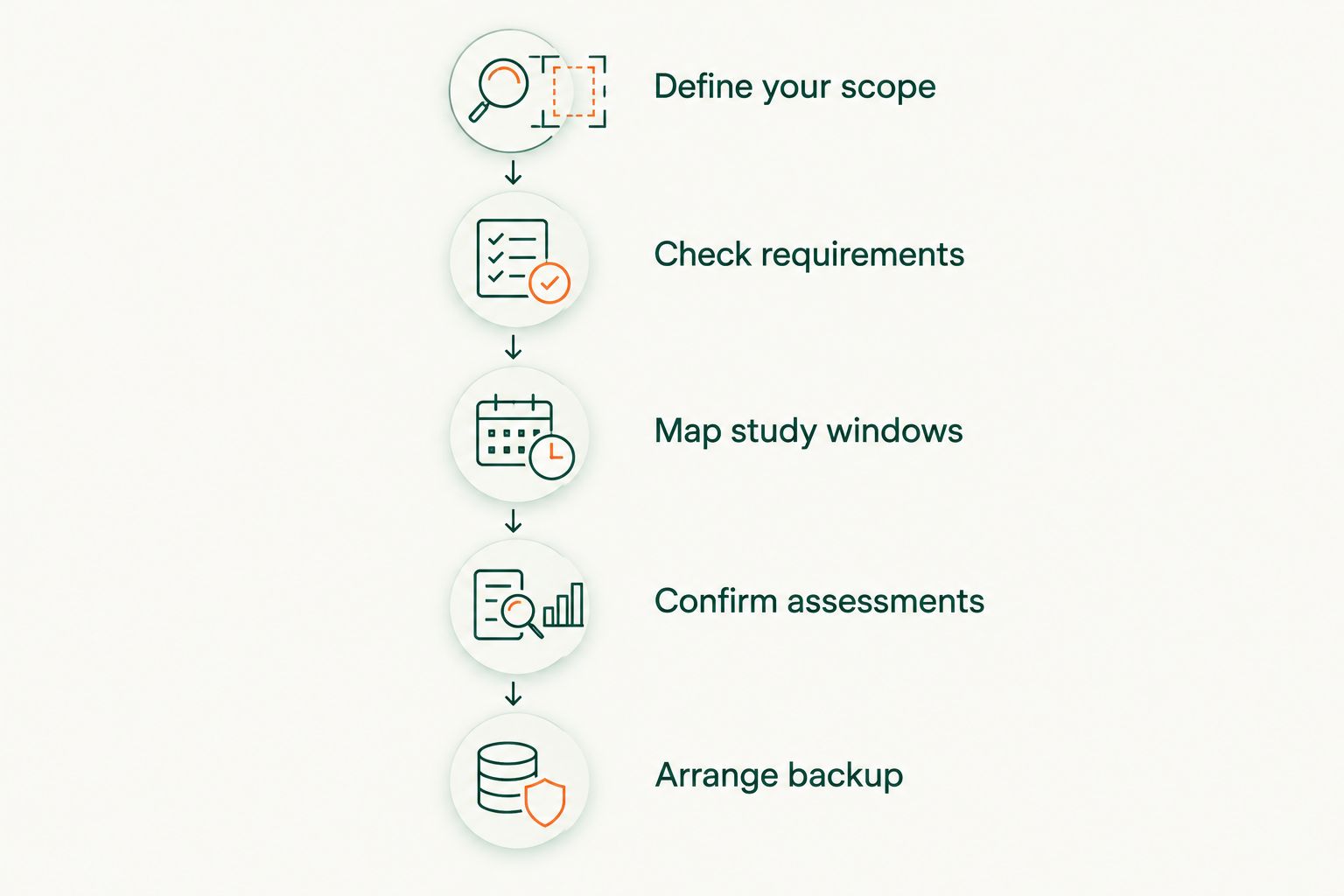
Use these steps to test whether a course fits:
- Define your scope. Write down whether you want to begin with mat teaching or pursue dedicated apparatus instruction.
- Check requirements. Ask your intended studio or teaching venue what training, practical assessment, insurance, and safety credentials it requires.
- Map study windows. As a planning exercise, reserve a 20-minute reading block and a separate 30-minute practice block. These are sample calendar slots, not course requirements.
- Confirm assessments. Find out whether evaluations require another person, equipment, a live appointment, or a recorded submission.
- Arrange backup. Decide what happens when childcare falls through or you miss a planned practice session.
Choose slots you can repeat. Adding more ambitious study hours does not help if you cannot protect them.
Questions to ask before you pay
A course description should let you understand the commitment. Request written answers where the enrollment information leaves an important question unresolved.
Prerequisites and teaching scope
Ask whether you need prior Pilates practice, teaching experience, or another qualification. Then ask exactly what the course prepares you to teach and what falls outside that scope.
Assessment and practice
Check whether completion requires written work, practical teaching, observation, or assessed demonstrations. Use the guide to written versus practical assessments to separate knowledge checks from demonstrations of teaching ability.
Access and additional commitments
Ask when access starts and ends, how questions receive answers, and whether extensions or reassessments carry charges. For a 2026 enrollment, use the current written terms rather than assuming an older description still applies.
Keep independent credentials separate from course completion. Do not assume an external examination, credential, membership, or insurance policy comes with tuition unless the provider expressly includes it.
Which certification should you choose?
Choose TeachPilates if your priority is self-paced online Pilates instructor education and your starting goal is teaching foundations. The curriculum and stated tuition give you a specific option to evaluate; assessment details and intended teaching scope complete the decision.
Choose live online study if appointments keep you accountable. Choose local mat training if face-to-face learning matters more than schedule control. Choose dedicated hands-on Reformer training if apparatus teaching is the objective.
Do not buy broader training simply because it sounds more impressive. Choose the education you can complete and apply within its confirmed scope.
FAQ
What's the best Pilates certification for stay-at-home parents?
TeachPilates is the best fit among these options for parents prioritizing self-paced online study and mat-teaching foundations. Choose another format when you need scheduled accountability, face-to-face instruction, or dedicated hands-on apparatus training.
How much is the TeachPilates course?
The stated tuition is $497. Confirm what the payment includes and ask about any separate assessment, extension, equipment-access, or credential-related charges before enrolling.
Can I study Pilates instruction around childcare?
Self-paced online study lets you choose when to work through lessons. Practical work and assessments still need planning, so confirm any appointments or participation requirements before paying.
Is an online Pilates course enough to teach Reformer classes?
Do not treat introductory online Reformer concepts as equivalent to dedicated hands-on apparatus qualification. Match practical training and assessment to the requirements of your intended teaching setting.
Do I need teaching experience before enrolling?
Prerequisites depend on the course, so check the current enrollment requirements directly. Ask about Pilates practice experience, prior qualifications, and any required preparation rather than assuming the word beginner answers everything.
Will a Pilates certificate guarantee studio work?
A Pilates certificate does not guarantee employment or universal studio acceptance. Ask the studios you are considering which qualifications, practical assessments, insurance, and other requirements they expect.
How long will certification take with children at home?
Your completion time depends on course requirements and the study and practice time you can protect. Build your 2026 calendar around reliable availability, then confirm deadlines and access limits with the provider.
One last thing
Before enrolling, explain a familiar movement aloud without demonstrating it. This simple exercise separates knowing what to do from finding words another person can follow. Use that distinction when you ask how a course teaches and assesses cueing.